
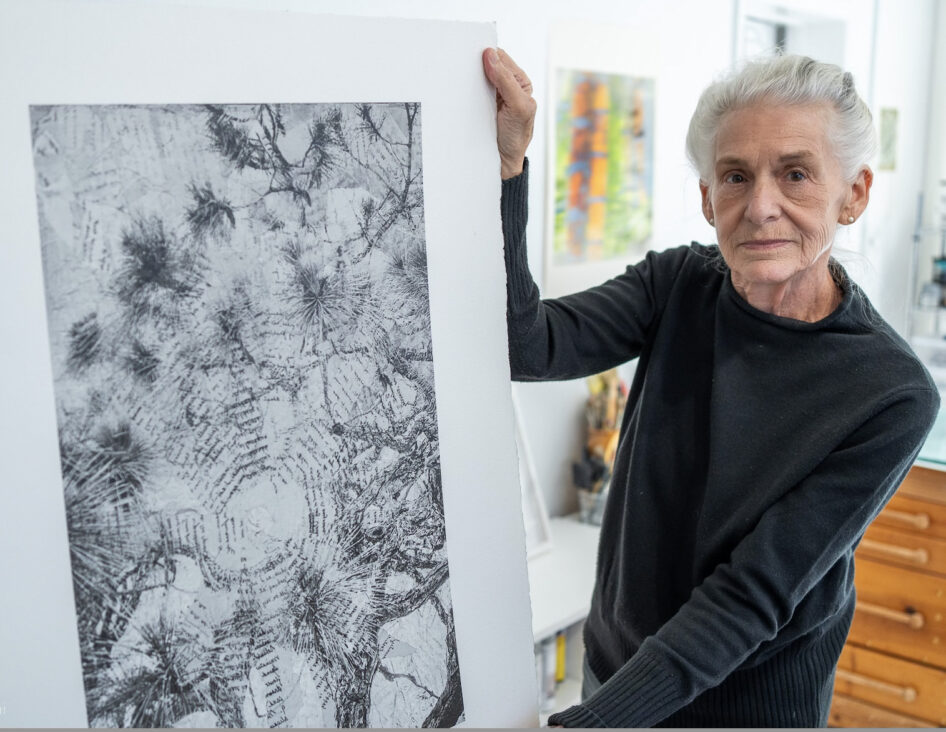
At nearly eighty‑three, Lynda Fay Braun stands as an artist whose work defies generational categories and technological boundaries. Though her medium has transformed dramatically over the decades — from drawing and painting to photography and digitally manipulated prints — her artistic sensibility has remained remarkably constant: minimalist in its rigor, spiritual in its quietude, and deeply attuned to the patterns buried within nature’s seeming disorder.
Her earliest creative memories were shaped not by formal instruction but by intuition and a sense of refuge in the natural world. As a child, she was the one with a Brownie camera slung around her neck, finding angles and textures in the family park. She grew up in an era when girls were pushed toward Home Economics instead of the shop classes she longed for, but that never stopped her hands from making things — or her mind from analyzing beauty through the lens of restraint. Even then, she was learning to see: a Japanese ink drawing shown to her by her father introduced her to the concept of “less is more,” a principle that would later underpin her entire artistic vocabulary.
The Minimalist Lineage
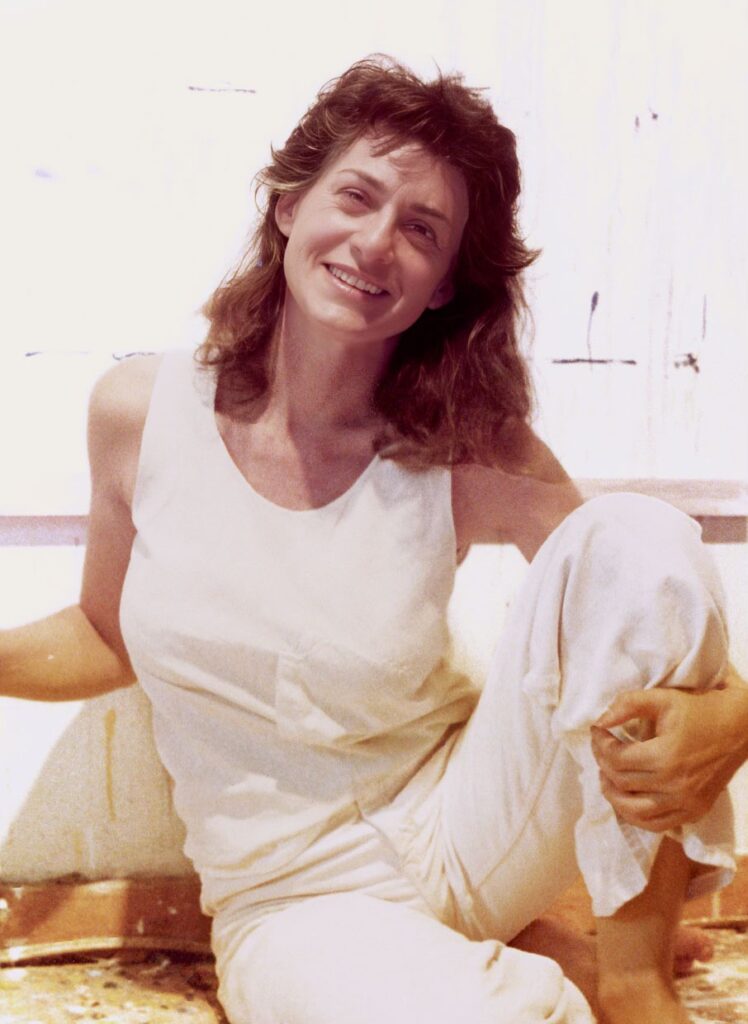
Braun’s formal education further embedded her in the lineage of Minimalism, Conceptual Art, and Asian aesthetics. As an MFA student at Cornell, she found herself at the center of an extraordinary moment in American art history: hosting Agnes Martin as artist‑in‑residence. The experience would shape everything that followed. Martin’s discipline, demand for clarity, and intuitive way of discerning presence and absence resonated deeply with Braun’s own evolving sense of purpose. Encounters with artists such as Richard Tuttle and Friedel Dzubas layered additional influences, but it was Martin’s combination of austerity and transcendence that remained a lifelong compass. Braun notes that “After Agnes passed away, I began using more color and became more experimental.”
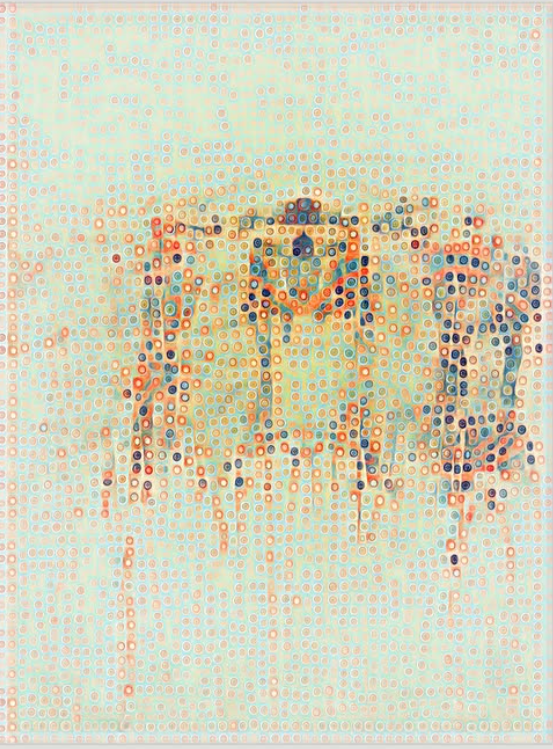
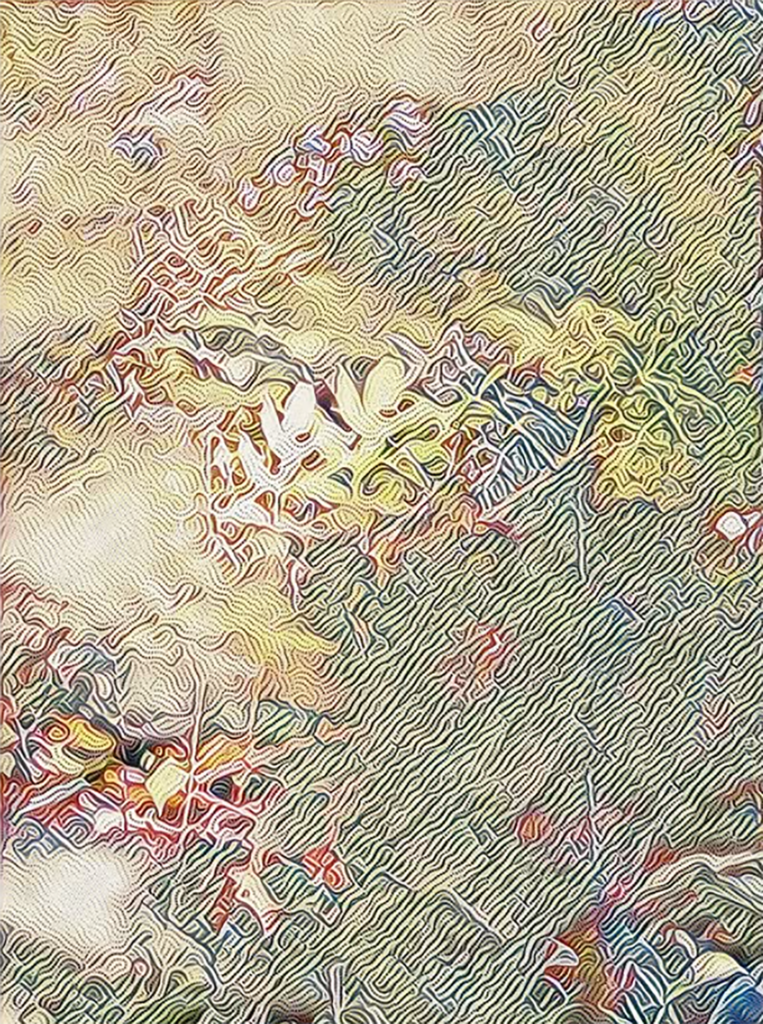
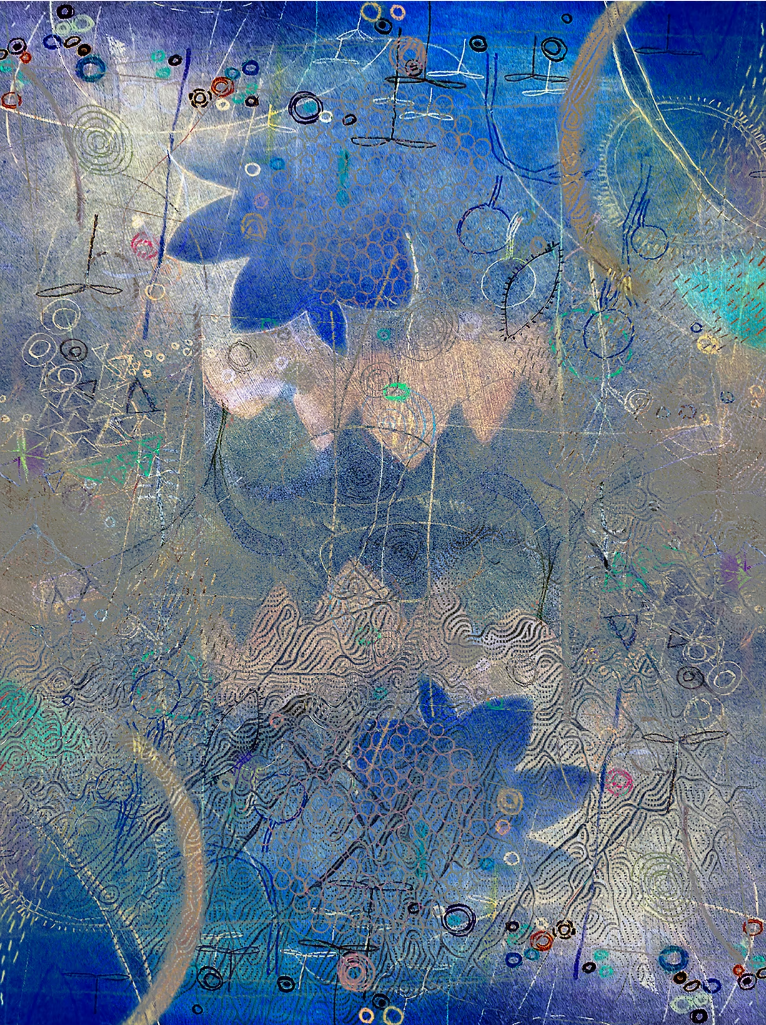
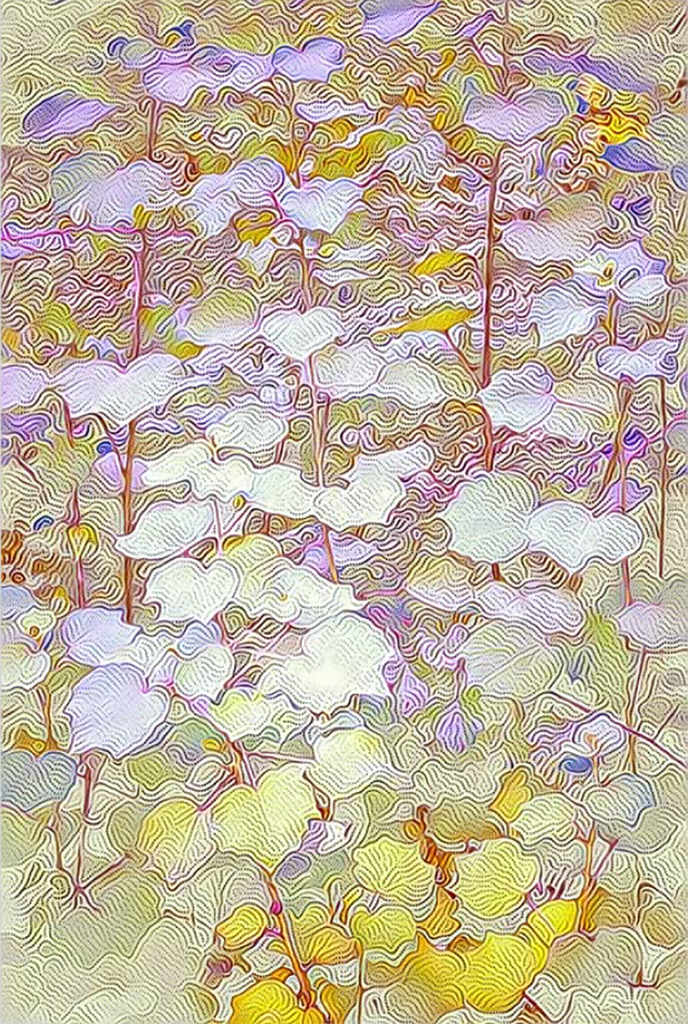
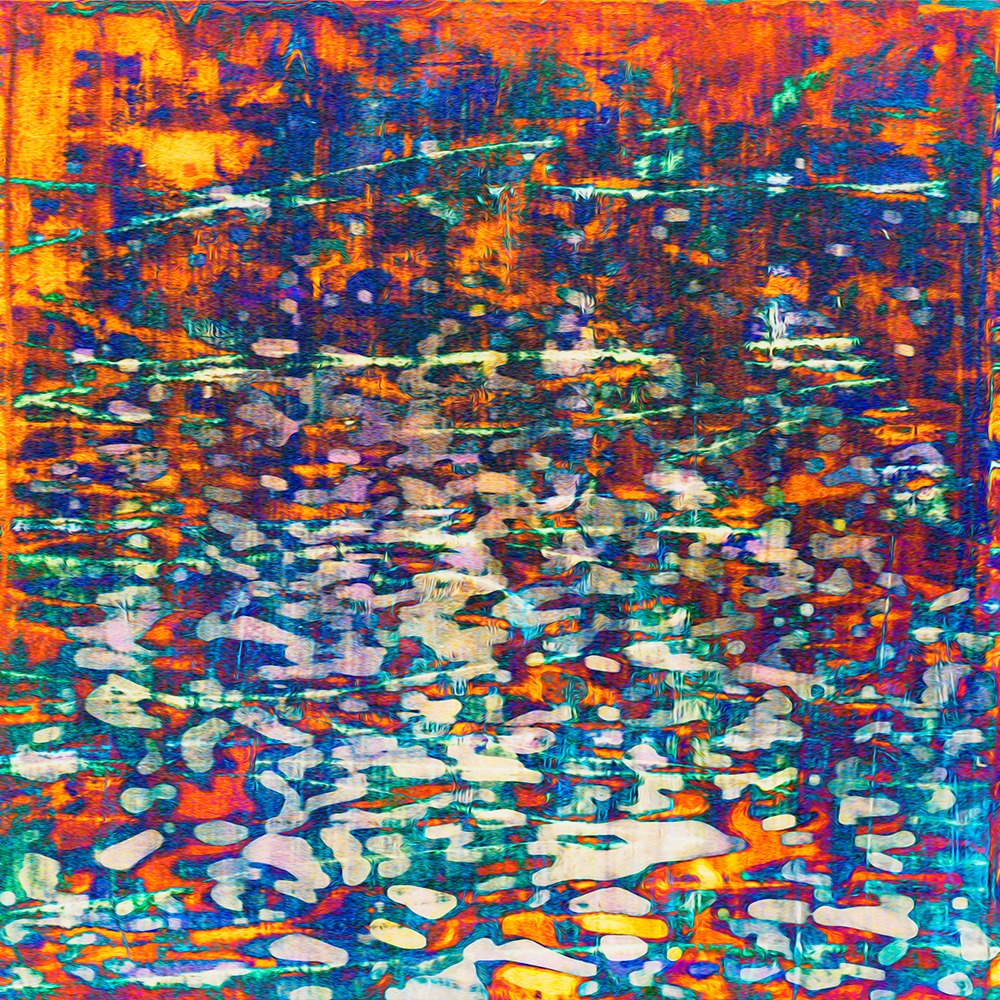
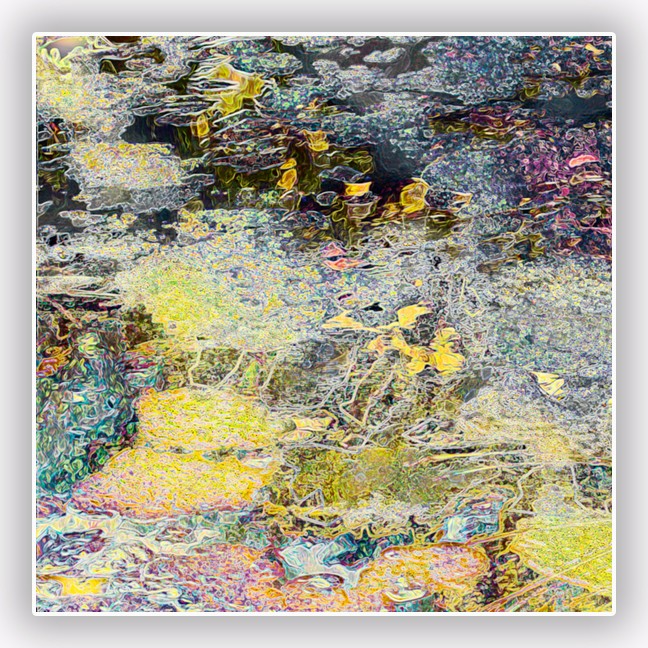
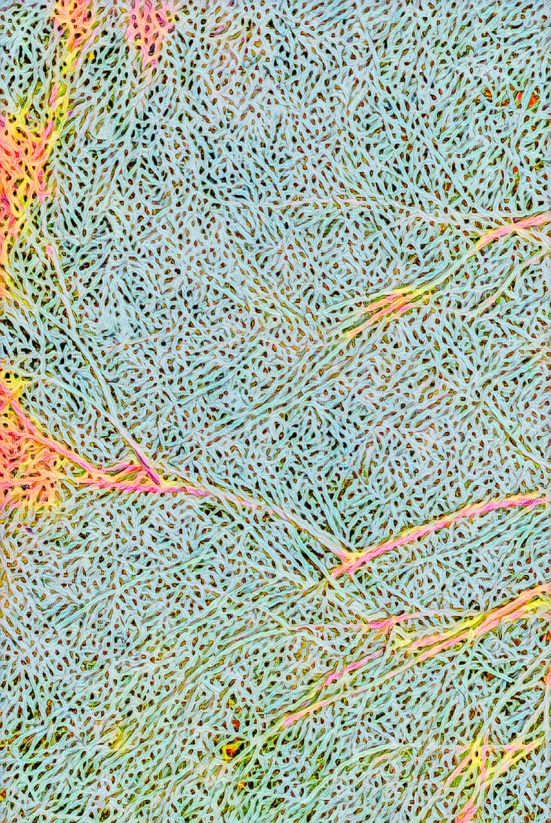
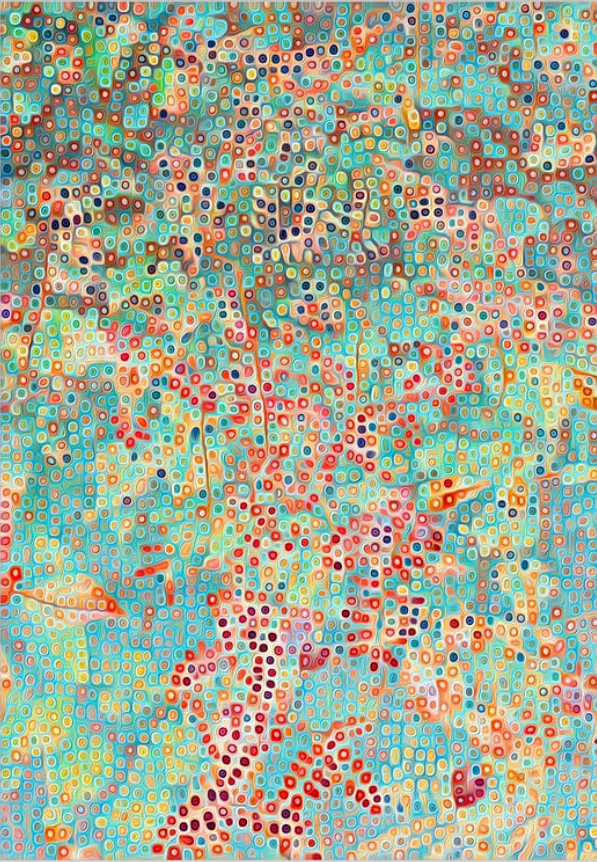
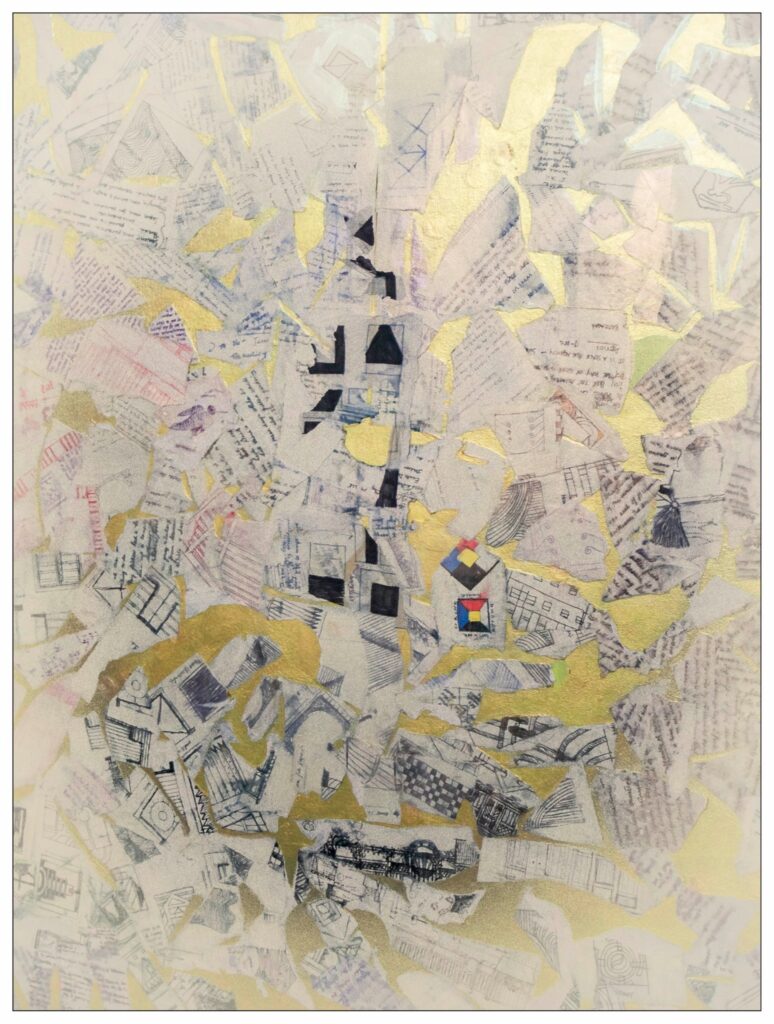
However, that clarity — the “rigor of restraint” — survives even as Braun’s tools have changed. Today she works almost exclusively with a camera, a computer, and a large‑format Epson printer capable of feeding stiff or unconventional materials. Her shift to lens‑based digital art is not an abandoning of her painting roots but a continuation of the same questions she has always asked: What lies beneath the surface? What order hides within apparent chaos? How can clarity emerge from density?
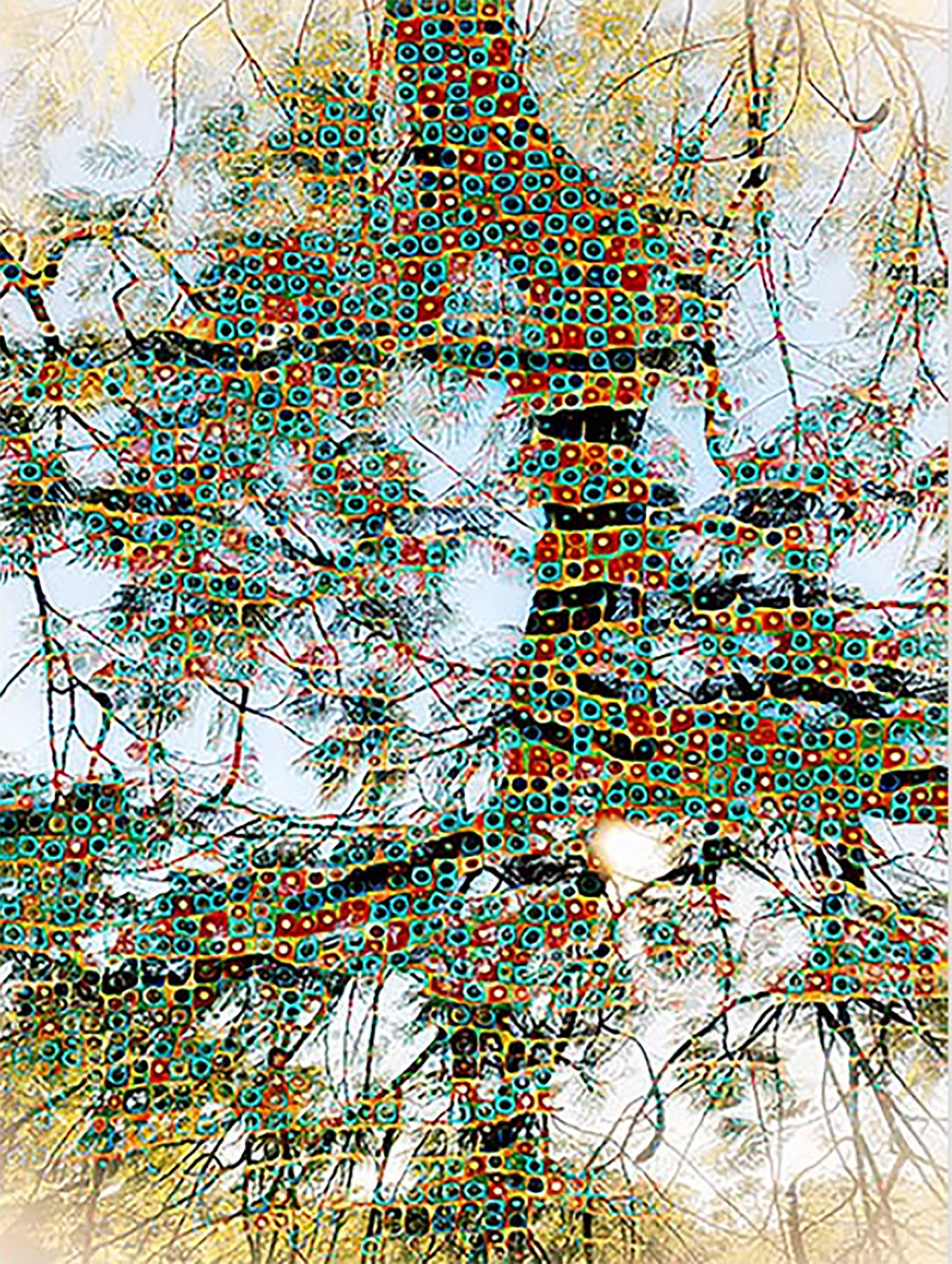
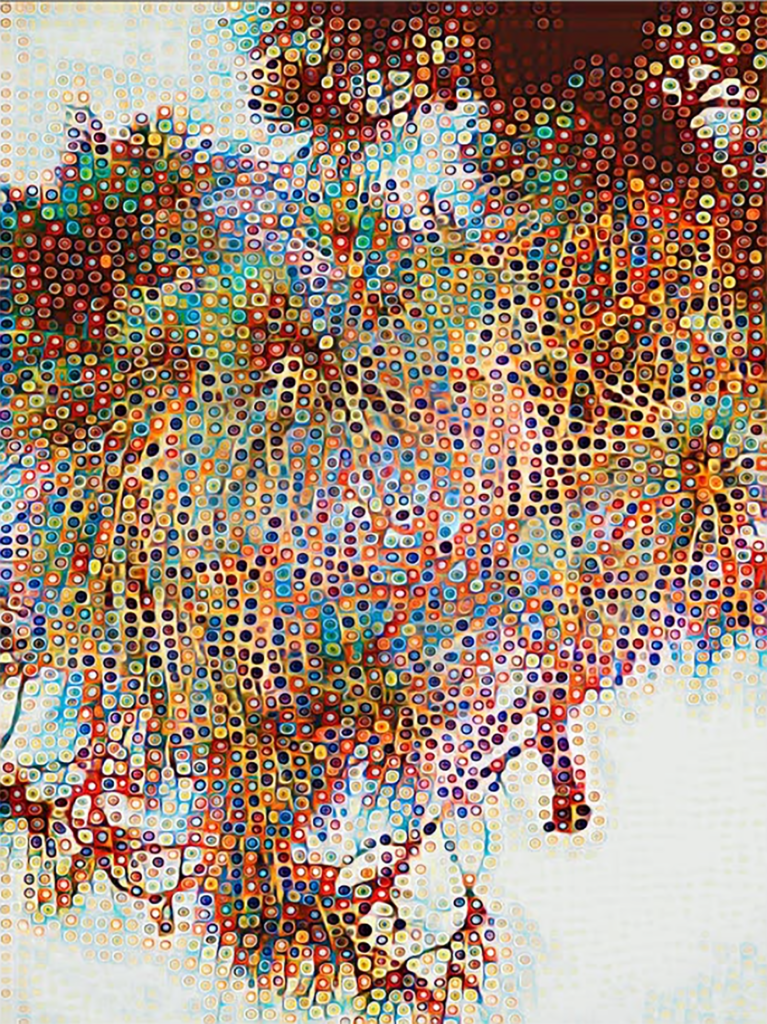
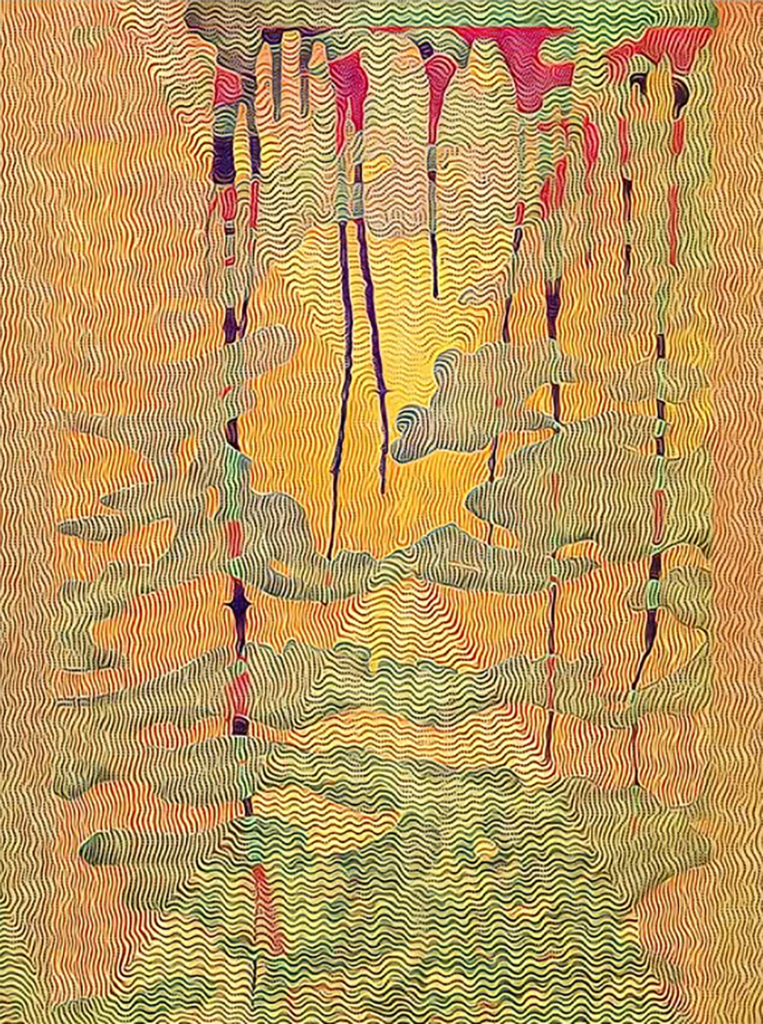
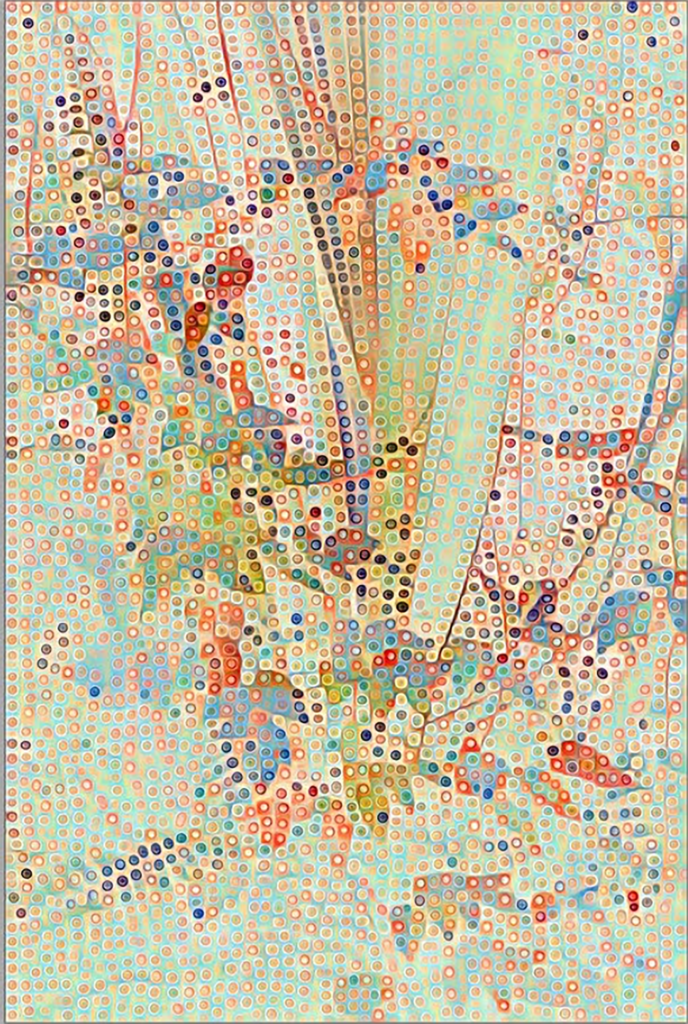
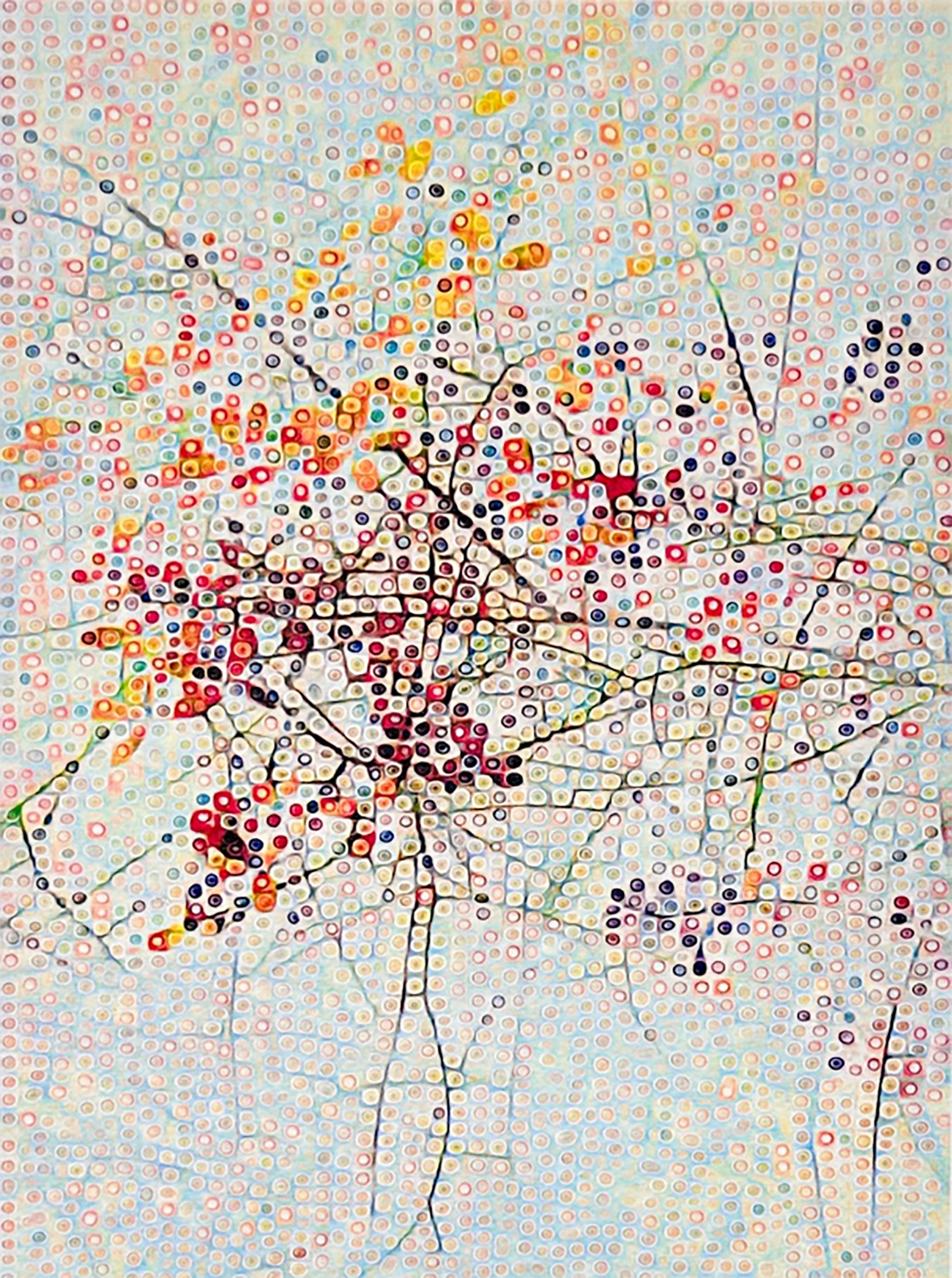
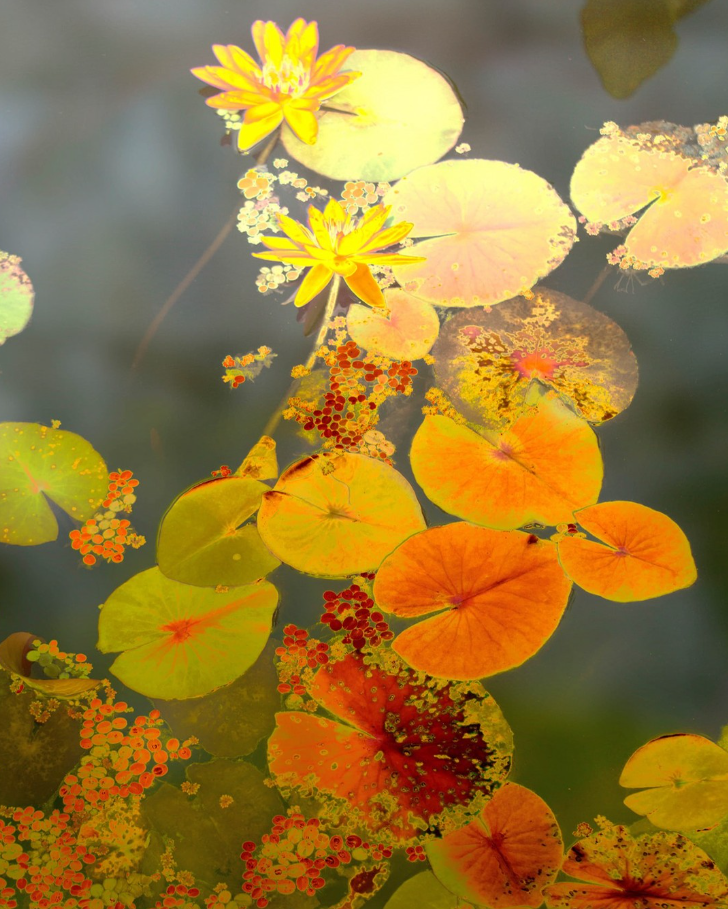
While the heritage of minimalism can be seen in Braun’s work, one is rather struck by the profound joy that explodes out of many of her pieces, and particularly, in recent years, her willingness to embrace exuberant color. She has indeed moved into her own territory, even as she continues to model pattern, restraint and clarity. Something decidedly new has emerged, something distinctly Braun, that offers a beckoning, often luminous glimpse at hidden worlds layered beneath the surface, so that what the lens sees, what the eye perceives, and what the spirit recognizes align in beautiful, sometimes astonishing ways.
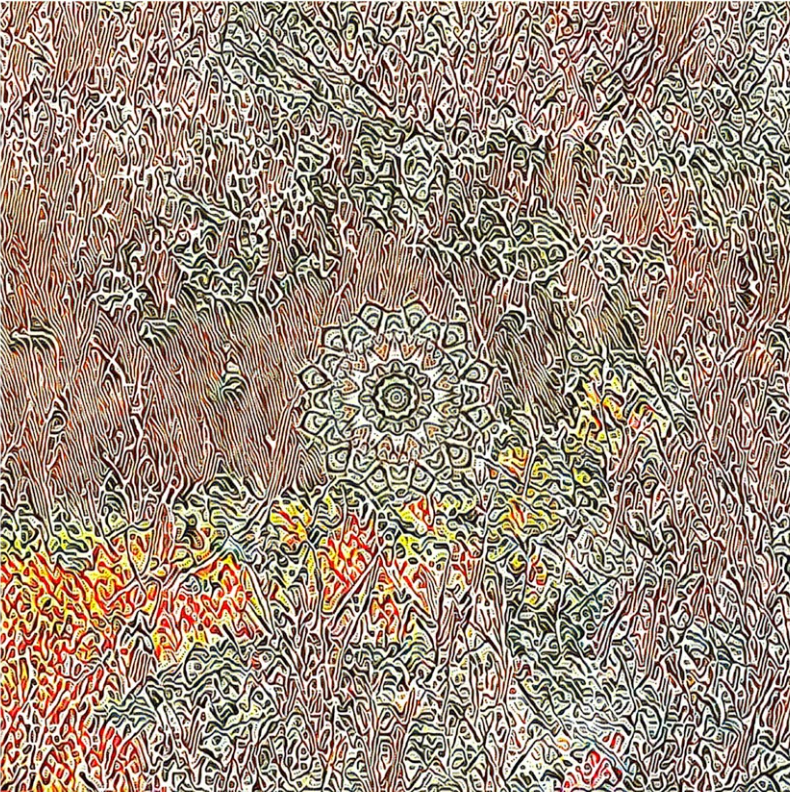
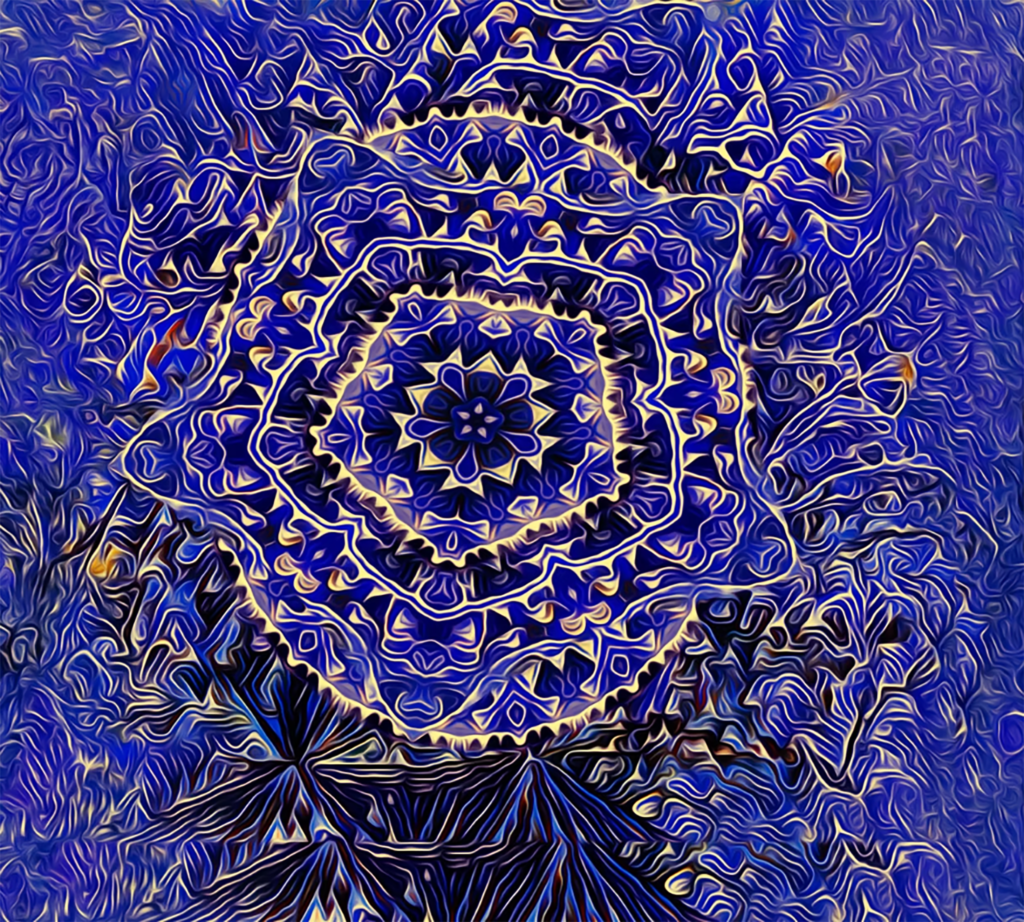
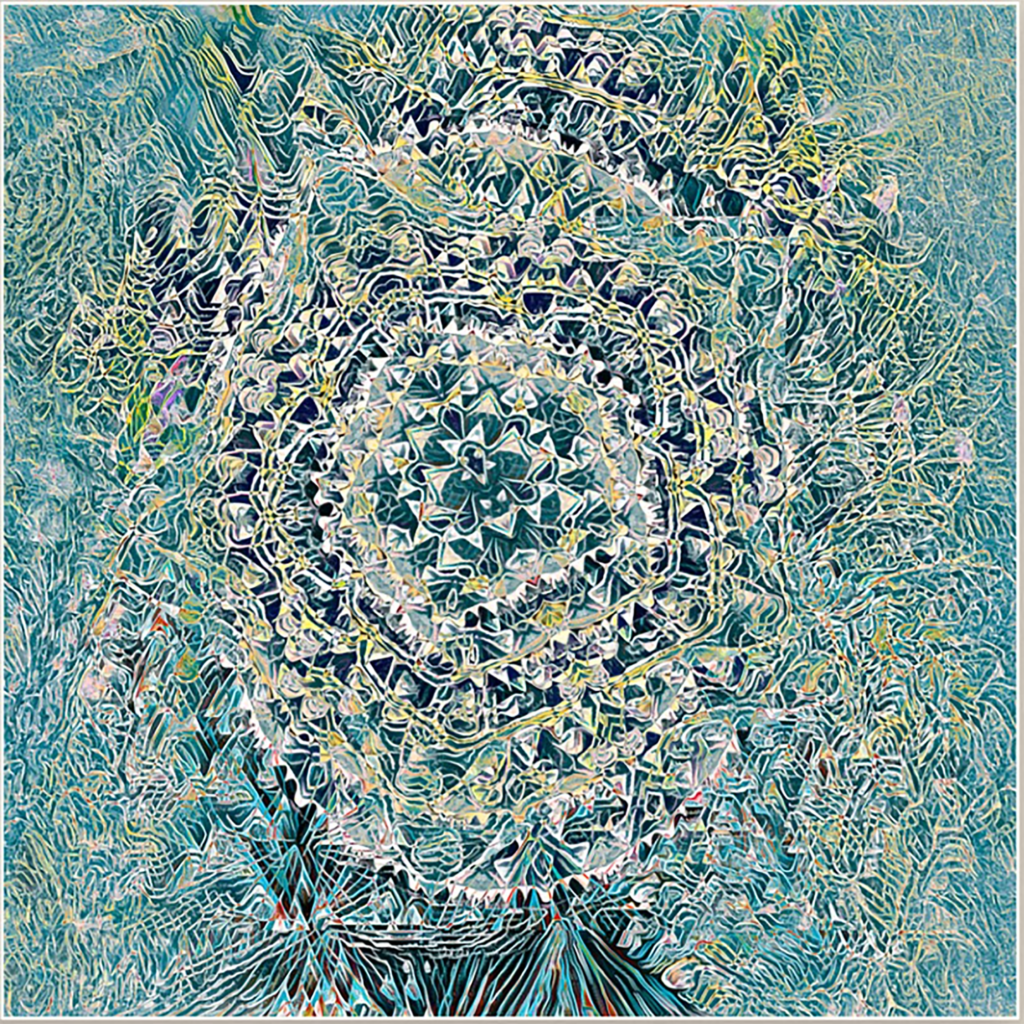
Braun challenges us to look deeper, into the patterns that form the foundation of the very cosmos and all creation, into Fibonacci spirals and mandalas, and one can see hints in her work of her travels to India, in the tranquil quality of her pieces, a great storing up of patience garnered by decades of meditative practice.
One sees the influence of her spiritual teacher, an enigmatic figure with whom she has been associated with for over 50 years, who also went with her to India, deeply shaping her perspective on life, art, success, and recognition.
“Through meditation, I stepped away from art entirely for more than a decade,” Braun says. “When I returned to painting, the work was different—less driven by ego, more grounded and patient.”
She remains low-key and non-competitive to this day: creating the work is reward enough. For her outstanding work as an artist, however, Naples Noteworthy is pleased to award Lynda Fay Braun with a Lifetime Achievement Award.
Digital Practice, Analog Sensibility
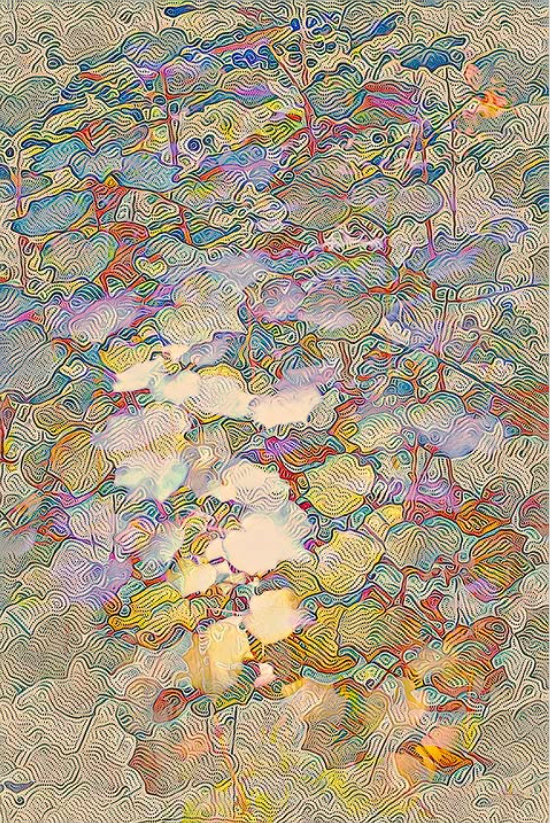
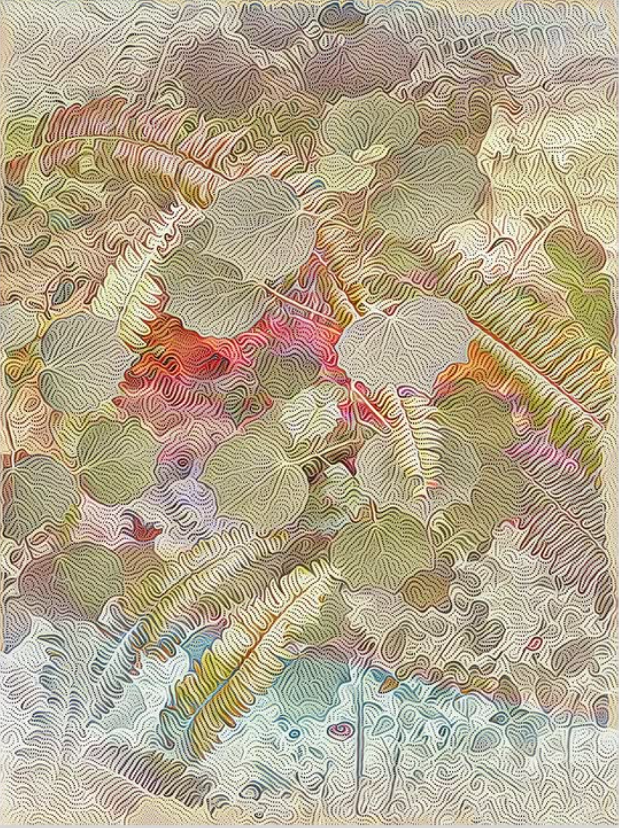
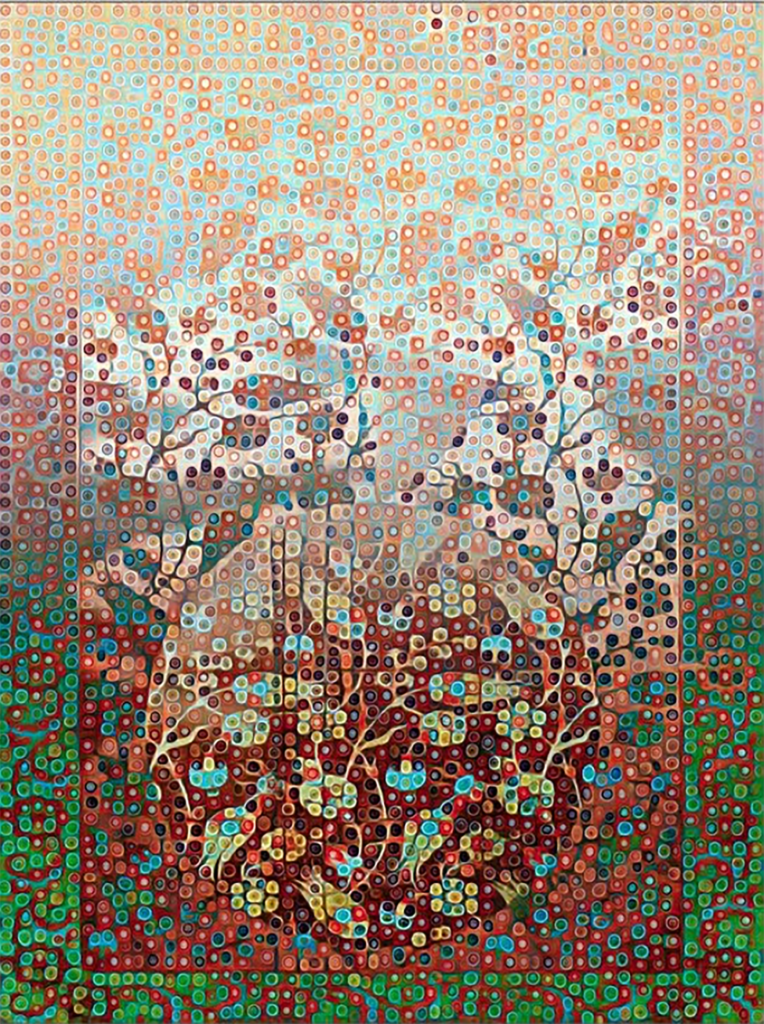
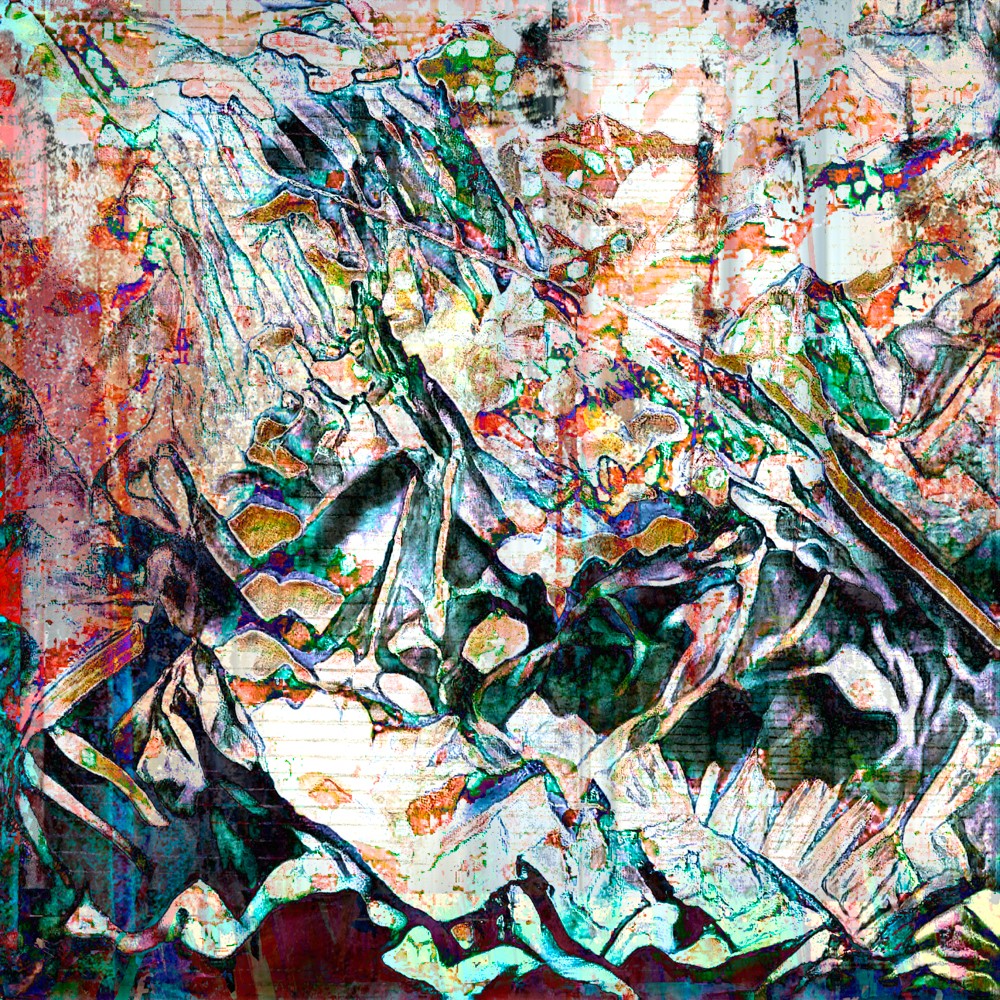
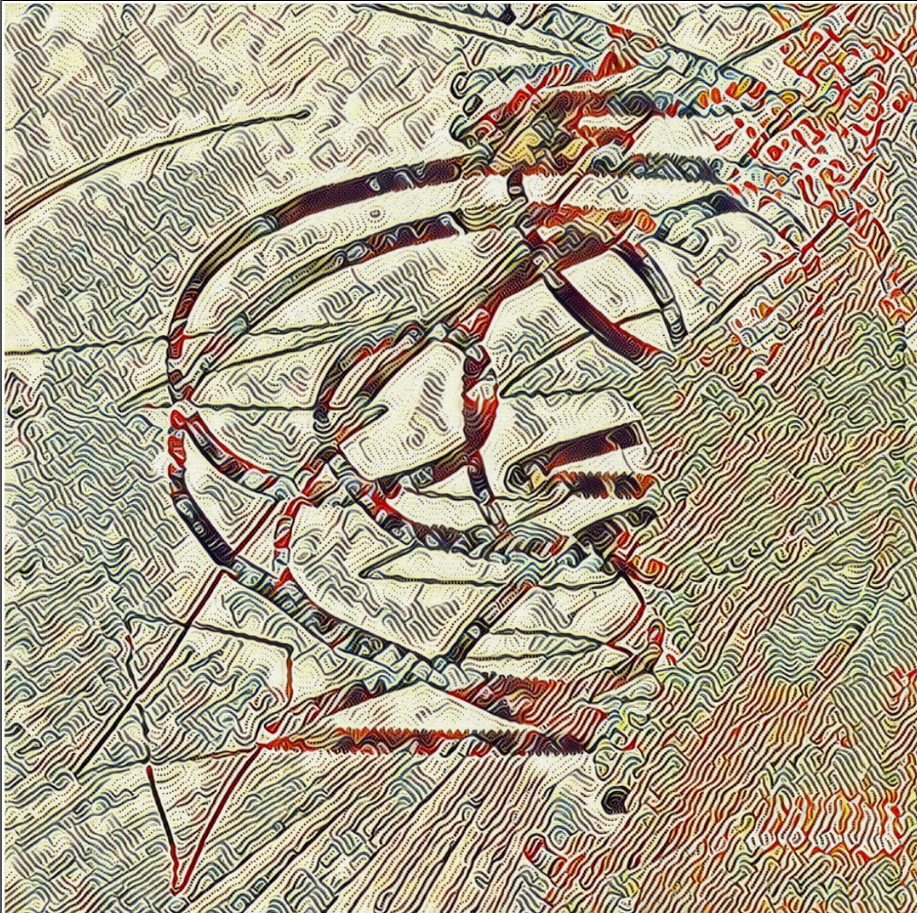
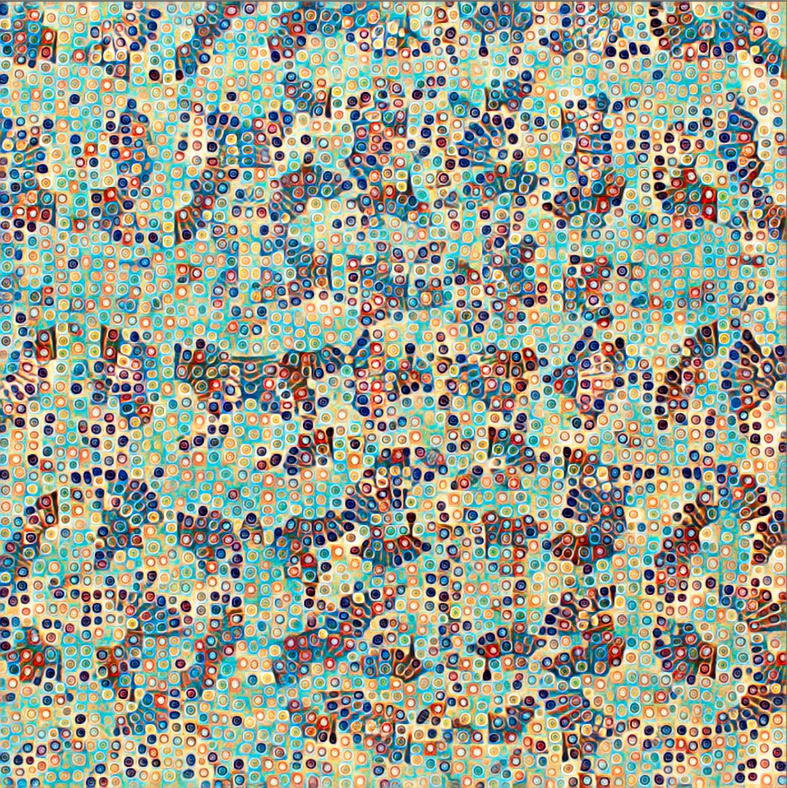
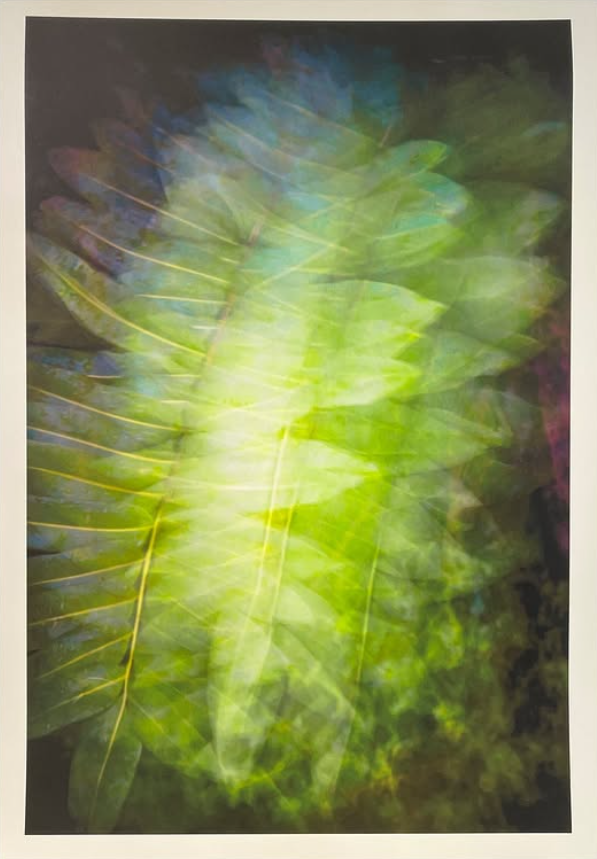
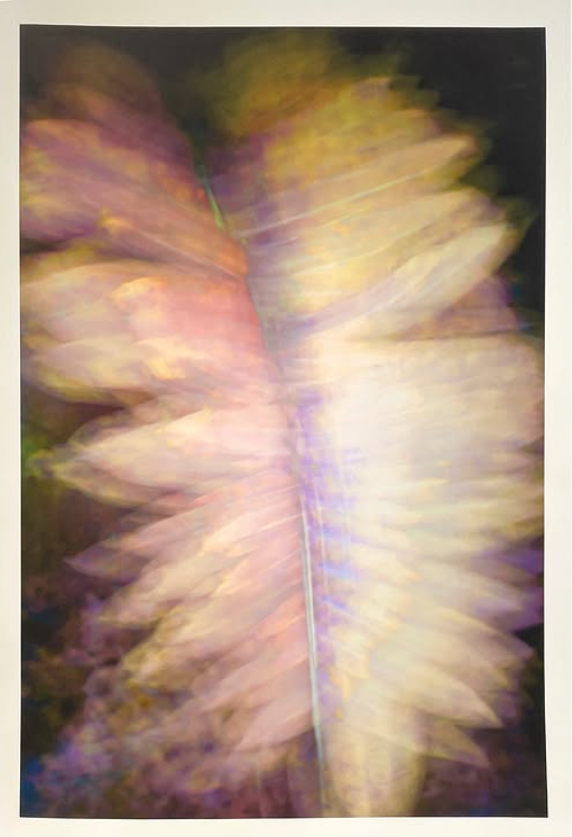
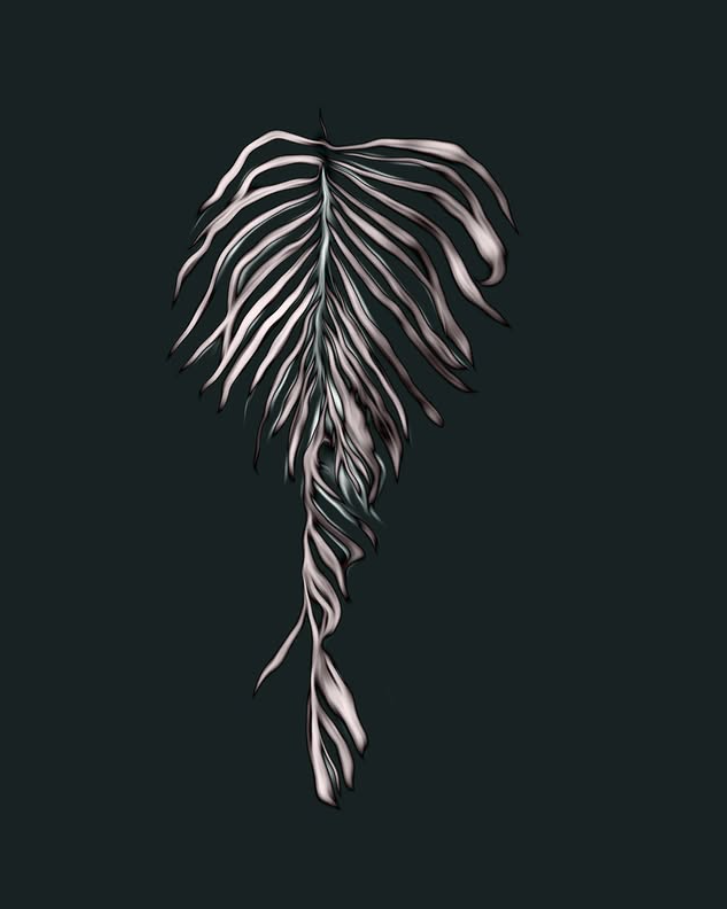
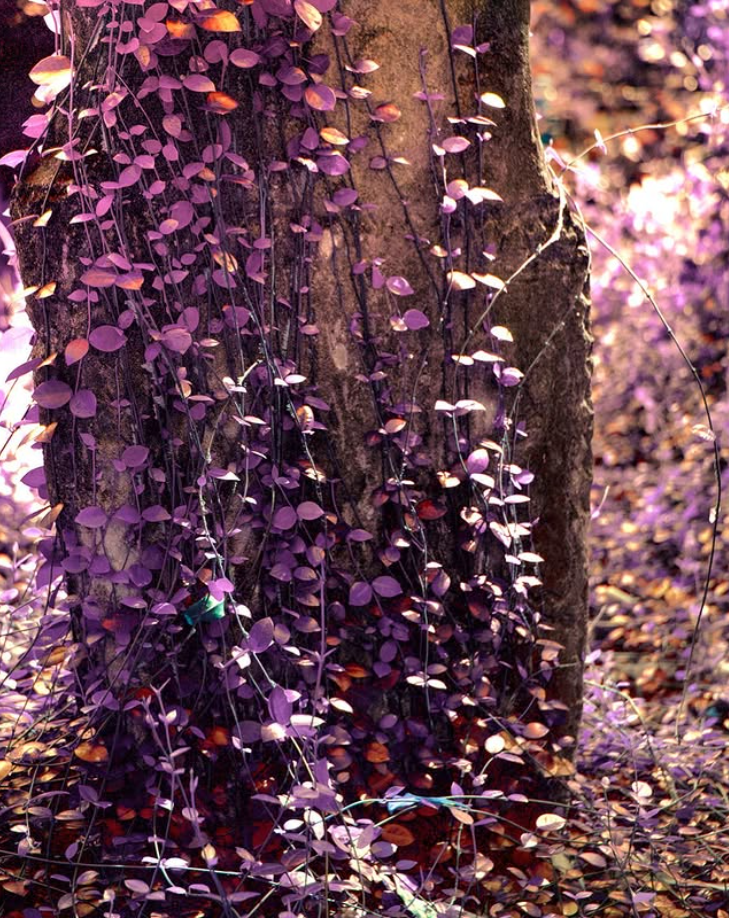
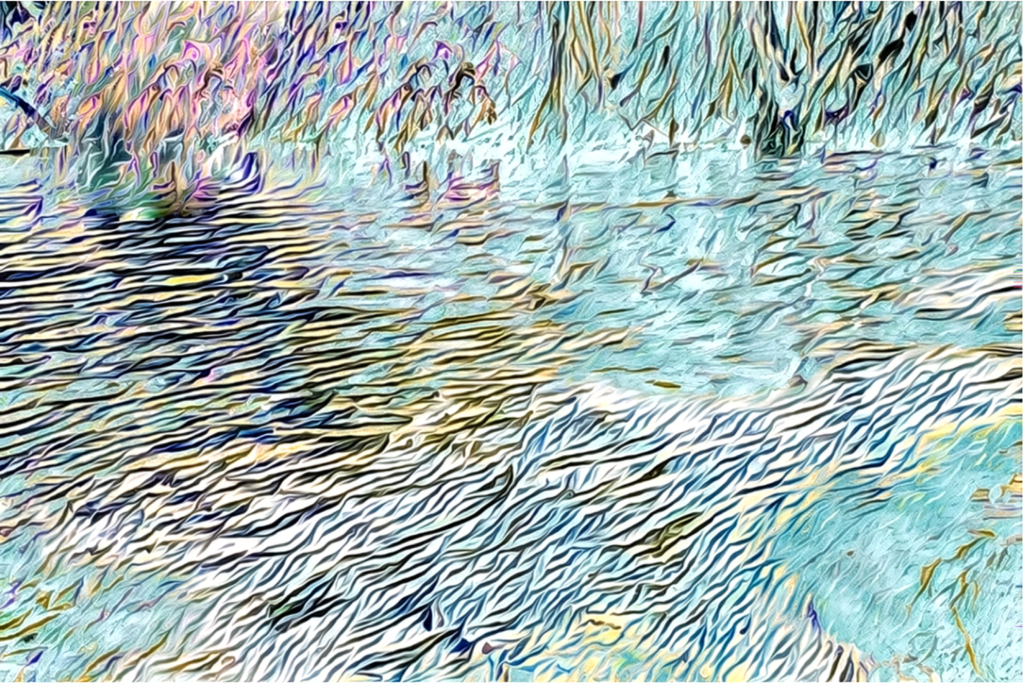
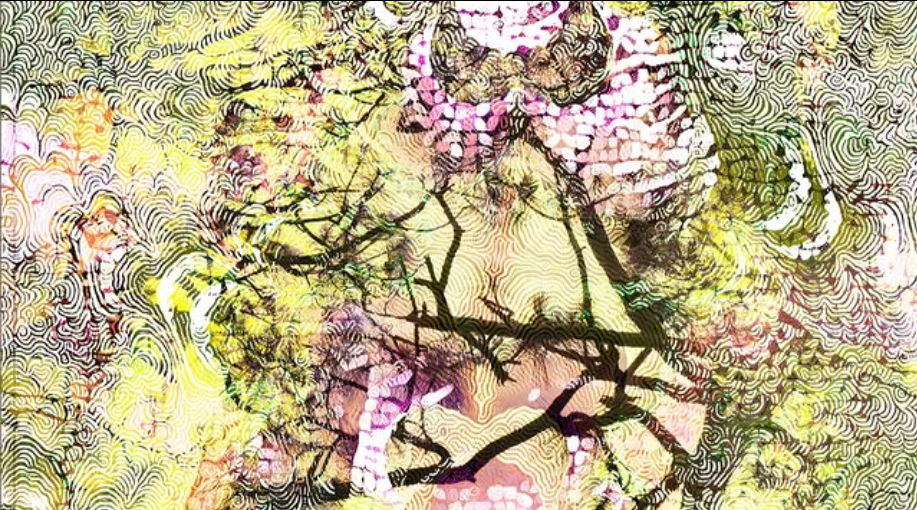
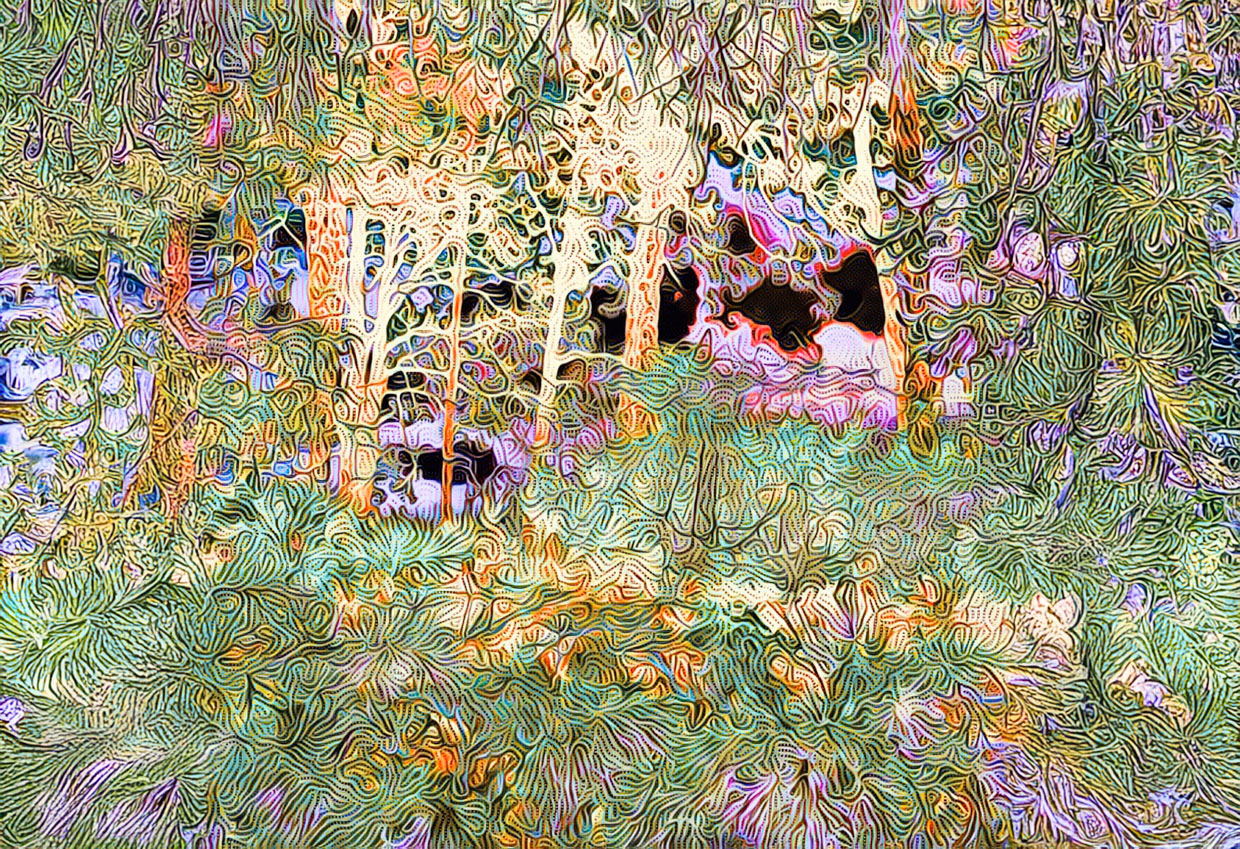
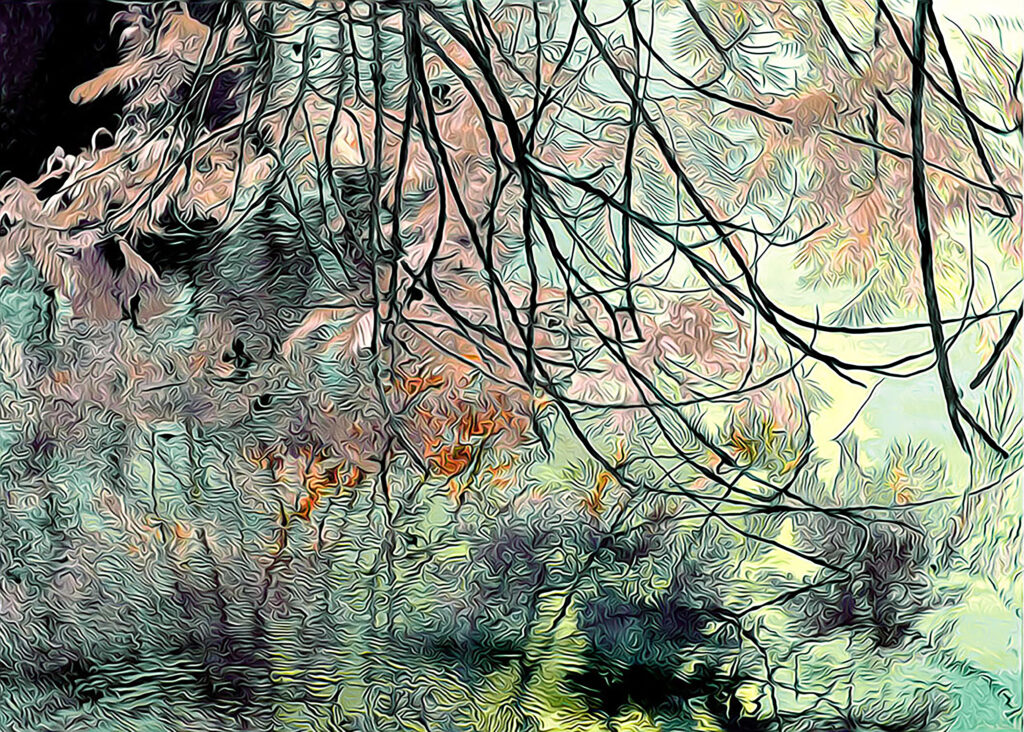
Braun’s process is a measured dialogue among the camera, digital programs, unconventional substrates, and her own instinct for space. She prints on cardboard, antique lithography paper, and even glass. She works only in natural daylight. Silence is a requirement—music feels like an outside influence, and Braun wants to be led only by what she sees. Digital experimentation — moving between apps, adjusting transparencies, pushing color, layering interpretations — becomes her version of the brushstroke.
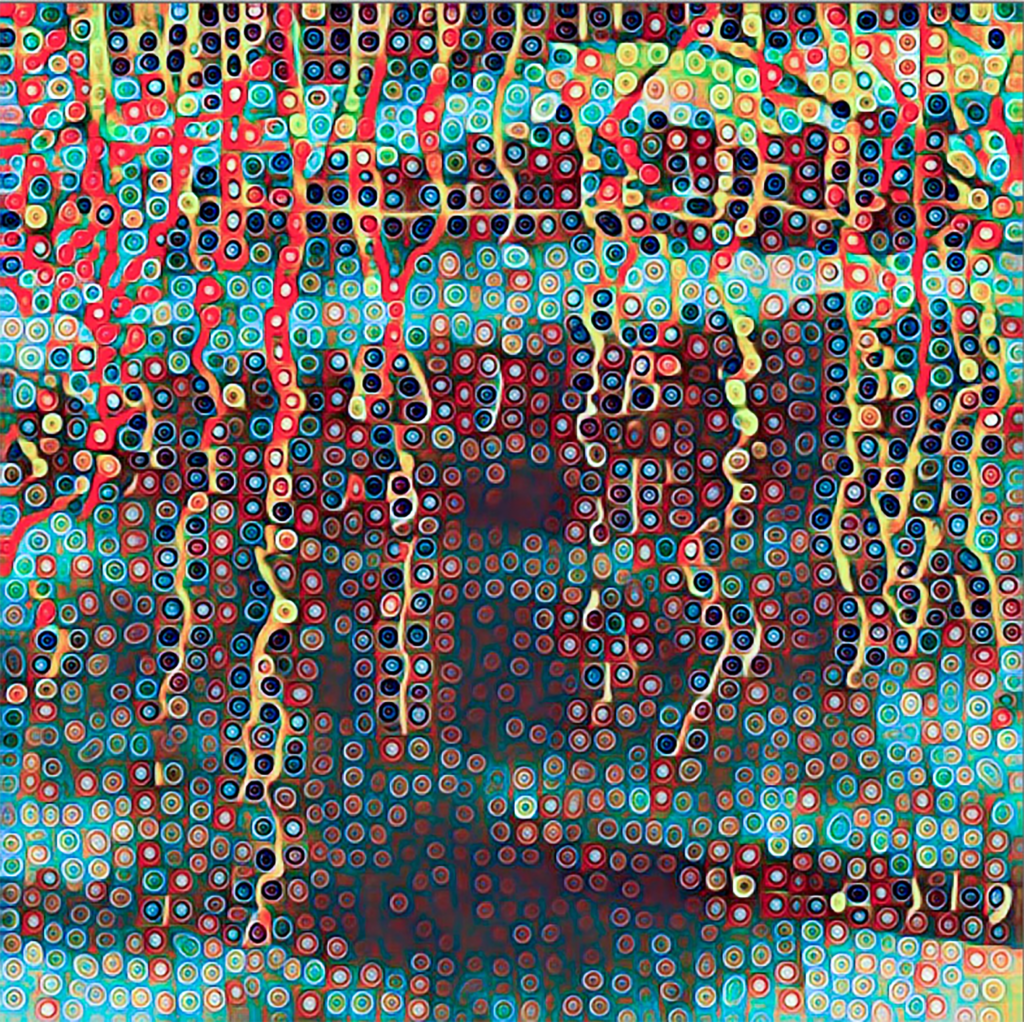
“Nature, the phone app, the computer, the printer and I all participate in a dialogue,” Braun explains. “I am using AI-assisted apps. These are different than AI-generated images. The difference is that when AI generates an image, it is from prompts. The photograph becomes merely a reference or disappears altogether. But when AI is used as an extension of the photographic process, the original image remains the foundation. In that sense, it is no different from the long evolution of the darkroom into the digital workspace. Not unlike cloning, dodging, burning, compositing, texture, and lens manipulation—all viewed at one time with suspicion. Yet each became accepted as part of the photographer’s vocabulary because the image still began with an encounter between the artist and the world. Used this way, AI doesn’t replace the photograph—it extends the artist’s hand. The authorship remains rooted in what was seen, felt and captured, rather than invented from nothing. The original photograph remains the foundation. In that sense, AI is no different from the evolution from darkroom techniques to digital editing. The image still begins with my encounter with the world.”
Nature as Source, Structure, and Spirit
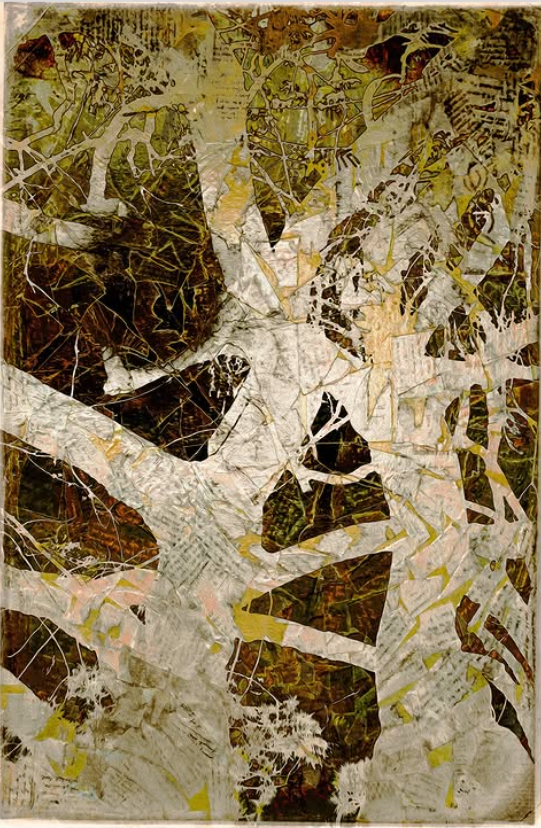
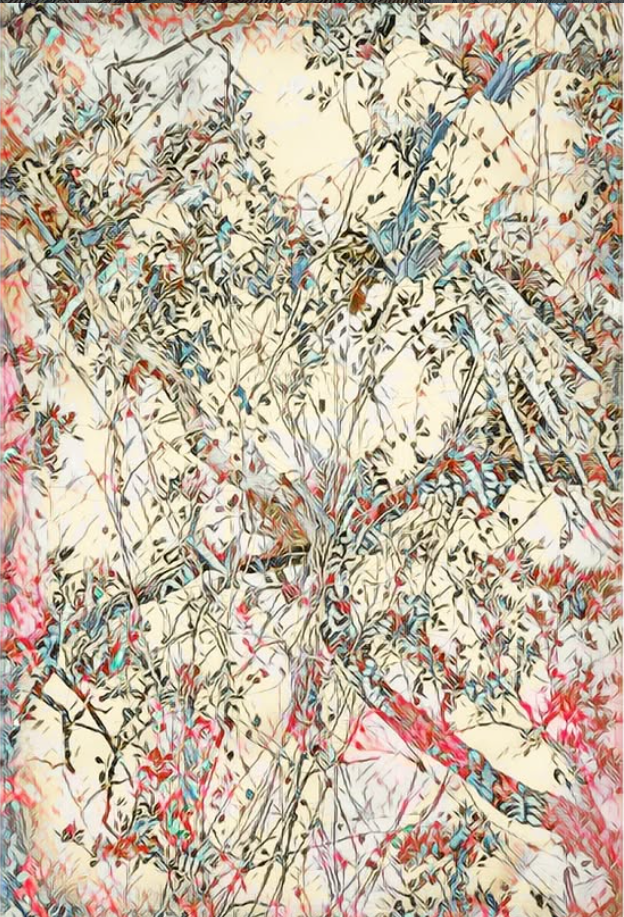
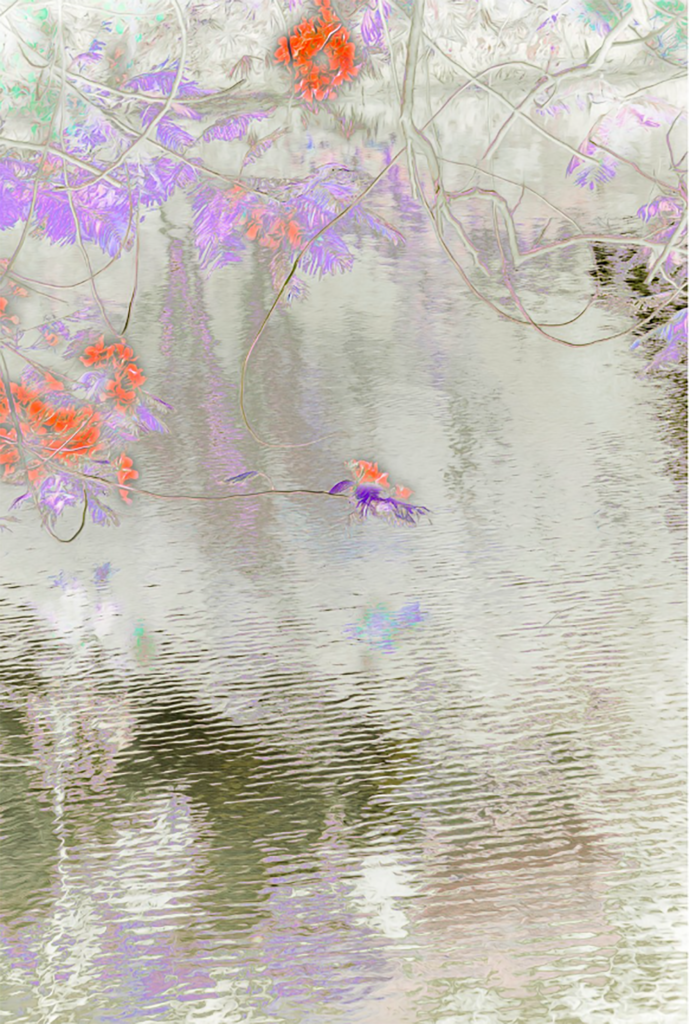
Braun’s art is inseparable from nature, not as scenery but as structural intelligence. She finds “holy symmetry” in chaos — in tangled branches, in storm debris, in the intricate forms that survive disruption. After Hurricane Irma, she walked her ravaged neighborhood searching for beauty amid destruction. Later, during the pandemic, isolated hikes through wetlands revealed a new visual vocabulary that eventually became her Entanglement series: work that exposes the hidden logic inside disorder, the rhythm within density, the coherence behind complexity.
Her connection to nature was strengthened when she decided to pursue an additional degree in Horticulture, becoming a national curator for the Morse House — the home of Samuel F. B. Morse, inventor of the telegraph, after whom Morse Code is named — in Locust Grove, New York, with grounds of over 350 acres of gardens and woods. Following the original plans and journals of his gardeners, Braun recreated the gardens of the mansion from bare ground to a fully restored property as initially envisioned and maintained, which is open to the public for visitation.

Her spiritual life — decades of meditation, study, and internal excavation — threads quietly through the work, surfacing not as overt symbolism but as a way of seeing. Braun often describes her creative process as a dialogue with something larger, a state of clarity in which perception sharpens and meaning reveals itself. As she puts it, in this quote by Tim Keller, “If you point the camera at God, you will find God looking back at you.” If the focus is reverent, the image carries that reverence. The same reciprocity guides her art: when she looks deeply into the natural world — into tangled branches, storm debris, wetlands, or the geometry hidden within growth — something essential looks back. That recognition becomes the architecture of her abstractions.
The Dialogue Between Artist and World
Braun’s art is exhibited in hotels around the globe — including Ritz‑Carlton properties and local venues such as the AC Hotel in downtown Naples — where her minimalist, nature‑driven compositions bring unexpected nuance into public spaces. Commissions come not because she aims for an audience but because viewers feel a connection that surprises them. One guest, notoriously uninterested in hotel art, wrote to say she loved a piece so much she wanted a larger one for her home. For Braun, such moments matter deeply.
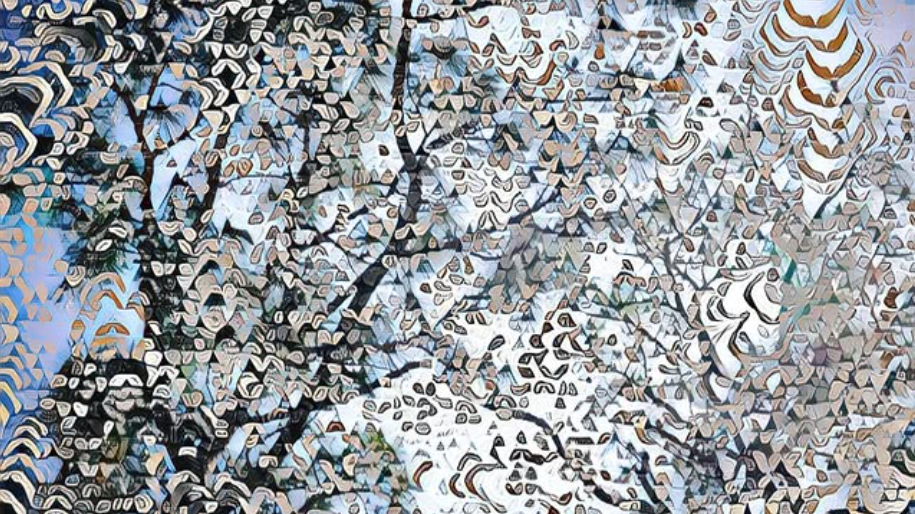
Yet the work remains fundamentally personal. She clears her schedule before she begins. She waits for daylight. She lets the image lead. She values the “aha” moments when digital tools reveal something she did not consciously intend. She treats technology not as a shortcut but as a partner in a larger dialogue.
What Comes Next
Looking forward, Braun’s path returns her to Santa Fe — a place whose light and creative energy have shaped her for decades. She plans to reconnect with the gallery that has long represented her and to transition older works out of inventory to make room for new explorations on paper. The art market may be changing, but Braun’s sensibility remains unwavering: rooted in discipline, guided by nature, and constantly seeking the line between visibility and mystery.
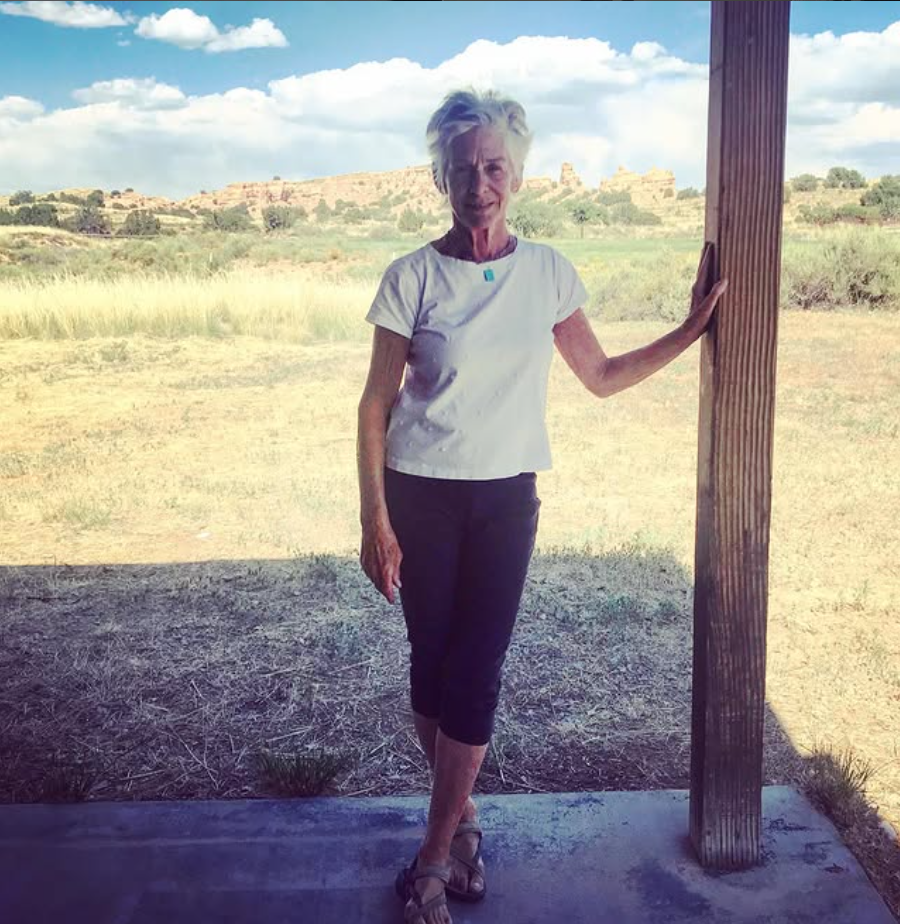
And beyond her formal practice, she restores old photographs — an act that mirrors her artistic philosophy. She brings clarity out of damage, coherence out of fading, and meaning out of what time has altered.
A Practice of Seeing
Ultimately, Braun’s art exists at the intersection of meditation, observation, and experimentation. Whether she is photographing storm‑torn branches or transforming digital patterns into layered abstractions, her work always circles the same terrain: the search for hidden order, the reverence for the natural world, and the belief that what we see is only the beginning of what is there.
Acquisitions
Braun’s work can be viewed and acquired through her Facebook page, her Instagram page, or her website at lyndafaybraun.com.


This feature was written in collaboration with the mighty writer, sage, and supercomputer, Copilot.
Gallery



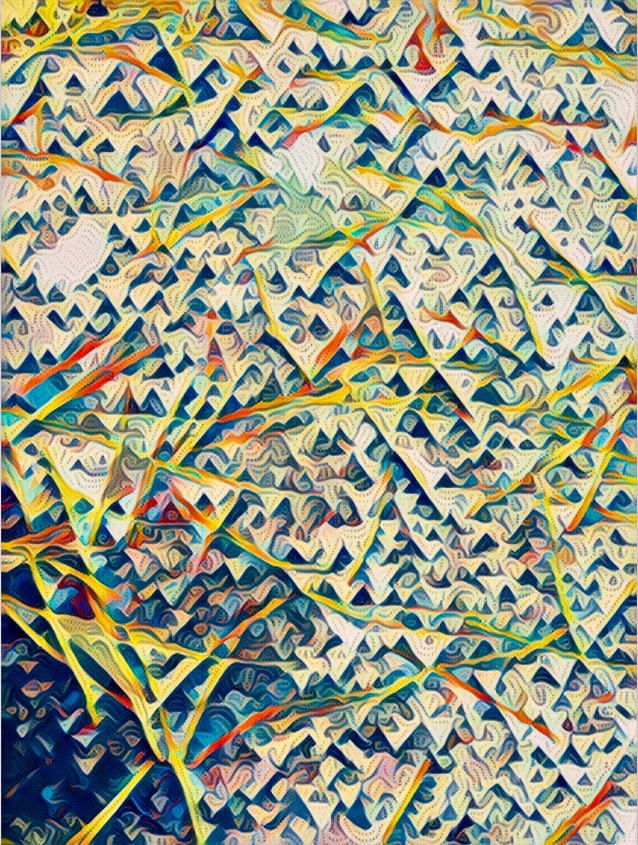
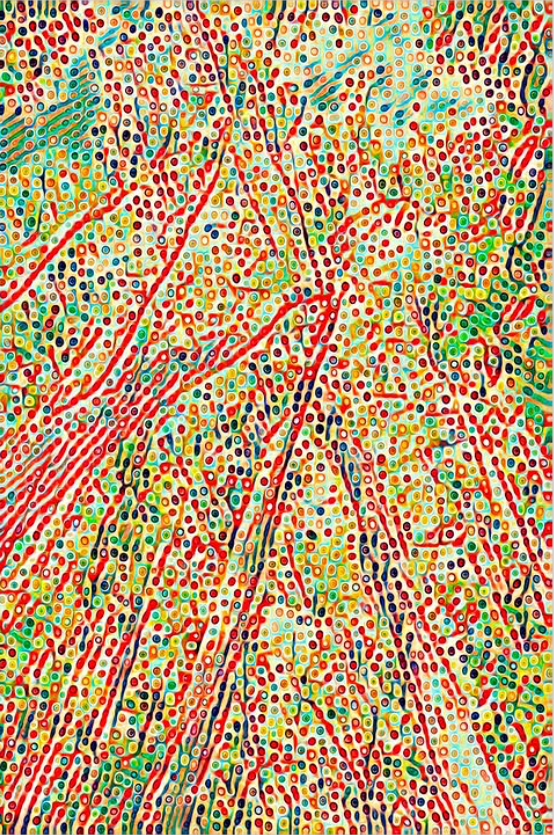
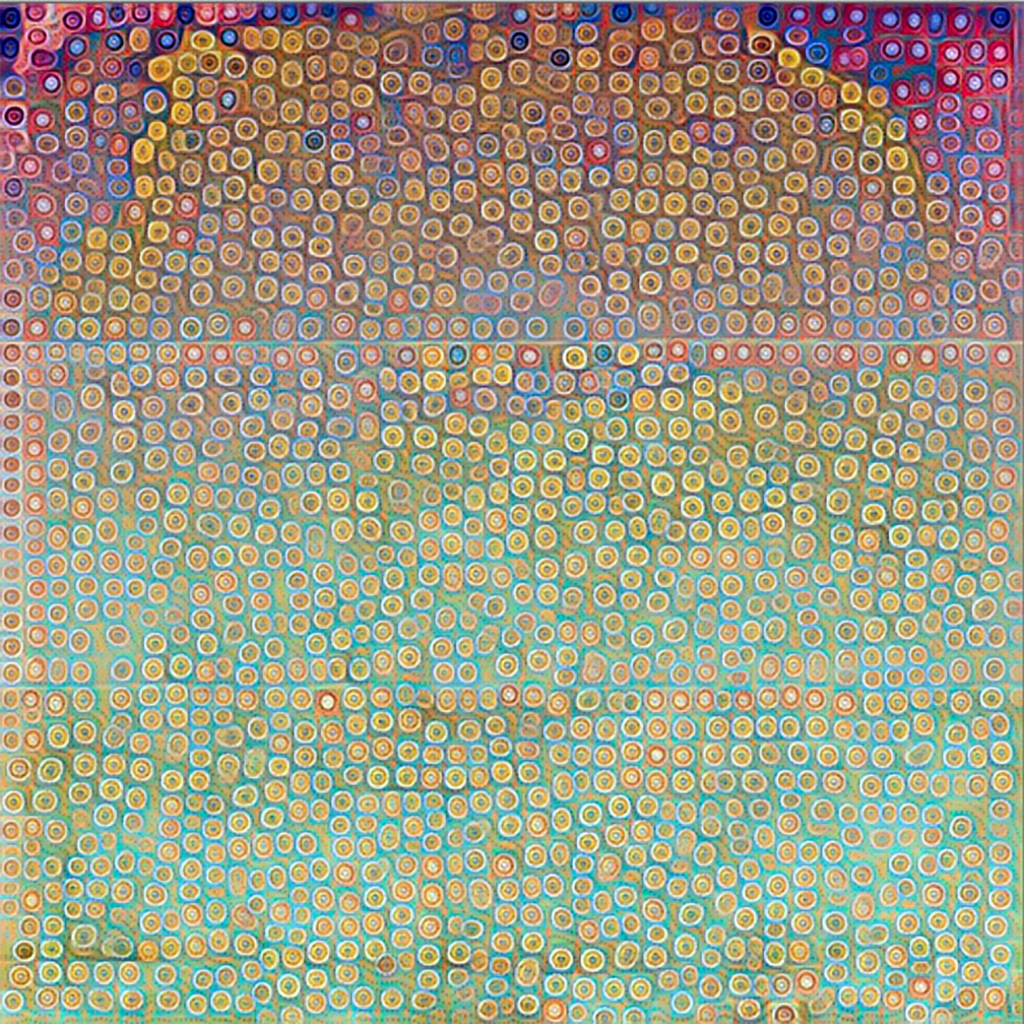
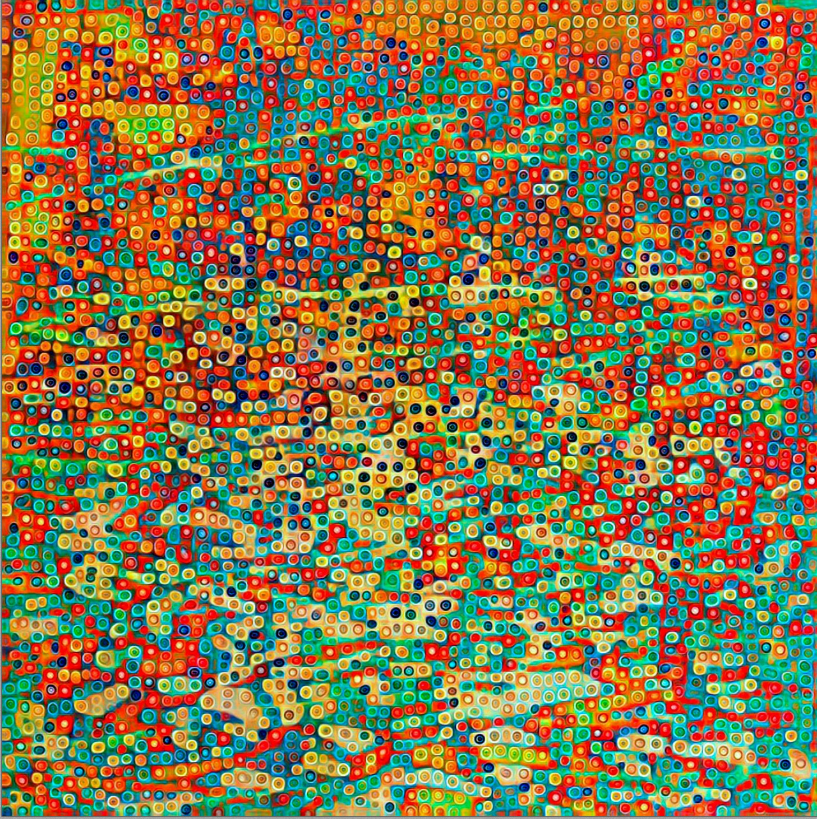
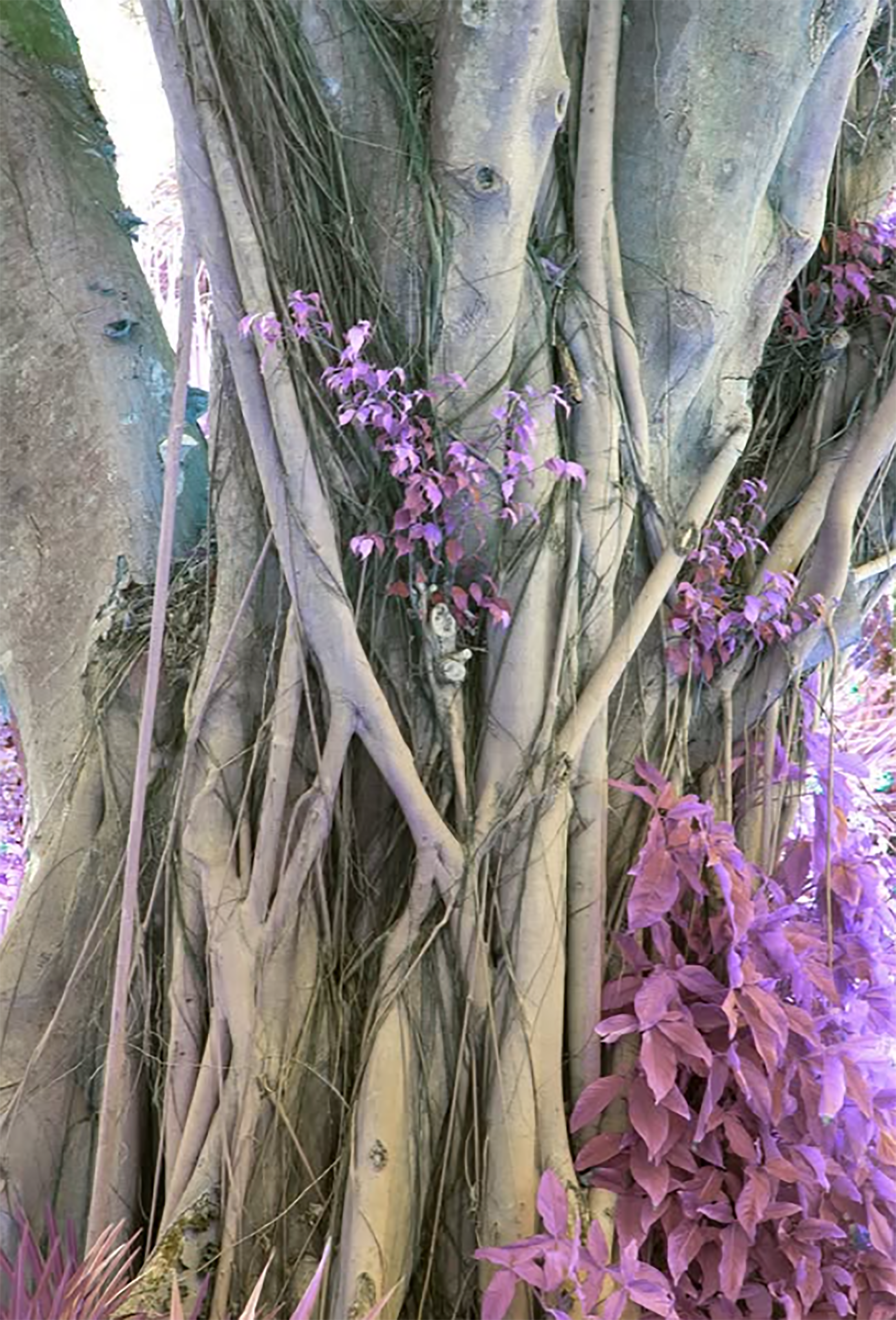
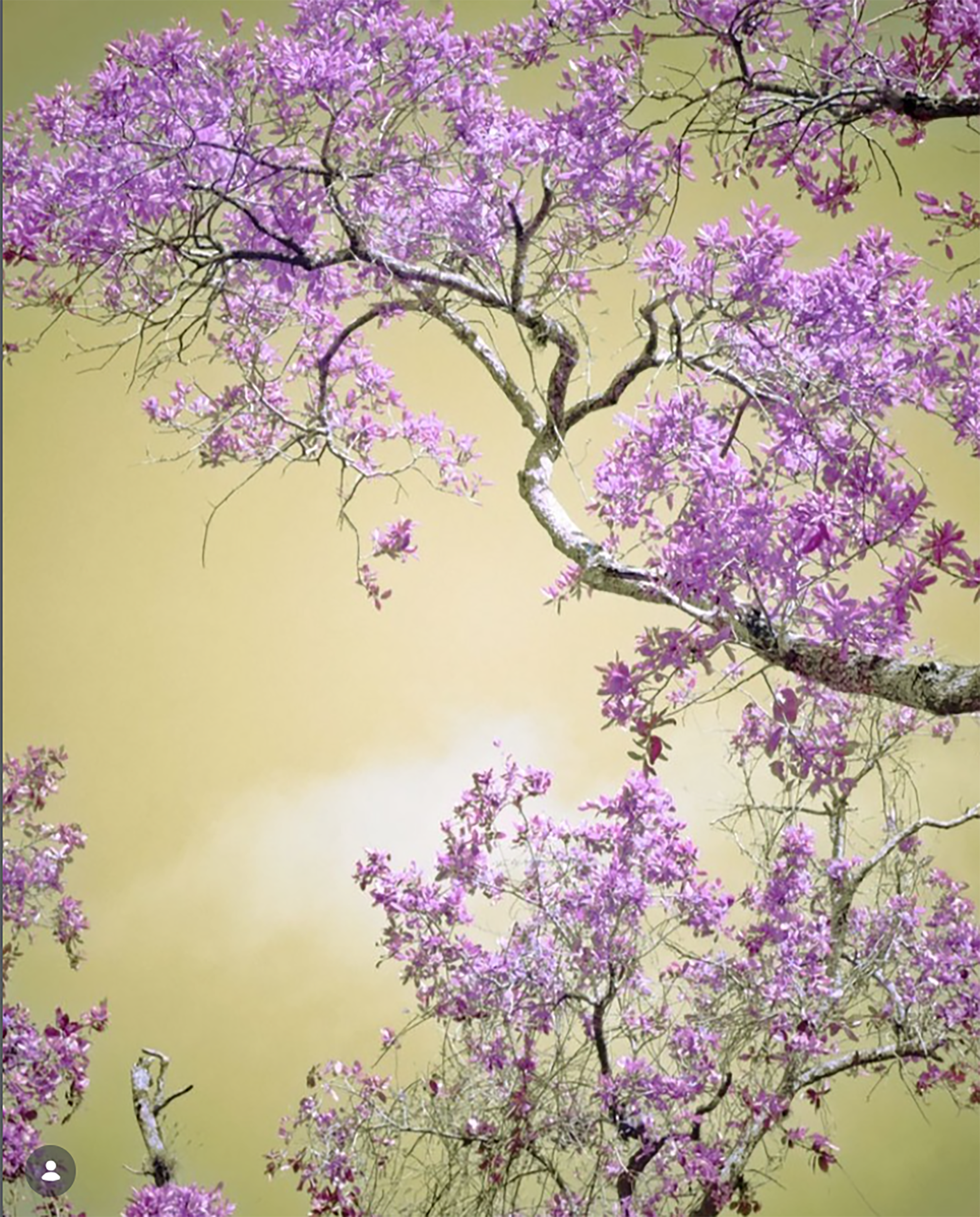
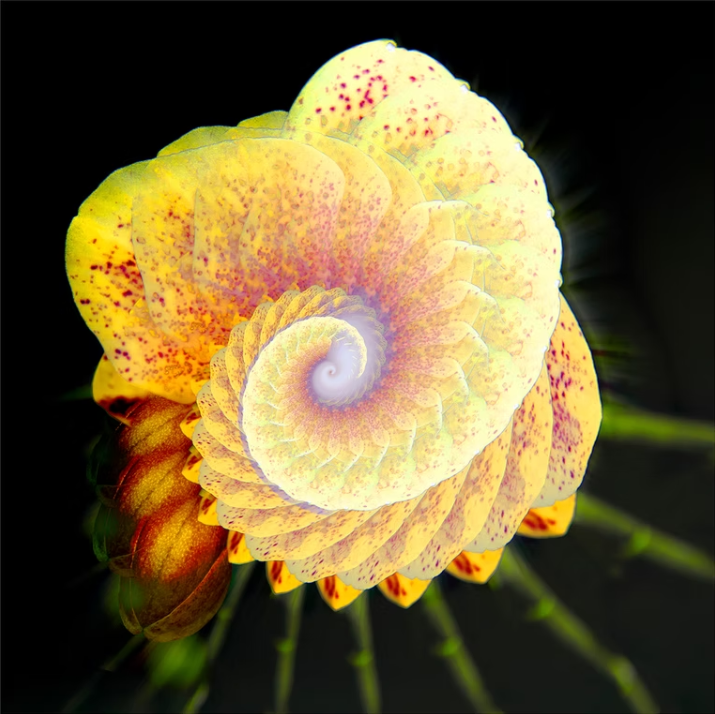
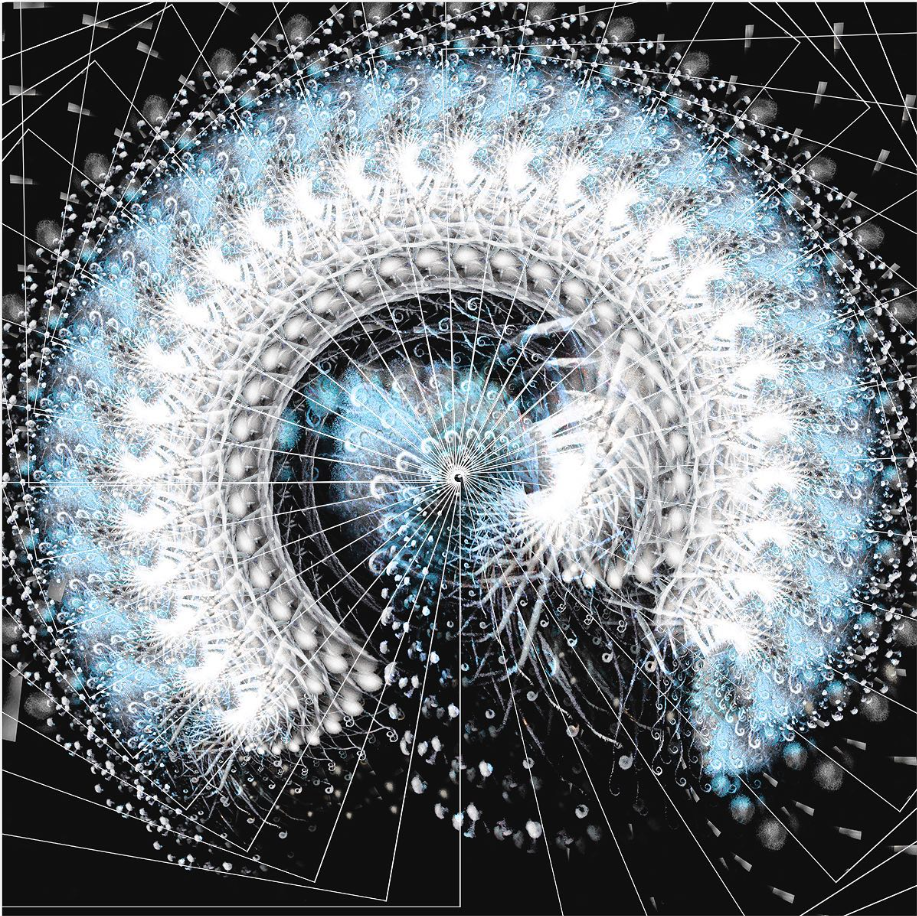

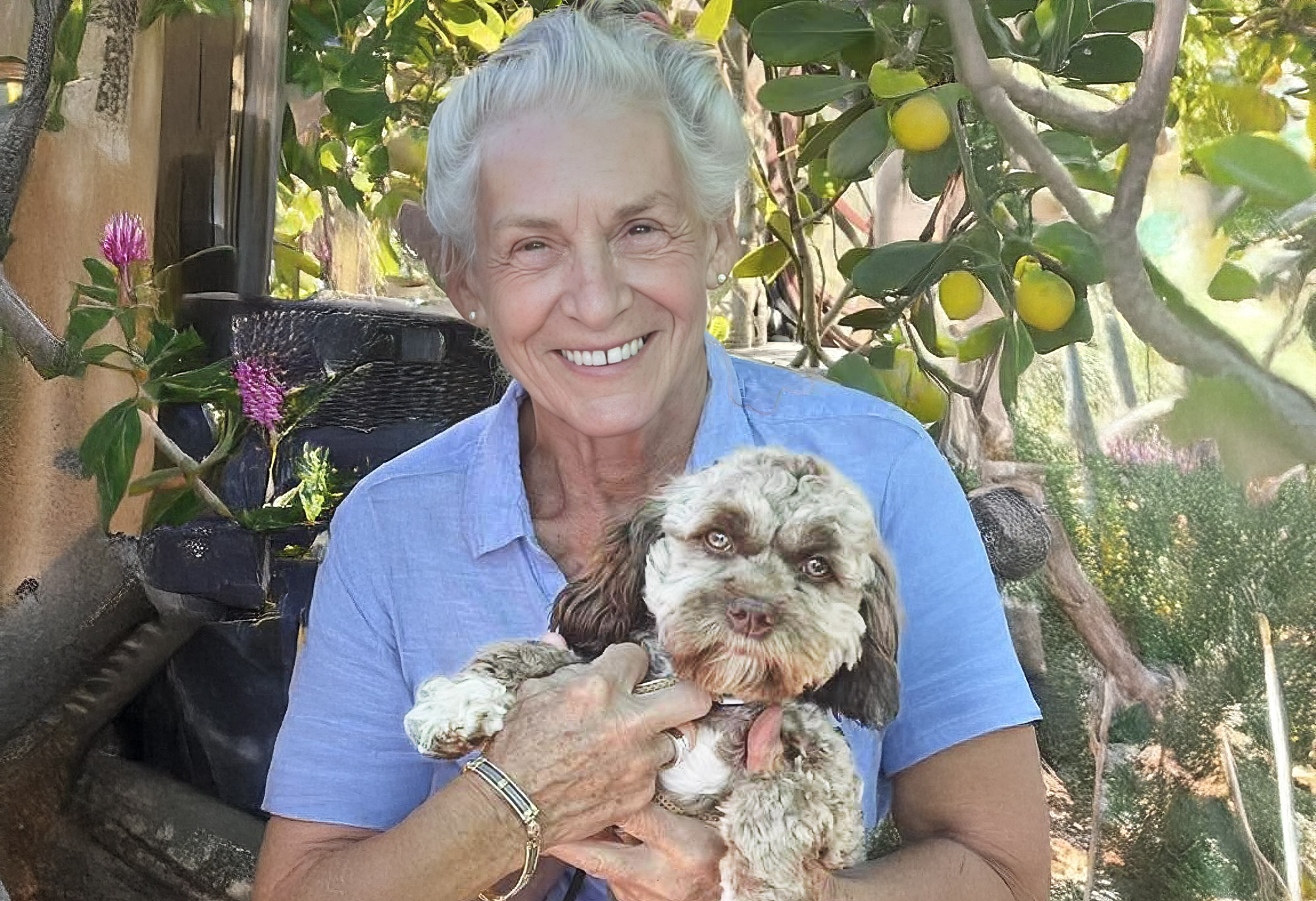
Until a few years ago, Braun rode horses, swam a mile daily, did Jazzercise, went dancing, and gardened for fun and relaxation. During the pandemic, she became more cautious, stepping away from many of those activities. She finds pleasure walking her two-year-old Cockapoo, Gigi, through the nature preserve where she lives in Naples, Florida. Mostly, though, her greatest pleasure is making art and just fooling around on the computer.
Extraordinary People


