
A camera is a curious thing. In the past, some Native Americans wouldn’t allow their image to be taken, because they believed the camera could capture their souls, stealing their identity and spiritual essence. Clearly, they believed there was power in a photograph, something to be taken seriously. When you discover the work of photographer and visual artist Michelle Tricca, you’re struck with a similar sense of awe and reverence for what has been captured in the moment. Unbridled joy, eye-shining innocence, a look of intense consideration: a camera in Tricca’s hand does indeed illuminate the very soul, in that precious instant revealing secrets which are perhaps otherwise invisible to the naked eye.
It’s really a kind of sorcery. Give me that camera and subject and you would not have the same result. No; but in Tricca’s hands, something quite interesting happens: life appears. The people she photographs are engaged; there is a presence to each image that immediately identifies it as a Tricca photograph.
Tricca will, of course, tell you that it’s not sorcery, but hard work and years of experience, and that sometimes it takes a village to get the shot you’re after. I’m sticking with my sorcery theory.
Bringing a photo to life is just part of what Tricca does. Once she gets you to really see the subject, she uses her art as activism.
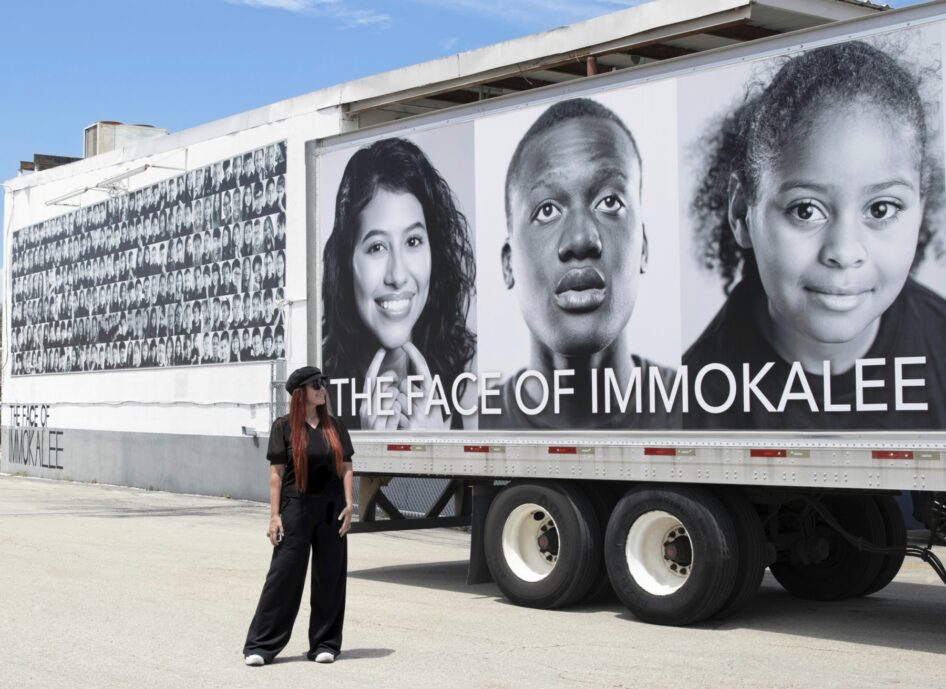
The Face Of Immokalee
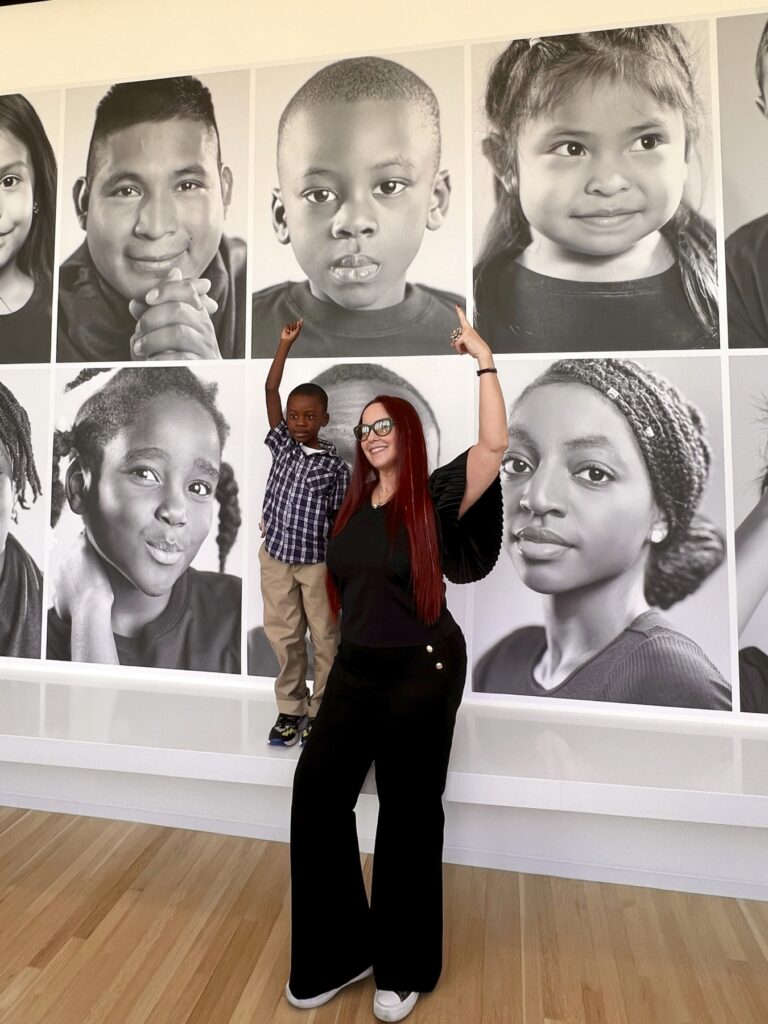
On a quiet stretch of Main Street in Immokalee, two building walls rise into view, each transformed into a monumental portrait. Twelve feet high and nine feet wide, the faces look out with a presence that is both intimate and commanding. They belong to the people of Immokalee—farmworkers, families, children—rendered in stark black-and-white by Tricca. For Tricca, these portraits are more than images. They are a bridge between worlds, a gesture of visibility in a county where wealth and hardship exist side by side, often without acknowledgment.
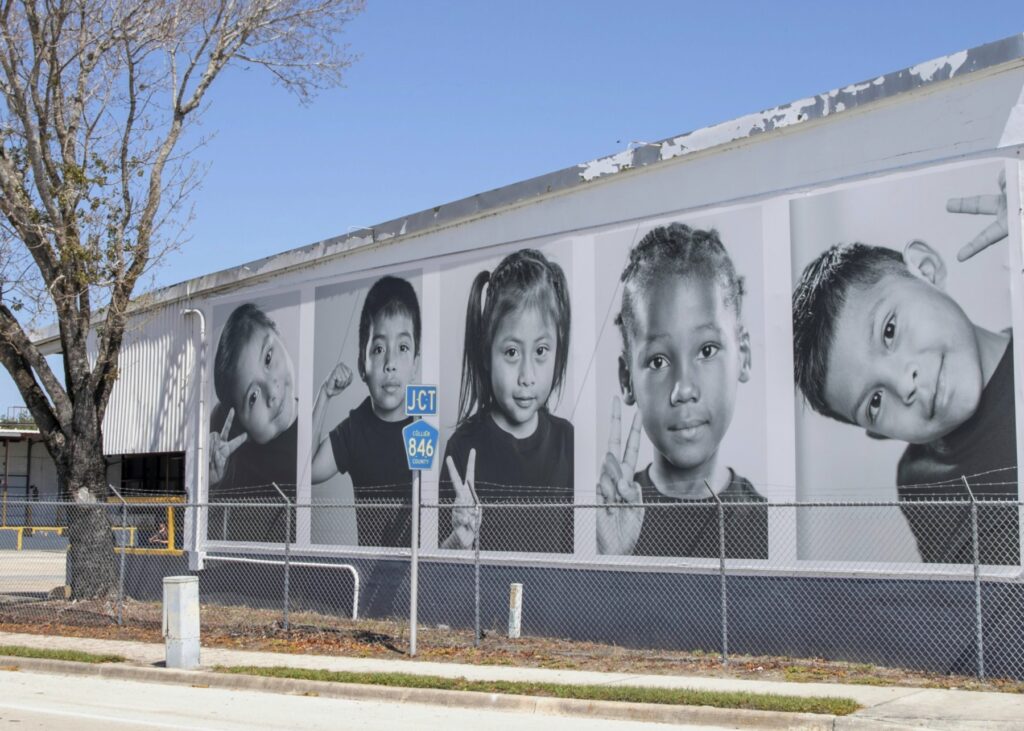
“I wanted the exhibit to be physically and metaphorically larger than life,” she says. “My artist brain sees Collier County’s homogenized walls as giant canvases. Immokalee is one of the most economically disadvantaged (migrant farmworker) communities, ironically located in one of the wealthiest counties in the United States. The intention of this project is to bridge the disparity between the two largely juxtaposed regions—through art.”
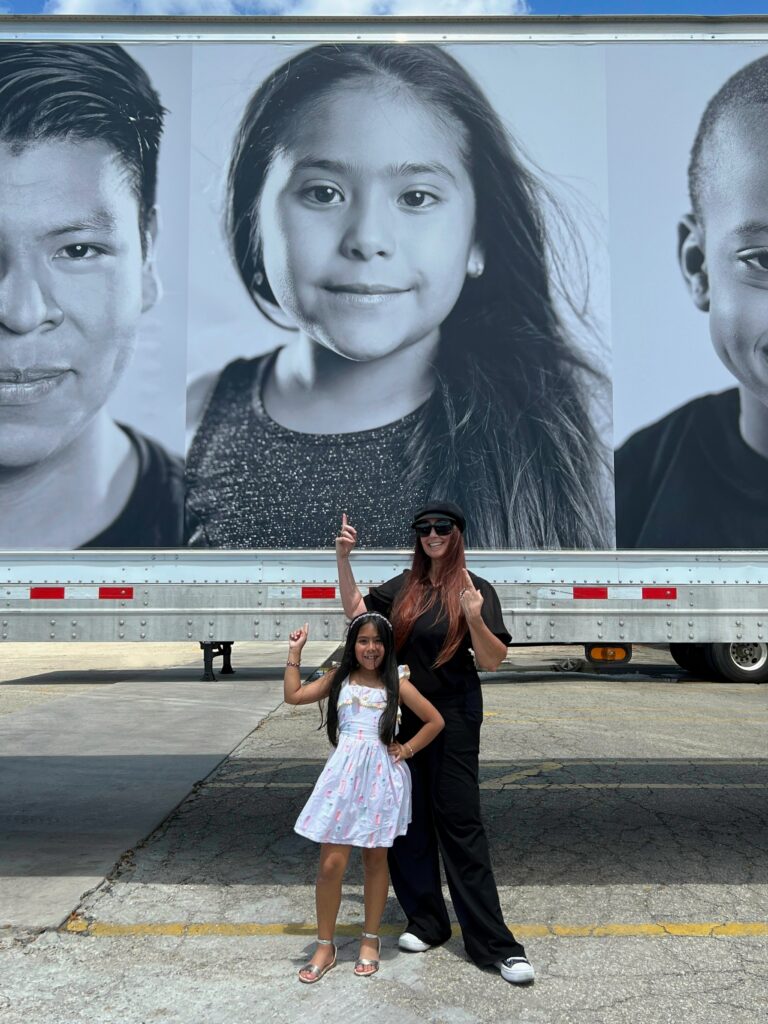
The project—The Face Of Immokalee—has become one of the region’s most celebrated public art installations. It has been on view since early 2023, expanded onto semi‑trailer trucks at Lipman Family Farms,* exhibited at The Baker Museum at Artis–Naples, and honored with a PBS documentary that won Best Florida Film at the 2023 Naples International Film Festival and earned an Emmy nomination the following year.

But to understand how Tricca arrived at this moment—an artist using her lens as a form of activism—you have to go back to the beginning.
Roots and Early Vision
Tricca was born in Dallas, Texas, the daughter of a second‑generation Italian‑American family with deep entrepreneurial roots. Her great‑grandfather and grandfather founded Tricca’s Italian Restaurant in Malden, Massachusetts, where her father and uncles grew up cooking.
Her childhood unfolded across several states—Texas, Pennsylvania, Michigan—before her family settled on Cape Cod. There, surrounded by beaches and New England culture, she developed the visual sensitivity that would later define her work.
“I’m a visual learner and have always been inspired and influenced by photographs,” she says. “I was always the one of my friends to bring the camera along to document our fun times.”
Her walls were covered in oversized fashion ads from W Magazine and black‑and‑white Bruce Weber photographs she salvaged from her job at Abercrombie & Fitch. Even then, she was studying faces, light, and the emotional charge of imagery.
The Darkroom Epiphany
Tricca entered Radford University intending to become a broadcast journalist. But a single analog black‑and‑white darkroom class changed everything.
“Taking that analog black-and-white darkroom class sparked my obsession,” she recalls. “Second semester senior year, I took Advanced Art Photography and spent every weekend in the darkroom. That’s when the proverbial lightbulb lit up.”
After graduation, she built her portfolio through internships at Cape Cod News and later moved to Southern California, where she photographed for newspapers, a model management agency, and a surf company. LA Times photographers she befriended told her, “You’re going to make your money shooting people.” They were right.
But the true turning point came at age 24.
The Accident That Changed Everything
At an age when most young artists are still figuring out their direction in life, Tricca survived a near‑fatal car crash. The recovery was grueling—intense physical therapy, relearning the use of her limbs—but it also became a spiritual awakening.
“I made a bucket list, realizing my life could have ended so young,” she says. “One of my decisions was to dedicate myself to the pursuit of photography. I wanted to live the artist life.”
The experience sharpened her sense of purpose. It also gave her a perspective that would later shape her empathy-driven portraiture.
“When you come close to death in your early 20s, you obtain a profoundly different perspective on life,” she says. “Surviving the car crash made me motivated to live my life. It really shifted my perspective for the positive. I had a lot of (moral) support from my friends and family and a great, attentive medical team and physical therapists. Making a bucket list while I was incapacitated gave me a lot to look forward to for when I healed and was able-bodied again. I live with the same motivation to seize the day.”
A Life in Motion: Travel, Surf Culture, and Global Encounters
Tricca’s artistic education continued far beyond classrooms. She traveled widely—East Africa, Italy, Hawaii, Greece, Switzerland, Thailand, Hong Kong, Philippines, Vietnam, Mexico, Colombia, South Africa, The Seychelles, England, Australia—and each place left a mark.
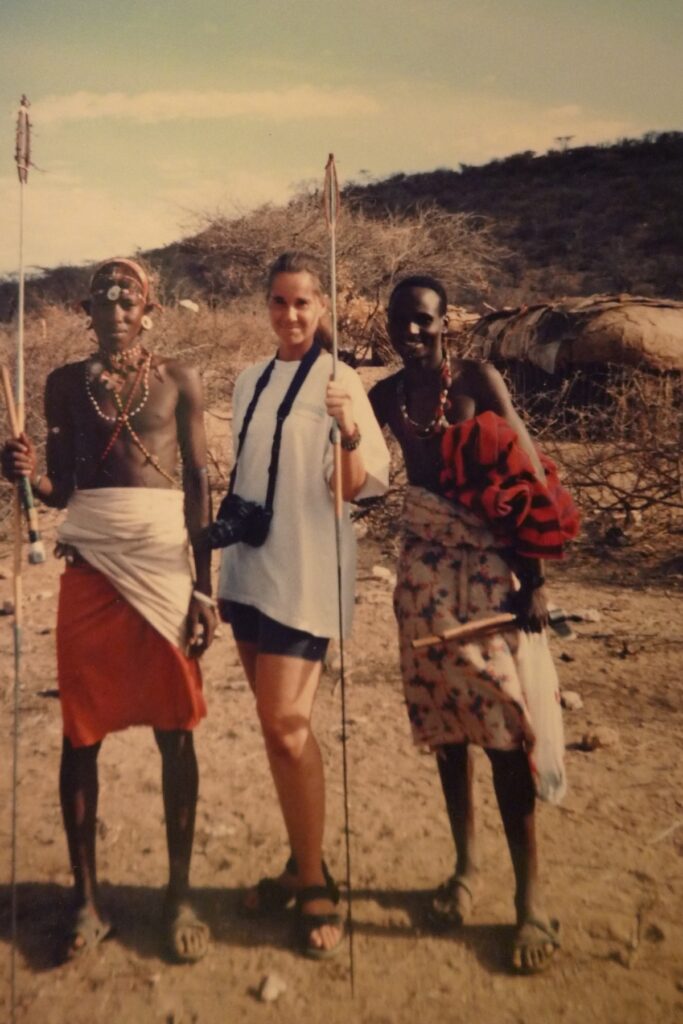
Her first bucket‑list trip was a safari in East Africa, a “core memory.” Going to Kenya and Tanzania was an adventure that opened her eyes and heart to travelling afar to cultures completely different from her own. “Camping out at different game reserves and living amongst wild animals and the Maasai was an incredible opportunity for me to get in touch with my instinct,” Tricca relates. “It was like being on Wild Kingdom. I remember the daily adrenaline rushes photographing action shots of the people, animals and land. I realized the common denominator of humanity is the ability to smile, laugh, and react to gestures of love.”
Italy connected her to her roots. Hawaii, where she spent seven years photographing the world’s top surfers for international magazines, fulfilled her “fantasy of living on Gilligan’s Island.”
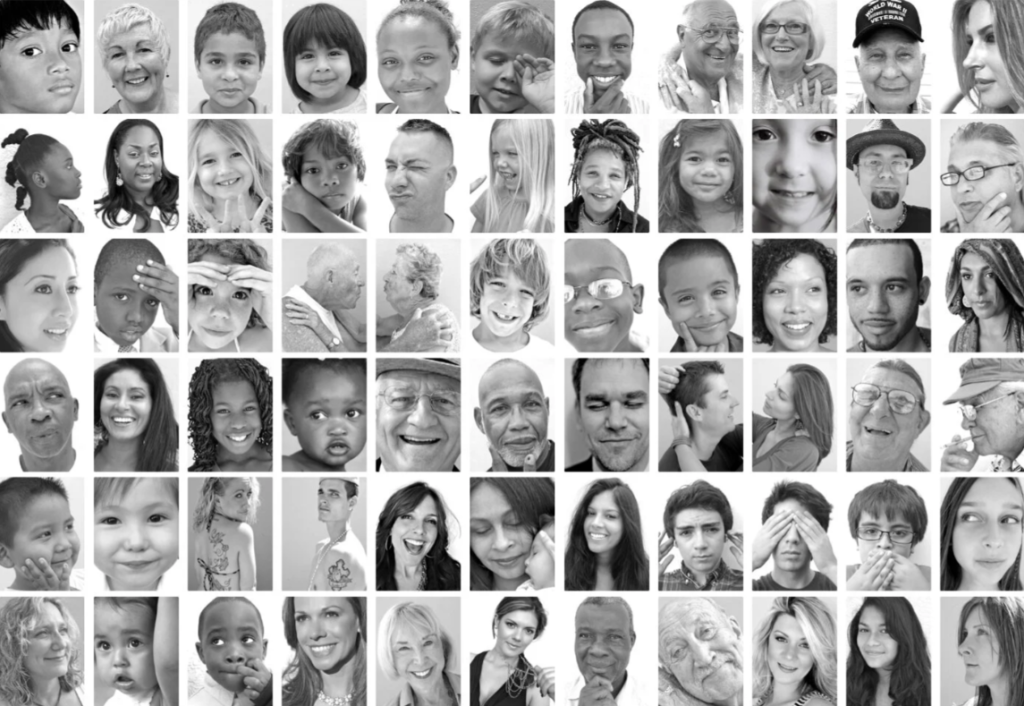
These travels—and meeting people from diverse cultures—were another kind of awakening for her, opening her mind and heart to the possibilities that exist for human relations and community. “I’m inspired by the ethereal richness of the human race … all cultures, ethnicities and ways of life. I’ve been all over the world and have interacted with some real salt‑of‑the‑earth people and cultures,” she says. “All of these experiences have grounded me and inspired me to think out of the box.”
These encounters deepened her interest in communities defined by resilience, tradition, and identity—an interest that would later surface in her Florida‑based projects.
“Travelling the world has taught me that you don’t know what you don’t know. It has shown me that despite cultural and language barriers, communication skills and expressing yourself go way beyond verbal conversations. Your character, personality, open-mindedness, curiosity, patience, flexibility and ability to adapt are the keys to successful travel, especially off the beaten path. Travel has also taught me that the most important parts of life are not things—they are experiences, relationships and memories.”
Florida Cowboys: A Portrait of Heritage
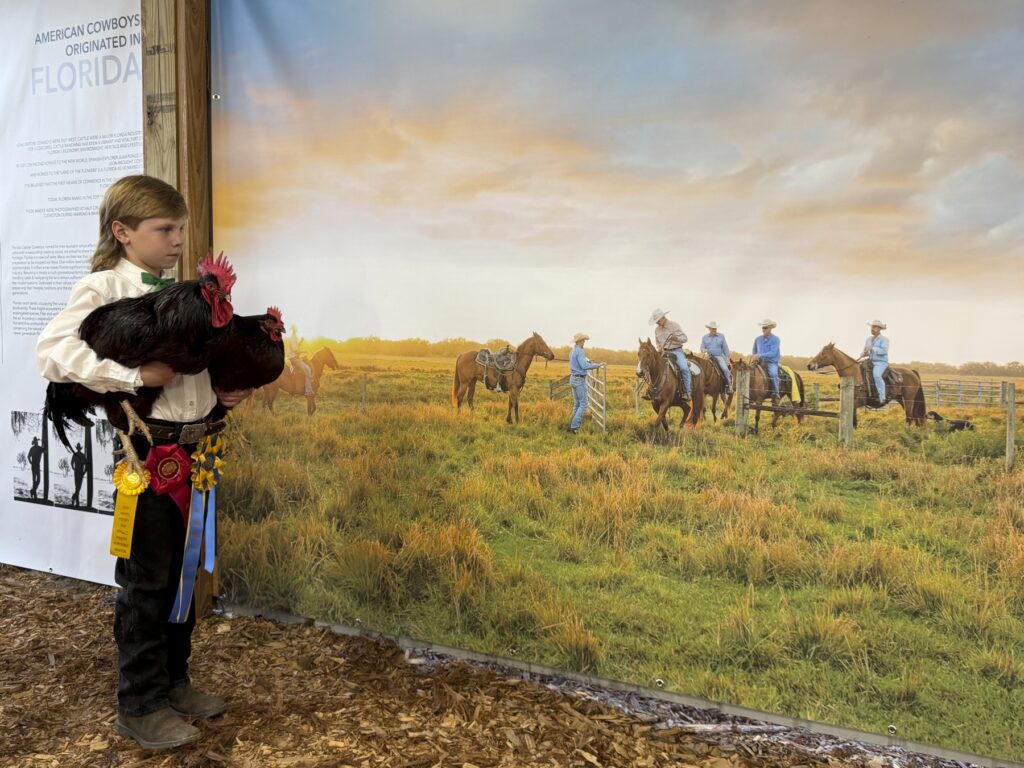
In early 2020, Tricca turned her lens toward a lesser‑known part of Florida’s history: its cowboy culture. Florida Cowboys documents a crew of working cowboys on a Southwest Florida cattle ranch, capturing a way of life that predates the American West.
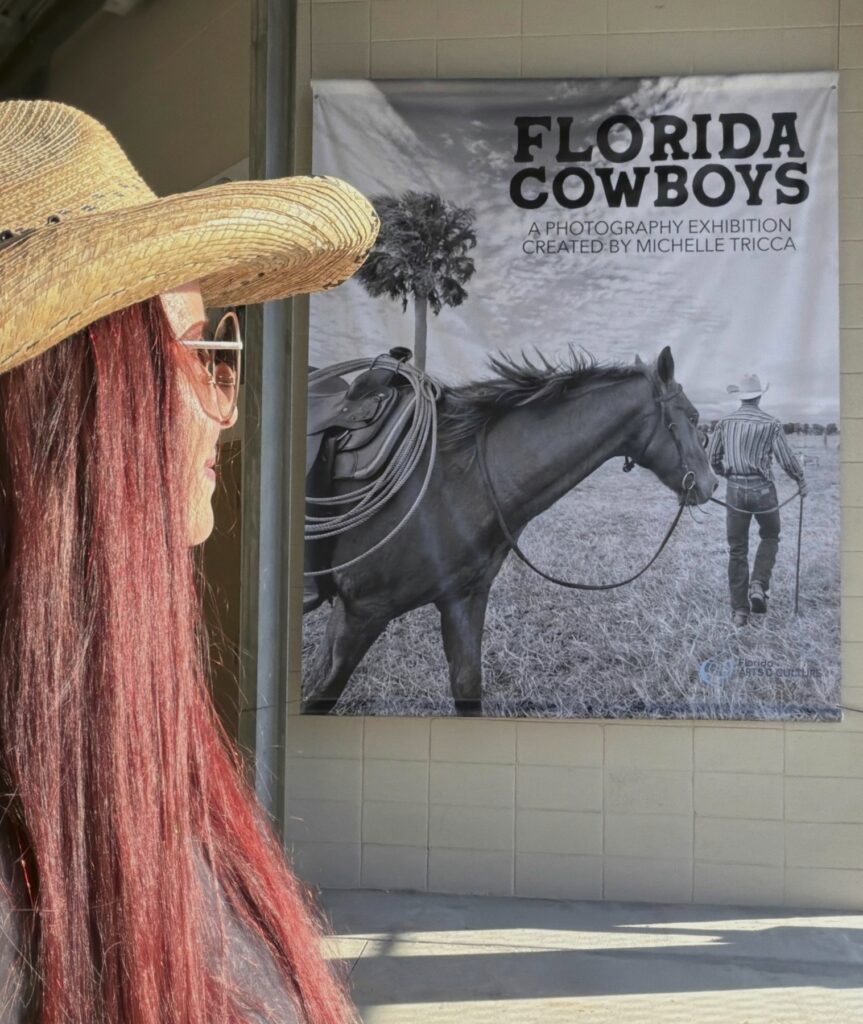
“America’s cattle industry and first cowboys began in Florida in 1521,” she notes. “Many people do not realize Florida has a vibrant and prolific ranching culture.”
The series was commissioned for five solo exhibitions in 2026 by the Florida Cultural Alliance and the State of Florida, Department of State in collaboration with the Arts & Agriculture program to bring culturally relevant art to Florida’s rural counties. So far, they’ve installed five exhibits in the counties of Hardee, Hendry, Glades and DeSoto, the most recent being at Arcadia Rodeo.
Through the project, she discovered unexpected parallels.
“I realized there are many similarities between the artist life and cowboy life,” she says. “Cowboys are a passionate bunch.”
The Face Of Immokalee: Art as Activism
If Florida Cowboys revealed a hidden history, The Face Of Immokalee brought visibility to a community often overlooked.
The project began as a public art portrait installation celebrating the “soul of Immokalee,” a migrant farmworker community central to Florida’s agricultural economy. Tricca chose unconventional exhibition formats—building walls, semi‑trailer trucks—to ensure the work was impossible to ignore.
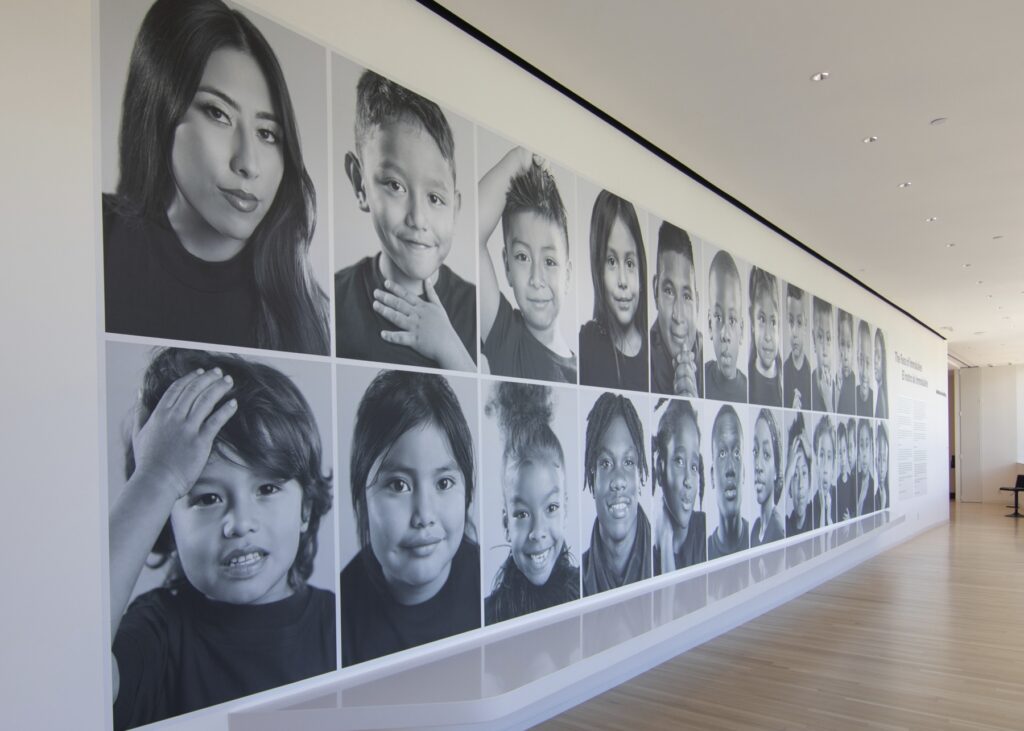
“I want people to look up close rather than gloss over an anonymous person,” she says. “The project is about the human condition, the art of photography, and utilizing your resources to make a difference.”
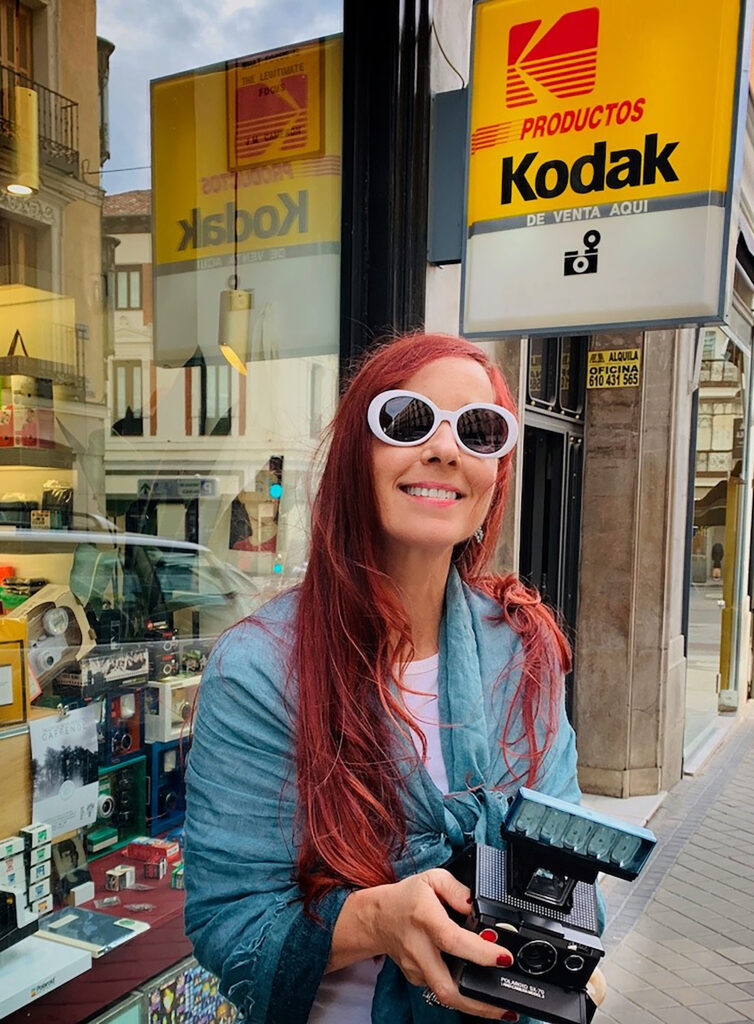
The installation is printed on industrial, weather‑proof vinyl and will remain on view in Immokalee indefinitely, thanks to a $25,000 grant from the Florida Department of State, Division of Arts & Culture, and the National Endowment for the Arts.
The project has brought pride to the community and awareness to those who were unaware of Immokalee’s role in the nation’s food supply.
“Many of these people pick our food and work on our homes. They deserve love, respect, safety, comfortability, and a sense of pride, as we all do,” she says.
Community Engagement and Philanthropy
There are many philanthropies that support the Immokalee community, and an
abundance of opportunities for people to volunteer and give back. Beyond her art, Tricca has been deeply involved in Immokalee since 2018. She mentors students through The Immokalee Foundation and volunteers as an adult‑education English teacher. You can help the people of Immokalee by volunteering or donating to any of these organizations:
- The Immokalee Foundation
- Guadalupe Center
- Cultivate Immokalee
- Cultivate Abundance
- Misión Peniel
- Coalition of Immokalee Workers
- Immokalee Fair Housing Alliance, Inc.
- The Fair Food Program
- RCMA
These are just some of the opportunities available for you to get involved. Tricca’s work—both artistic and philanthropic—reflects a consistent ethos: visibility, dignity, and connection.
The Artist’s Eye: Style, Process, and Philosophy
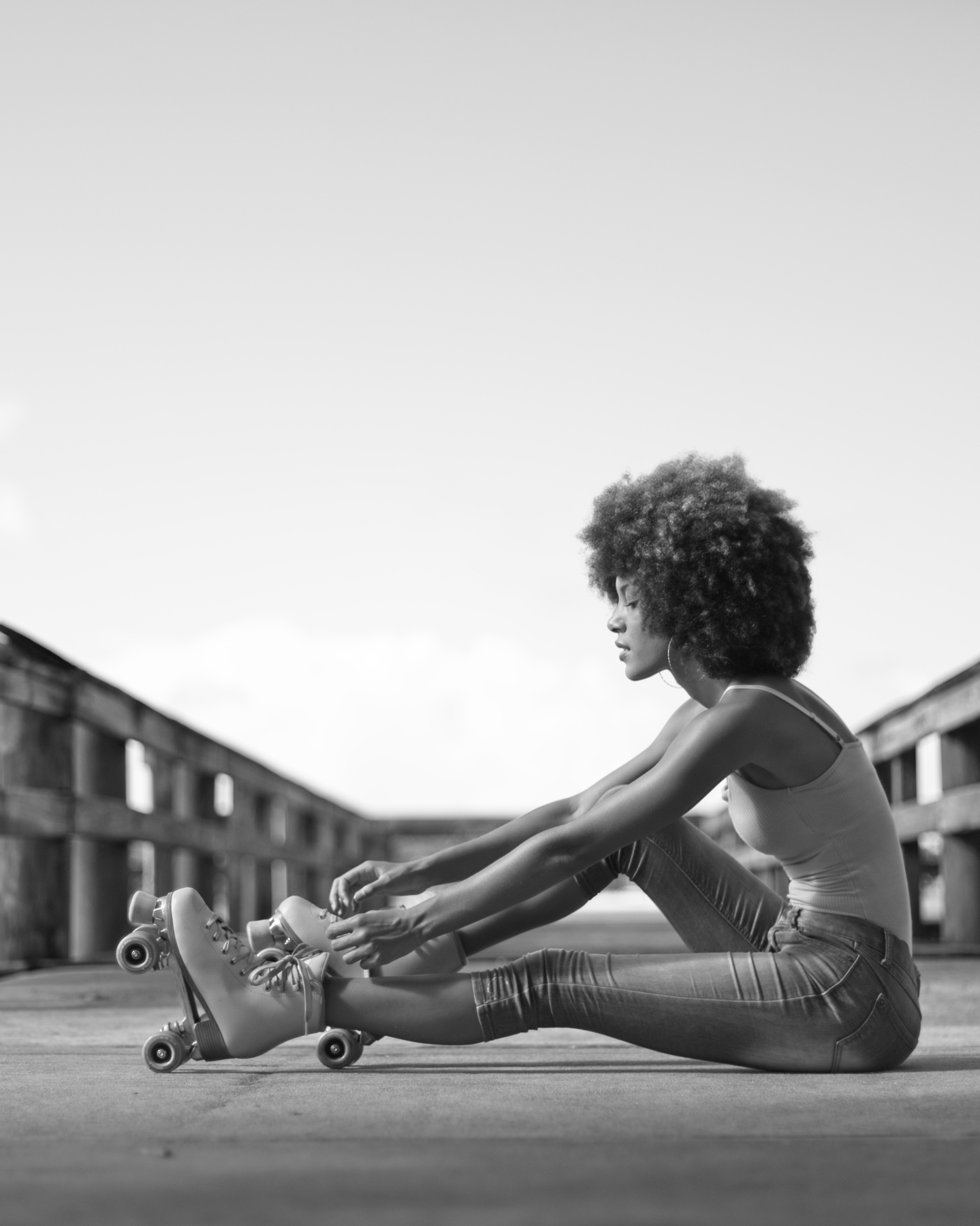
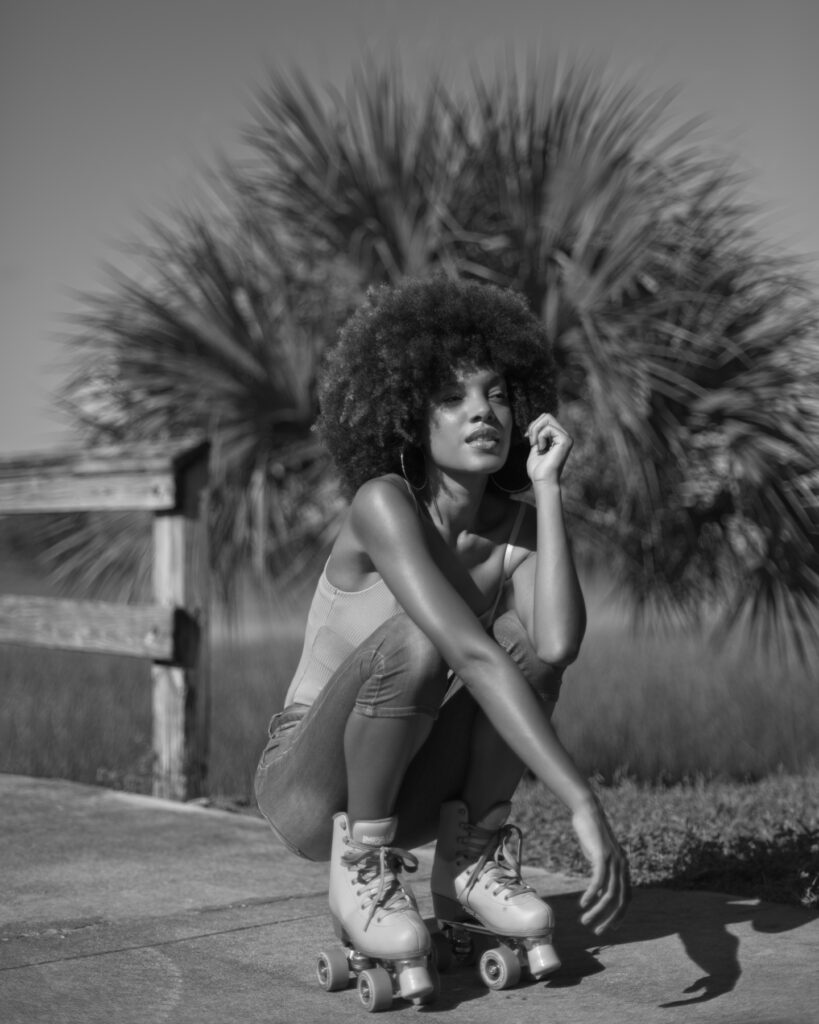
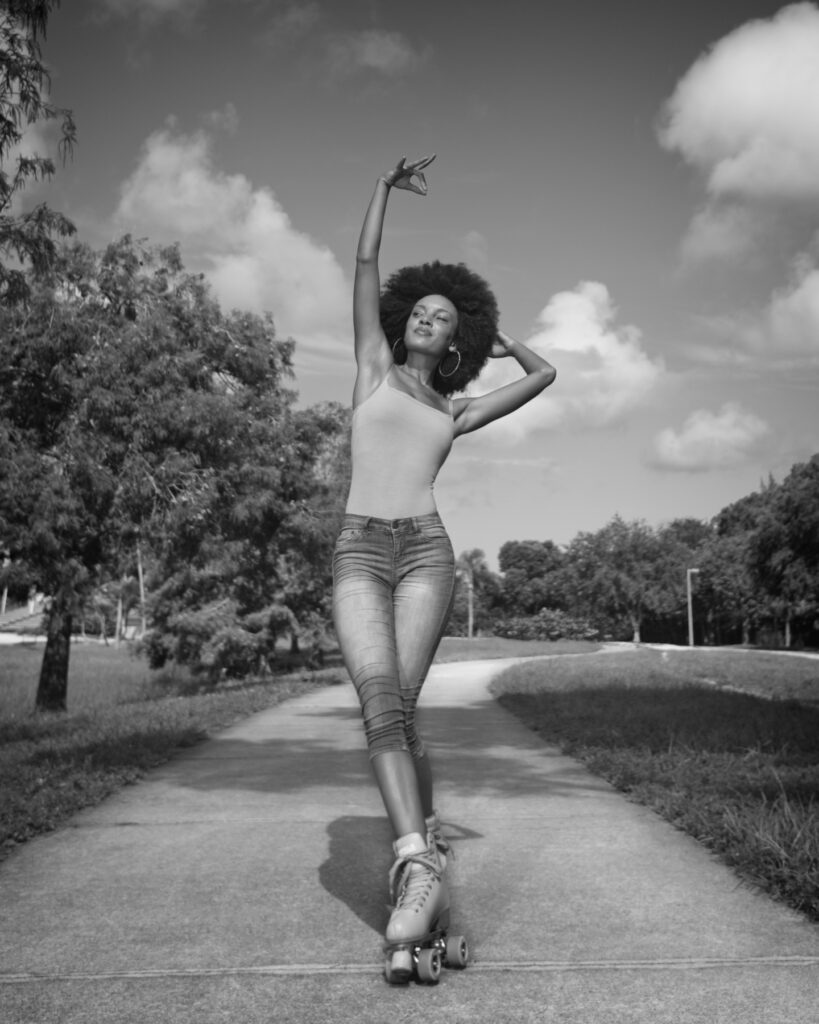
Tricca’s portraits are known for their candor and emotional clarity. She especially excels in black-and-white photography.
“Black-and-white is soulful and timeless,” she says. “There is something compelling about monochrome that keeps the focus on the subject.”
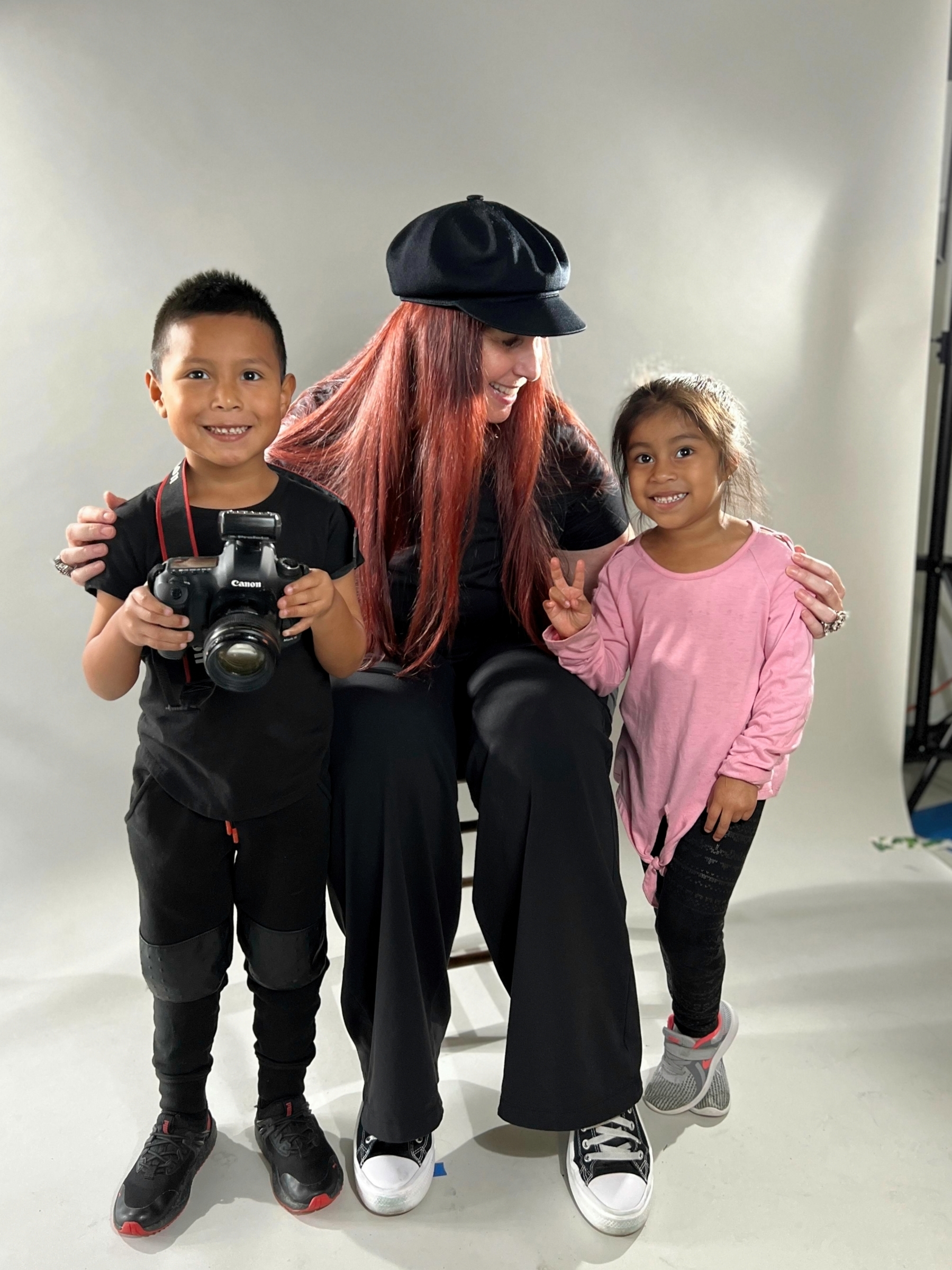
Her process is rooted in presence.
“When I’m working, I am 100% in the moment and in my element,” she says, “focused on what I am doing and my subject matter. I am there because I want to be there. It for sure has its challenges. Photographing people demands attention—managing light, lenses, aperture, shutter speeds, Mother Nature, sometimes managing a crew, and personalities and elements beyond your control. It is always gratifying. Photography is the only thing I’ve never lost interest in. Being hired to photograph people is a great responsibility and I take that seriously. People are counting on me for how they’re visually portrayed. I am grateful to make a living as an artist.”
What does she hope to achieve with her photography?
“I am a photographer who thinks like an artist and works with integrity,” Tricca says. “The intent of my photographs is to evoke emotion and trigger curiosity. I believe in the power of portraits to illicit interest, preserve love, and transform communities. I value the printed image and its ability to infuse sentiment, style and spirit when displayed artfully.”
Authenticity is non-negotiable.
“My work is about authenticity; I absolutely do not use AI for the creation of my photographs. I shoot with DSLR cameras and multiple lenses, preferring the 50mm for portraits. My studio strobes are portable so I can bring them on location to manage light. I work with some great assistants on commercial shoots and personal projects. Sometimes it takes a village. I aim to create my portraits through the lens in lieu of in post-production, though I use image editing software for minimal editing since I shoot in RAW. I value creating tangible art for my clients. I offer Coffee Table Photo books and Wall Art, which are of premium, professional grade and produced by artisans who work for the professional photography trade.”
A Closing Reflection
Tricca was born with a gift for photography. She discovered this gift and developed it early in life. A near-fatal crash in her youth changed the trajectory of her life, deepening her bond with the camera and sending her around the world on a mission to document humanity in all its vibrant expressions. Understanding the power of photography, she used it to help shape people’s sense of identity and value. Finally, she used photography to promote social change and transform communities.
“I can’t change the world,” she says, “but I can use my art as activism.”
And so she did. Tricca’s artistic efforts, with positive community projects such as The Face Of Immokalee, stand as torches of hope in an ever-darkening world of misanthropy and disconnection. She shows us what is possible, what lies just beneath the surface, and what happens when the camera is allowed to conjure—however fleeting—a glimpse of the soul. She teaches us to find in the other, what we know to be true in ourselves. And to move forward together toward a future where all of us belong.
Michelle Tricca’s fine art prints are available through her print shop, with a portion of proceeds supporting public art murals for underserved communities. She can be contacted at mt@michelletricca.com. You can acquire Tricca’s services at her website, michelletricca.com or view some of her portraits at:

*Naples Noteworthy extends deep condolences to the Lipman family and the many friends and colleagues of Larry Lipman, who passed away on March 22, 2026. The vibrant CEO of Lipman Family Farms was indeed an extraordinary leader whose legacy will live on. Larry was a powerful example of a life well lived, and one focused on doing good.
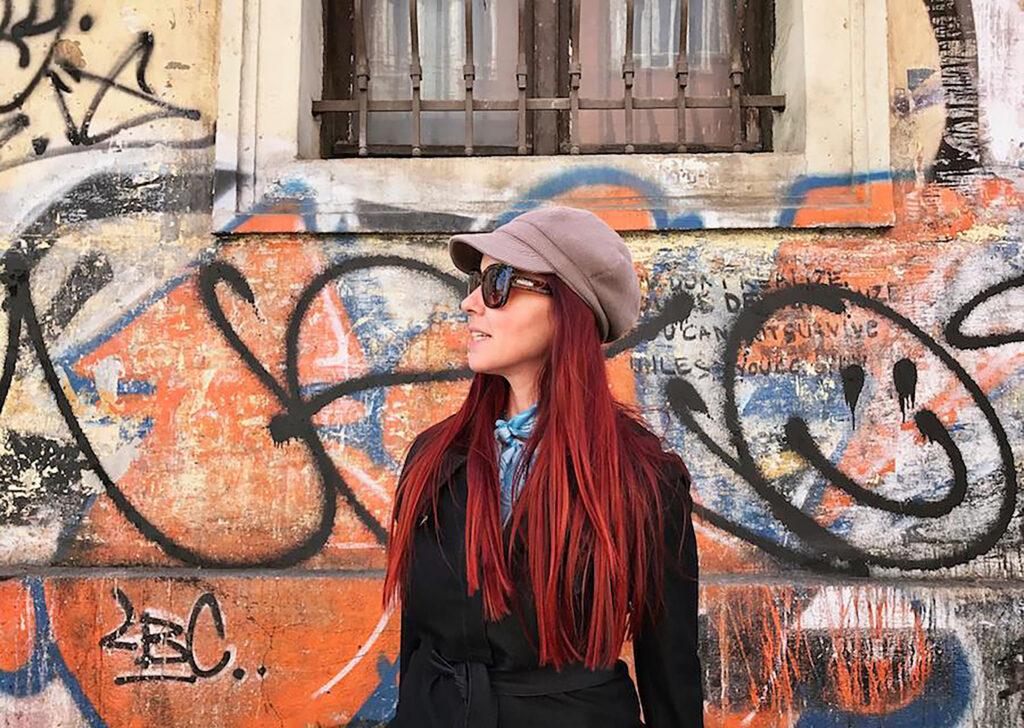
Tricca lives near a nature preserve in South Naples. She spends her downtime hiking, visiting art exhibits, being near the ocean, and enjoying time with friends and family. She doesn’t currently have a pet due to her travel schedule, but she loves big dogs and imagines a Golden Retriever in her future.
Extraordinary People


