
Building a stronger safety net—one cart of groceries, one volunteer shift, and one weekend meal bag at a time.
In a region often defined by postcard-blue water and paradise-level prosperity, Evelyn Rossetti‑Ryan, Executive Director of Our Daily Bread Food Pantry, is quick to point out what many residents never see: the workforce families, seniors, and children living one unexpected bill away from an impossible choice. “Although Collier County is often perceived as an enclave for the wealthy, this is not a reality for the food‑insecure workforce families we serve,” she says, of the people who keep the local economy running—yet still struggle to keep their fridges full.
Roots: Where “Food Is Love” Began
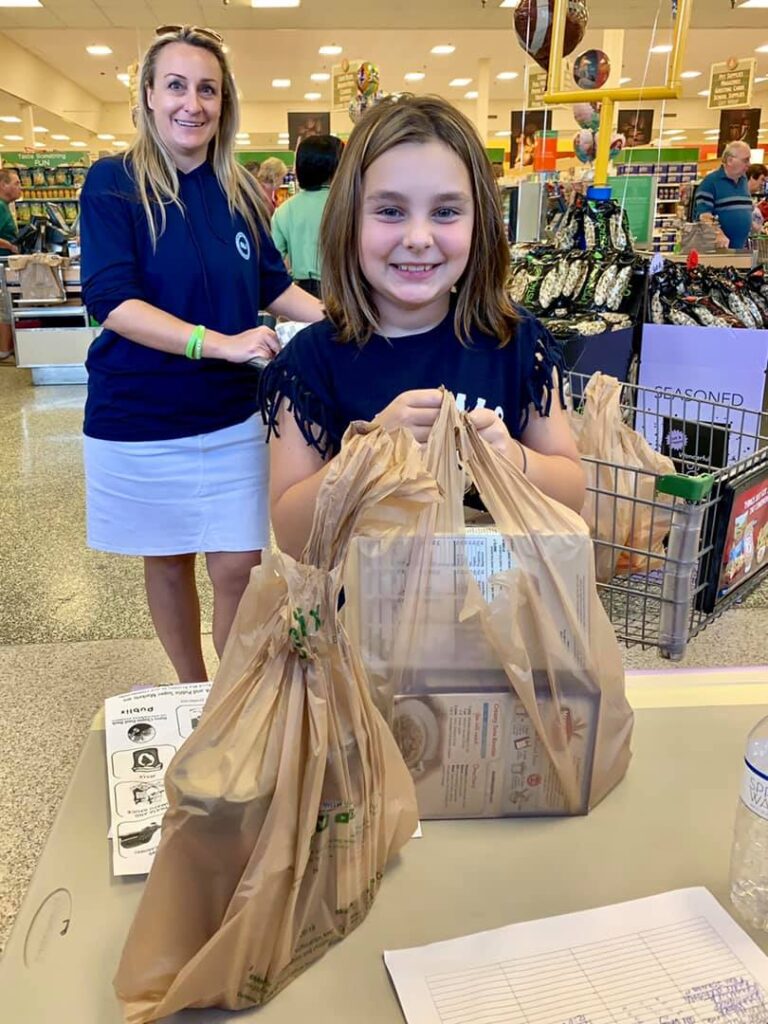
Her understanding of hunger and dignity begins at home, in an Italian household where meals were more than tradition. “Growing up in an Italian family, food—especially fresh and healthy food—was always appreciated and enjoyed,” she recalls. Early on, she learned a credo that still guides her work: “Food is love and food is medicine.” In a neighborhood where people shared corn, tomatoes, zucchini, and rides when times were hard, contributing felt natural—even when she was a child tending a garden. “From a young age, I learned and loved contributing to my community, and sharing with those in need.”
An Epiphany—and a Calling
That impulse to serve eventually became a career—and, in her words, a calling. Rossetti‑Ryan describes an “epiphany” during her time as a public relations executive in New York City: she realized she wanted her work to “make a positive impact” on the community around her. Not long after, she traded a high‑rise view overlooking Rockefeller Center for offices inside an elementary school on Manhattan’s Lower East Side, working as a Special Assistant for Community Relations and Strategic Initiatives for a New York City school district. The shift brought daily reminders of what community infrastructure can mean in real life: students, parents, and neighbors walking through the same doors, needing not only education but support.
Food is love and food is medicine.
Evelyn Rossetti-Ryan

Those years also sharpened her understanding of how closely food, health, and opportunity are connected. She developed “a deep appreciation for how vital community‑based partnerships are for a community’s physical and mental health, nutrition/access to healthy food, literacy, safety, and educational and workforce development.” It’s a holistic lens she still uses today—one that sees hunger not as an isolated problem, but as a pressure point that can push families into crisis.
Her nonprofit path has moved through seemingly different worlds: she’s led a children’s art museum, served as the first executive director of the Thyroid, Head and Neck Cancer (THANC) Foundation, and now directs Our Daily Bread Food Pantry. The thread, she says, has always been “service above self,” a principle she connects to Rotary—where she is the incoming President of the Rotary Club of Marco Island Sunrise. Whether through the visual arts, the healing arts, or food security, she says, “making a positive impact on the lives of those around me… has always been important to me and has guided me in my career choices.”
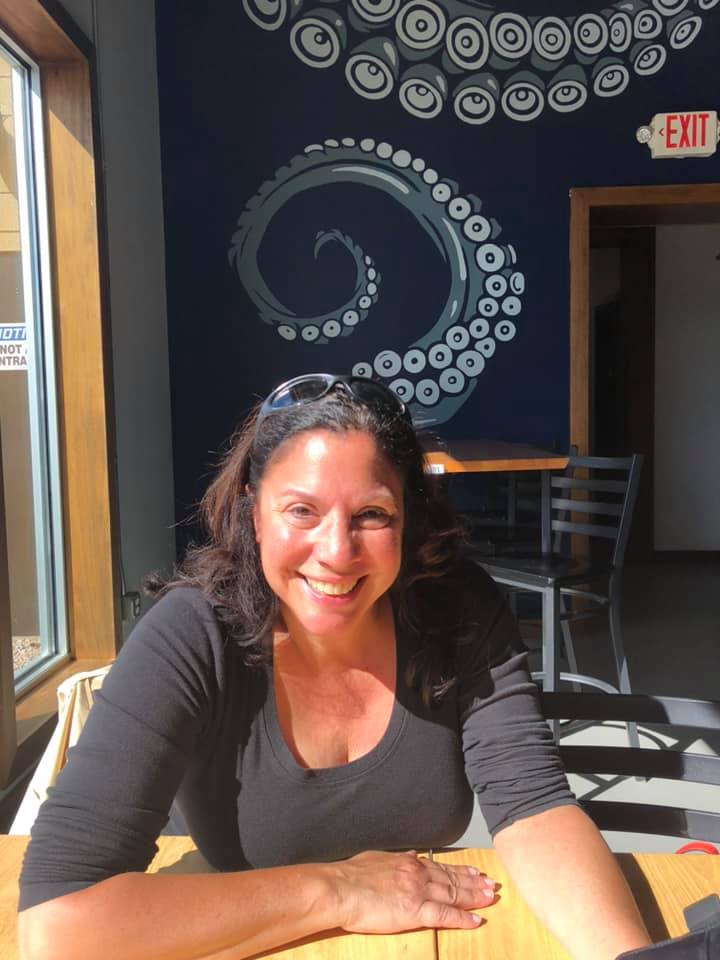
Rossetti-Ryan earned a Doctor of Education degree in Educational Administration / Organizational Leadership and a Master of Arts degree from Teachers College, Columbia University. She earned a Bachelor’s degree in French and Elementary Education from Columbia University. In 2021, Evelyn successfully completed Yale University’s School of Management Women’s Leadership program.
Leading With Purpose (and Volunteers)
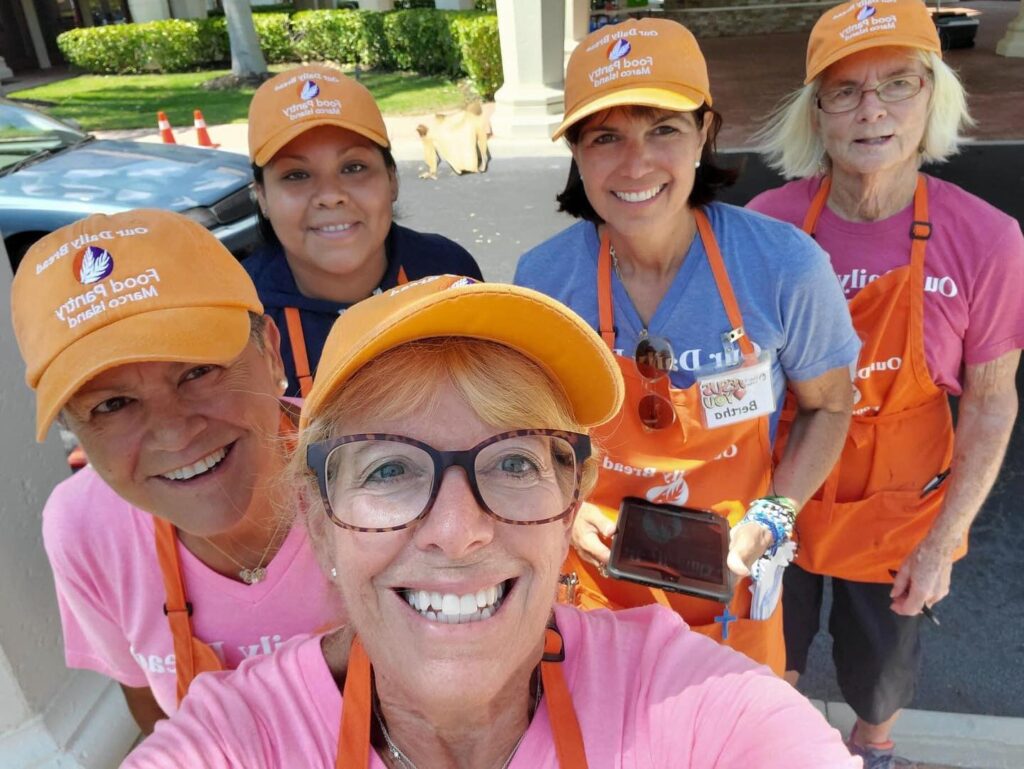
At Our Daily Bread Food Pantry, that ethos shows up in the way she talks about leadership: less as spotlight, more as scaffolding. “My leadership philosophy is rooted in purpose, people, and shared impact,” she says. Mission matters, but so does the experience of the people carrying it—especially the volunteers who power day‑to‑day operations. “Central to my leadership is a deep respect and admiration for our volunteers. Our Daily Bread Food Pantry volunteers are essential to our organization and the driving power behind our work.” Her job, she adds, is to “remove barriers, provide clarity and ensure that our volunteers have the tools, encouragement and support they need to succeed.”
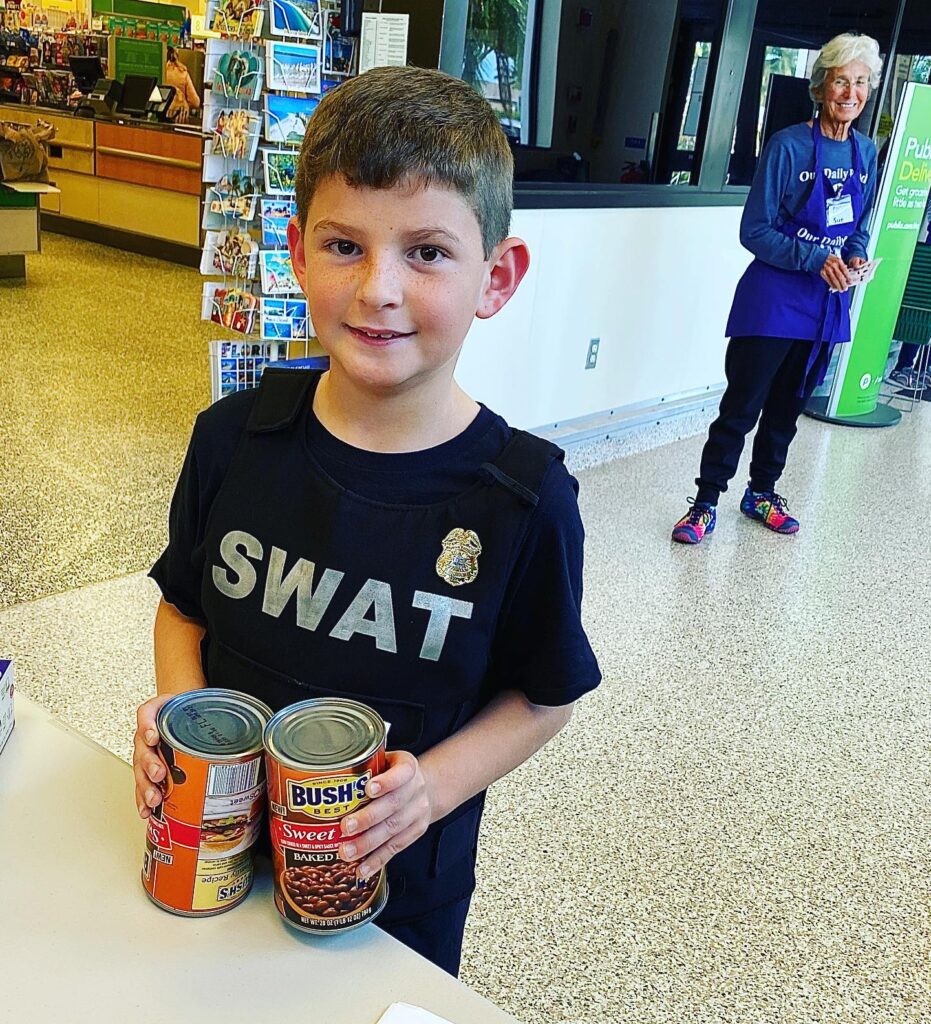
Her vision for the Pantry is straightforward and quietly ambitious: stability, dignity, and hope for neighbors who may feel unseen. “My vision is to ensure that Our Daily Bread Food Pantry remains a strong, sustainable source of support to those most vulnerable in our community; a place for those who may be going through difficult times to know that they are not alone,” she says. “Our Daily Bread Food Pantry is now and will always be a place of hope, encouragement and nutritious offerings.” And success, for her, is as much about culture as it is about distribution. “Success is felt in the strength and spirit of our community,” she explains—when volunteers feel valued, teams support one another, and “a family [leaves] our Pantry with not just food, but with a sense of relief and hope… a conversation that reminds someone that they are not alone.”
Success, for Rossetti-Ryan is also felt “in the strength and spirit of our community. It’s a team that…takes pride in the shared mission because they feel ownership in it…a culture where kindness and respect are simply how things are done. Success shows up in sustainability—when the Pantry is strong enough to meet today’s needs while steadily building towards tomorrow; where investors feel connected to the impact, and where systems run smoothly. Ultimately, success is when people, purpose and passion align so seamlessly that the impact extends far beyond what any one individual could accomplish to build a healthier, stronger, more resilient community.”
The Hidden Hunger in Collier County
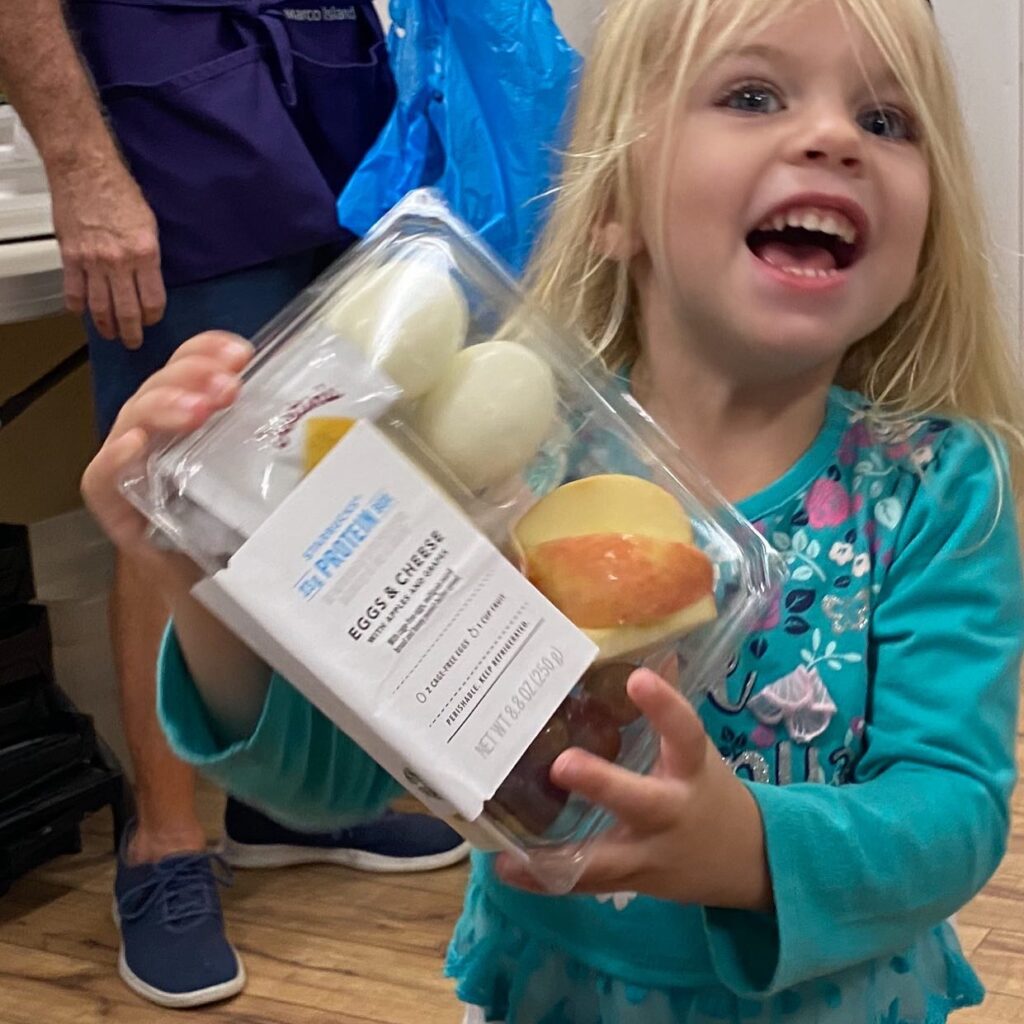
The need for food can be difficult to reconcile with Naples’ wealthy reputation, but the numbers—and the lived experience behind them—tell a different story. Rossetti‑Ryan points to the reality of ALICE households (Asset Limited, Income Constrained, Employed): families earning above the Federal Poverty Level but still below what it costs to live in the county. With a severe lack of affordable housing, workforce residents can spend a disproportionate share of their income just to remain housed. Without consistent food assistance, she notes, many families would face a choice no parent should have to make: healthy meals or a roof overhead.*
When Kids Go Hungry, Everything Else Follows
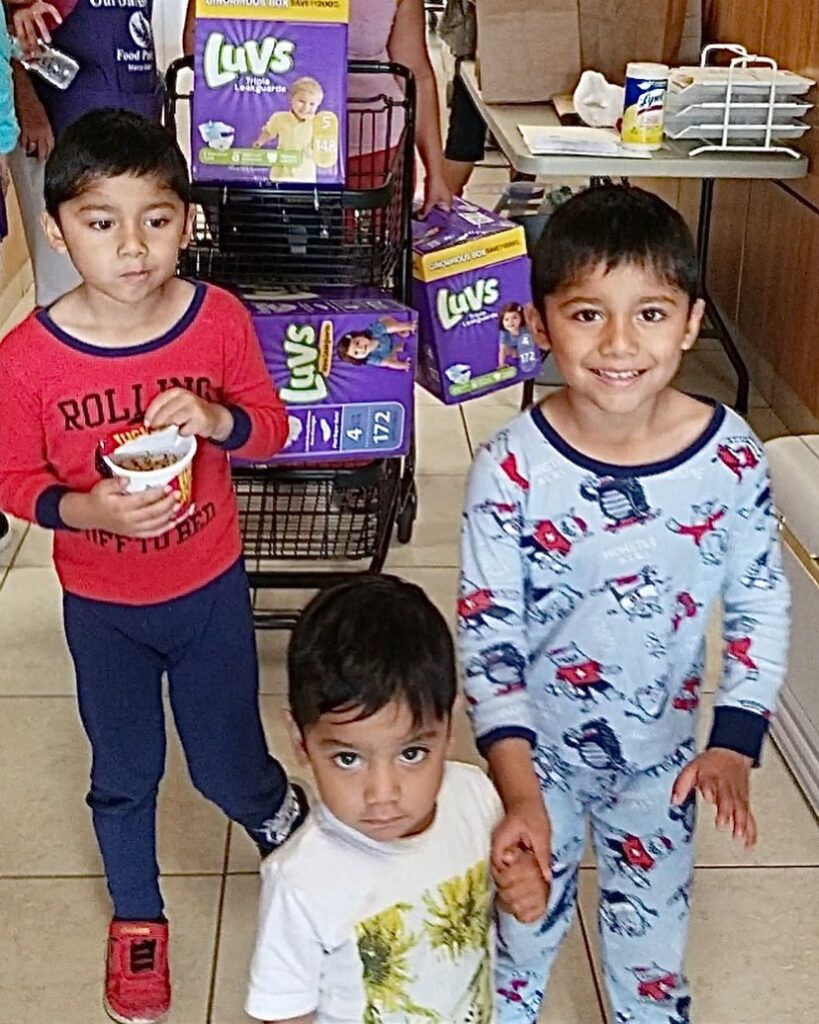
The clearest signal of rising need, Rossetti-Ryan suggests, is the surge in children’s programming. “Our children’s programming has grown by more than 60% in the past two years,” she notes. In 2024, the Pantry served 560 unduplicated children; by 2026, that number increased to more than 900. She worries, too, about uncertainty around federal and state support for K‑12 breakfast and lunch programs—changes that can ripple quickly through a household budget. Research underscores what educators already witness: “Children who are food‑insecure are more likely to experience poor diet quality and unhealthy weight gain… and [are] at a higher risk for chronic disease, poor mental health, poor academic performance, impaired growth and development, and unfavorable health behaviors in adulthood. Addressing childhood hunger was the inspiration for the Pantry and continues to be an area of great concern and investment,” she says.
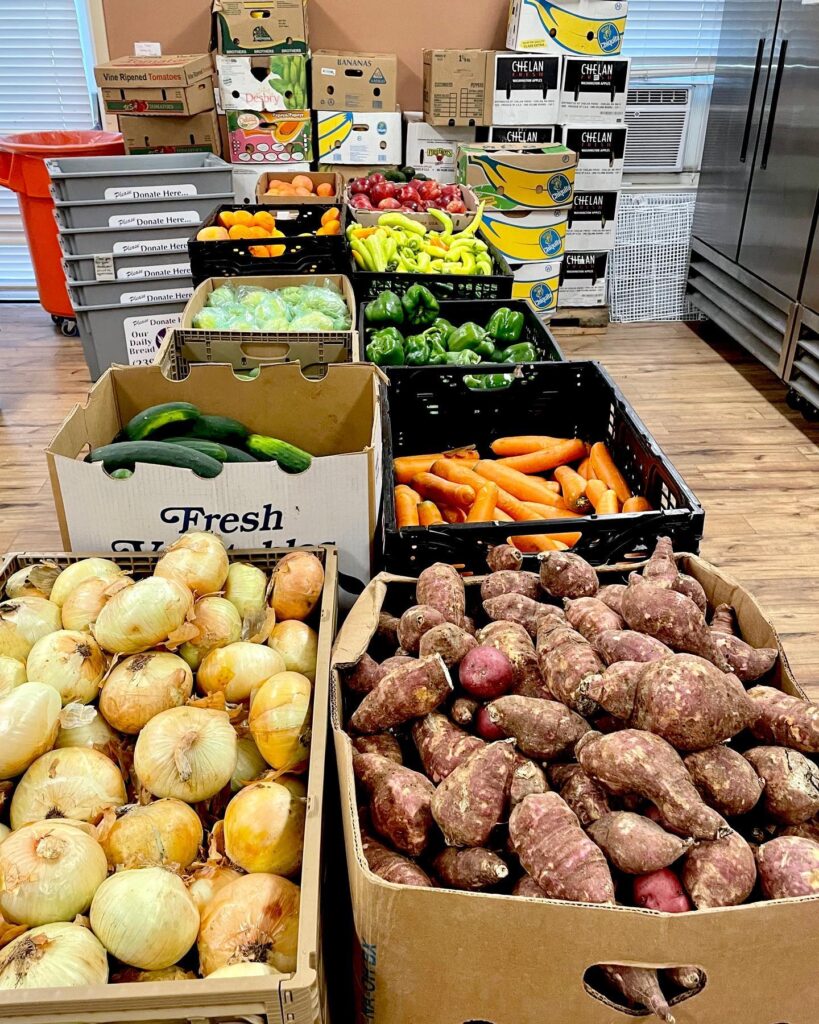
She understands the skepticism some people carry—especially in affluent zip codes—but she also knows how quickly it dissolves in the parking lot on a distribution day. “There are some who wonder why our community needs a pantry and are concerned that those who utilize the Pantry don’t truly need our services,” she says. Her response is simple: “One only needs to come and volunteer and engage with the hard‑working individuals who come to our Pantry on a Saturday morning, visit our mobile pantries during the week, meet the seniors who we deliver food to, or talk with the more than 900 students who rely on the breakfasts, snacks, and weekend meal bags to understand our ‘why’ and see the need that we meet daily.”
A New Home for the Work
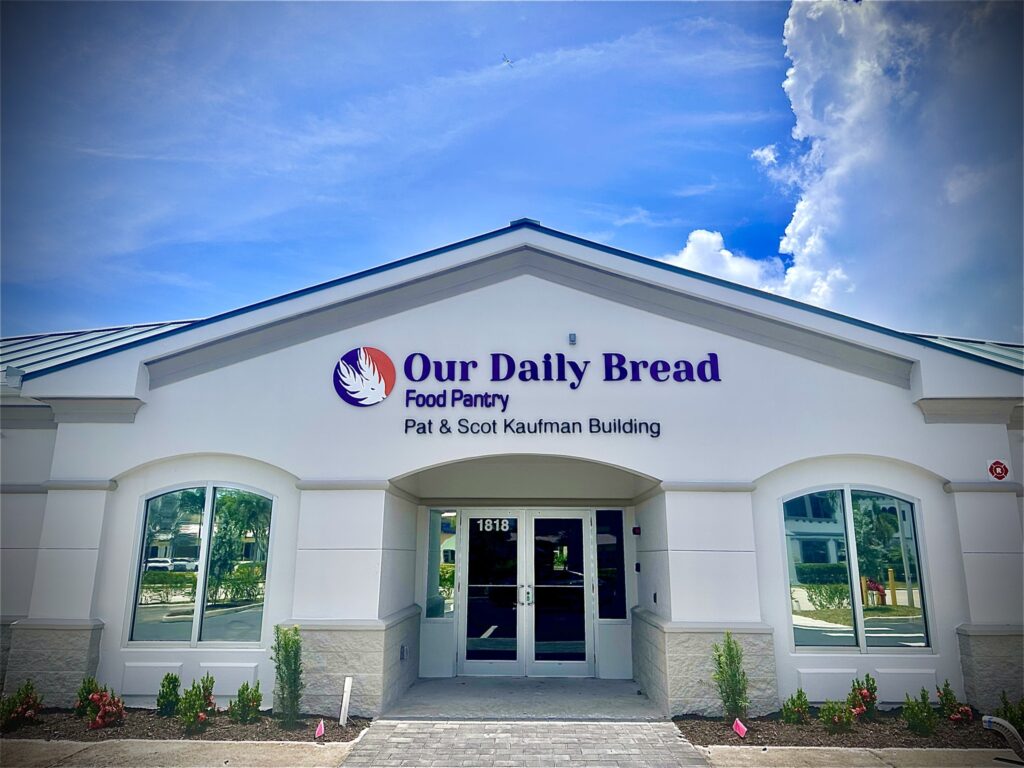
If the Pantry’s “why” is rooted in childhood hunger, its “how” has been strengthened by a milestone move. Rossetti‑Ryan is most proud of the organization’s new headquarters at 1818 San Marco Road on Marco Island. As Our Daily Bread marks its 10‑year anniversary in 2026, she credits a two‑year, $8 million capital campaign—and a wave of community belief—for enabling the purchase of the building mortgage‑free. She offers special thanks to Pat and Scot Kaufman, whose support allowed the organization to secure its new home. The former bank site, along with an adjacent lot, has done more than double space: it has optimized workflow for a volunteer‑powered operation with outdoor drive‑through access that helps product delivery, guest registration, and distribution run smoothly and efficiently.
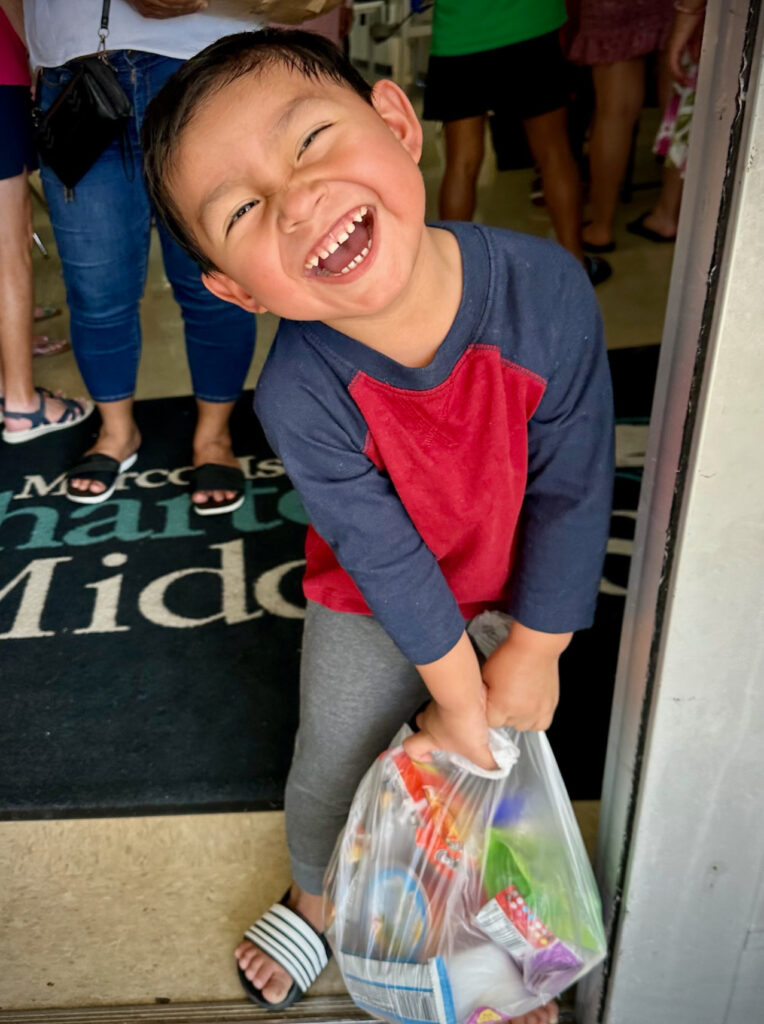
Still, the heart of the work is most visible in small, repeatable moments—like a child carrying a weekend meal bag home on Friday. One school counselor recently described what those bags mean for students: “The weekend food packs do far more than fill empty stomachs—they quietly restore a sense of care, stability, and dignity in our students’ lives.” When the uncertainty lifts, she continued, students return on Monday “focused, energized, and ready to engage.” In the counselor’s words, “what may seem to be a simple bag of food becomes a powerful source of motivation, helping cultivate a healthier mindset and a stronger, more hopeful outlook on learning and life.”
Healthy Kids, Stronger Futures
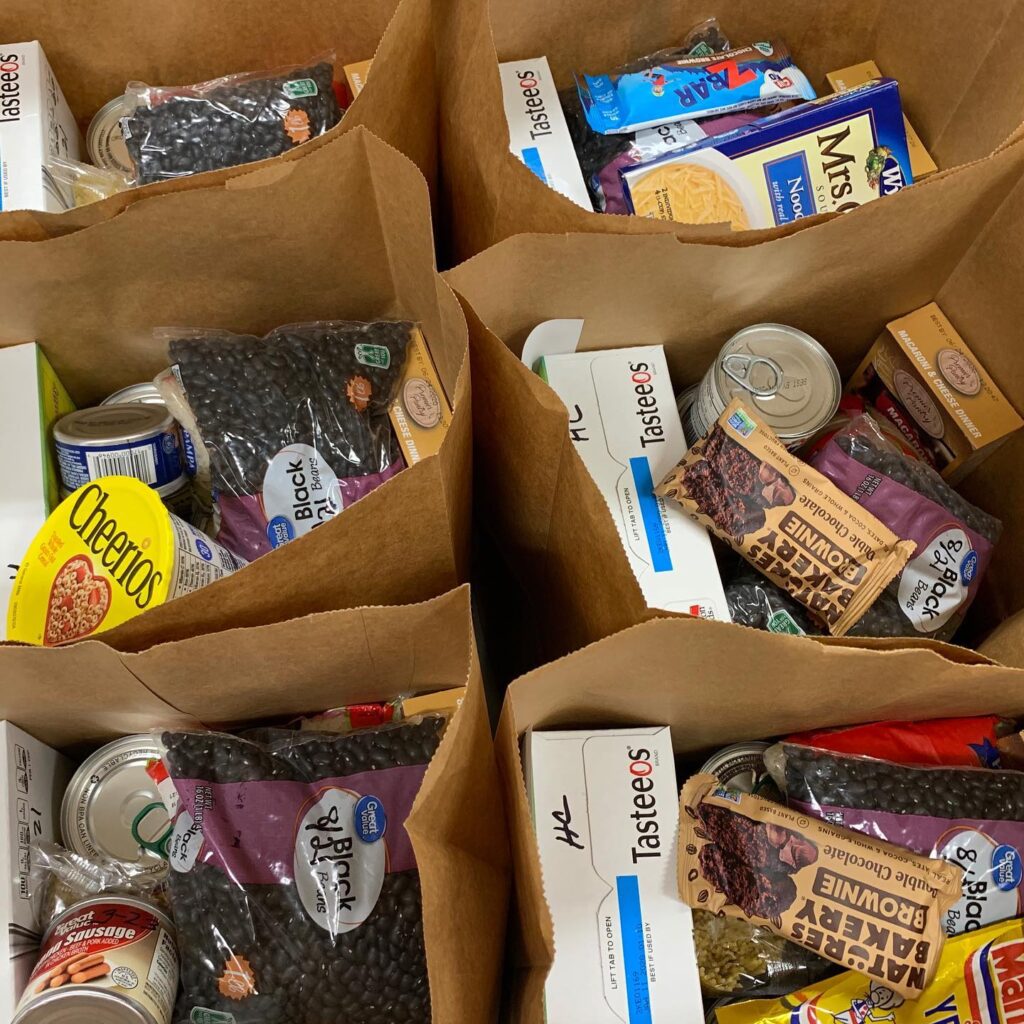
That impact is by design. Our Daily Bread’s Healthy Kids School (K‑12) Program aims to help low‑income children “maximize their full potential by providing access to the nutritious choices needed for a healthy diet,” Rossetti‑Ryan explains. The Pantry provides breakfast items such as cereal, hot breakfast sandwiches, granola bars, juice, milk, and fresh fruit; healthy after‑school snacks; and weekend meal packs that supply two days of nutritious, easy‑to‑prepare, kid‑friendly meals. Importantly, distributions at schools and summer camps are overseen by staff and handled as part of group activities—an intentional choice to help offset the stigma food‑insecure children often feel.
Food as Medicine—and Community Health
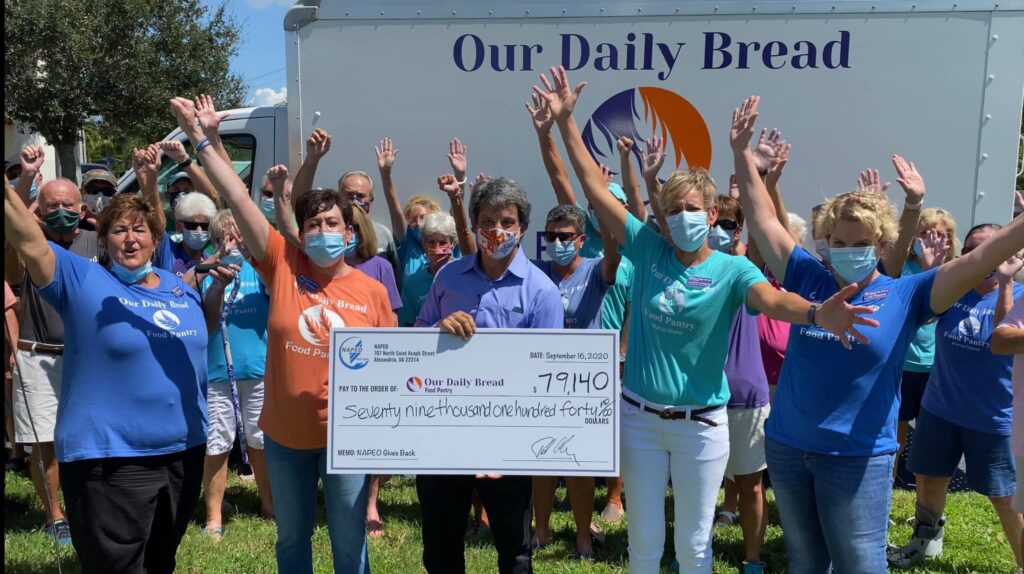
For Rossetti‑Ryan, meeting immediate needs and building longer‑term stability aren’t competing goals—they’re a continuum. As part of the Food is Medicine initiative, the Pantry provides each household with “a cart of fresh produce, protein, and pantry staples,” and pairs that support with partnerships designed to create healthier futures. Our Daily Bread collaborates with groups such as the American Heart Association (heart‑healthy nutrition materials and recipe cards), NCH (including “Pints & Pantries” blood and food drives), and is developing an on‑site pediatric diabetes screening with University of Florida Health. A recent three‑year $300,000 investment from the Florida Blue Foundation supports the Pantry’s Nutrition Prescription initiative, including volunteer nutrition education, bilingual nutrition materials, on‑site health fairs for Lipman Family Farms employees and their families in partnership with Healthcare Network, and funding to purchase fresh produce for guests. And while the Blue Zones office in SW Florida may have closed two years ago, Our Daily Bread continues to abide by its principles and has been a Blue Zone partner since 2017.
Building Relationships Across Marco Island
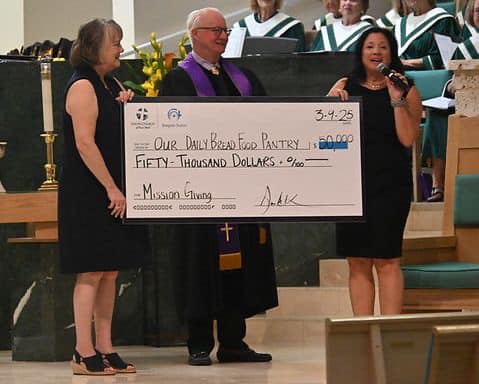
The Pantry’s mission—“to share the love of God by reducing hunger and building relationships in our community”—is reflected in the practical ways the organization shows up. “We deeply value our partnerships, and are blessed to partner with the healthcare community, including NCH, Healthcare Network, the American Heart Association, and the Florida Blue Foundation; local community-based organizations, including the Marco Island Center for the Arts, Marco Island Historical Society, the YMCA, and the Marco Island Chamber of Commerce; nonprofits, including the Alliance for Period Supplies, and Baby Basics; and the faith-based community, including Marco Island Lutheran Church, St. Mark’s Episcopal Church, United Church of Marco Island, Wesley United Methodist Church, New Life Church, San Marco Catholic Church, the Jewish Community Center, and Marco Island Presbyterian Church.” Rossetti‑Ryan notes that these partners contribute essential food and funding, provide volunteers, and help carry a message of “food, encouragement and hope.”
From One Closet to a Community Lifeline
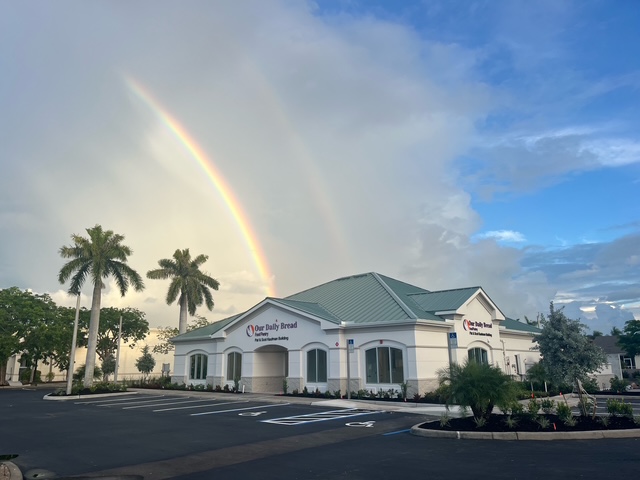
Founded in 2016 by five incredible women—Jo Anne Lundquist, Vicki Johnson, Shawnee Huff, Jennifer Ludwigsen, and Elizabeth “Liz” Pecora—the Pantry started as a mission of Family Church, created to address childhood food insecurity. Family Church provided space and support as the effort grew into a 501(c)(3) nonprofit, and the organization remained there until moving to its permanent home on San Marco Road. When the work feels heavy, Rossetti‑Ryan says she pauses to remember that arc: “We started 10 years ago… with one closet of donated food,” she reflects, and now the Pantry has its own building with refrigeration, providing fresh, wholesome foods and “feeding over 1,300 households, and close to 1,000 children weekly.”
Behind those numbers is a model built on people. “Our Volunteers are the heart and soul of our Pantry,” Rossetti‑Ryan says. Until three years ago, Our Daily Bread was run 100% by volunteers; today it remains volunteer‑powered, with 250+ volunteers who “offer food, encouragement and hope to our neighbors daily.” She is equally emphatic about partnerships—with healthcare organizations, schools, local nonprofits, civic groups, churches, and businesses—because every investment of “time, talent and treasure,” she says, helps the Pantry meet growing needs.

Truly, the collaboration between Our Daily Bread Food Pantry and the community, from all these organizations, volunteers, partners, and financial supporters, has been exciting to behold. What started out as a need being met by five compassionate women and an enlightened church has blossomed into a community-wide movement that is rather astonishing. Once it was clear that there were families and children, in particular, who were hungry, people, organizations, businesses, schools, civic groups and other churches stepped up to meet that need. With Rossetti-Ryan now at the helm and a generous community responding to the need, the Pantry has experienced more growth in its first ten years than one might have anticipated.
Evelyn Rossetti-Ryan is one of those people who has devoted her life to doing the right thing. She chose to make a difference in her community and in the world, rather than promoting herself. It’s people like Rossetti-Ryan that inspire others to give and join efforts like Our Daily Bread Food Pantry to help families, elderly, and children who truly experience need. This Pantry is a bright light of hope in southwest Florida in a time where many are questioning if the days of “community” are in the past. Our Daily Bread Food Pantry shows that we can still come together and make a difference when we want to. It’s become a place that understands dignity is as important as food—maybe even more.
Keeping Up With Growing Need
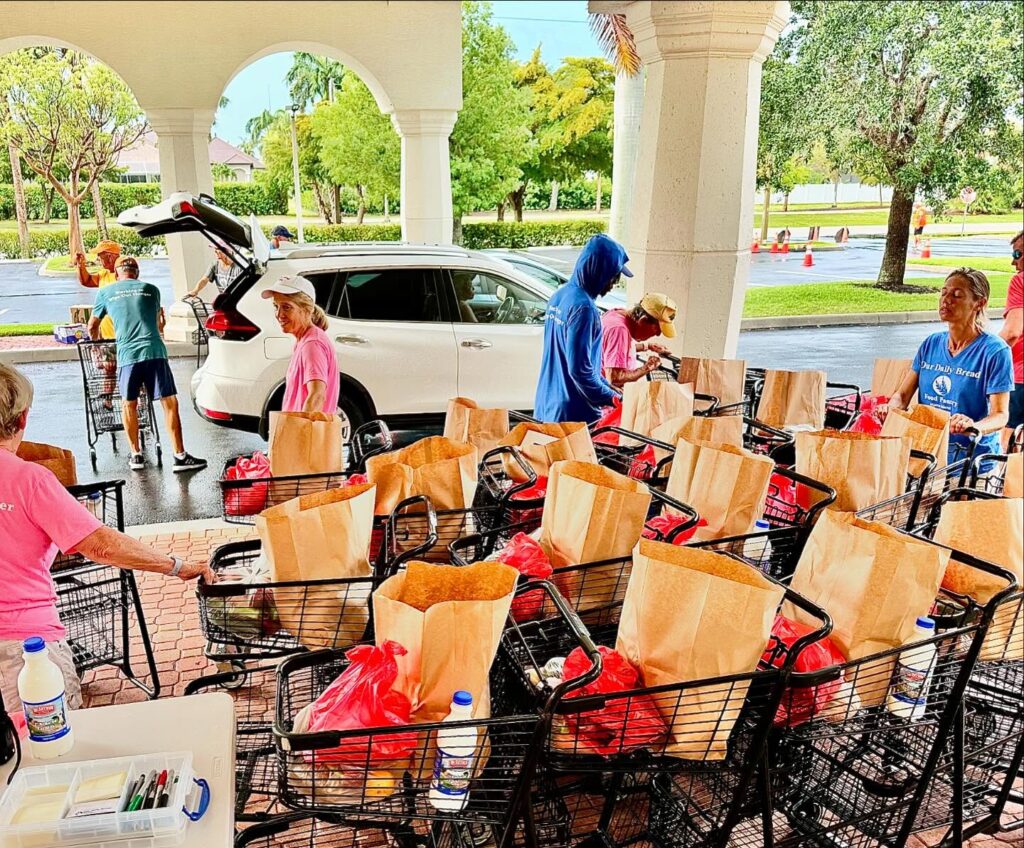
“The biggest challenge facing the Pantry today is keeping up with the increased need,” she says, emphasizing the constant work of securing both donated food and the funding that will keep the Pantry strong for years to come. To navigate the emotional weight—both the heartbreak and the hope—she focuses on showing up and noticing the good. She takes time “to appreciate the positive impact that our Pantry has on working families, students and seniors,” she says. The moments that linger are often quiet ones: “The smiles from our guests, knowing that we were able [to] provide nourishing food for them and their families, and hopefully, ease their stress and anxiety.”
What’s Next: Sustainability and Expansion
Looking ahead, Rossetti‑Ryan is energized by the Pantry’s growing “Food is Medicine” approach and the practical steps required to sustain it. She envisions an endowment to strengthen long‑term financial security, deeper partnerships with food banks and supermarkets to ensure a steady supply of healthy food, and continued investment in community health. If resources were unlimited, she says she would “stabilize and elevate our core mission”: ensure consistent, abundant, high‑quality food access; invest in infrastructure; expand the mobile pantry model—especially for seniors and underserved areas in southeast Collier County; grow food rescue efforts; and, ultimately, “build a sustainable future by creating an endowment.”
How to Help
For readers who want to help, she encourages simple, steady actions: become a monthly donor (for as little as $10 a month), organize a food drive with pantry staples like spaghetti, canned tomato sauce, rice, beans, canned vegetables, and fruit, and reach out with ideas and support. More broadly, she believes the community’s power is additive: “Each person, each day, one act—whether it’s donating an hour of your time, giving $1, $10 or more to a cause that is meaningful or showing kindness to someone in need—everyone has the ability to make a positive difference,” she says. “If each person did one thing each day, our community would be a brighter, healthier and even more beautiful place to live.”
Contact
Learn more about Our Daily Food Pantry at their website, ourdailyfoodpantry.org, on Facebook, Instagram, and YouTube.


| At a Glance | Our Daily Food Pantry |
|---|---|
| Executive Director | Evelyn Rossetti‑Ryan |
| Milestone | 10‑year anniversary (2026) |
| New headquarters | 1818 San Marco Road, Marco Island (former bank site; expanded space and drive‑through access) |
| Volunteer power | 250+ volunteers; volunteer‑powered operations |
| Children served | 560 unduplicated children (2024); more than 900 children (2026) |
| Signature initiative | Healthy Kids School (K‑12) program: breakfast, after‑school snacks, weekend meal packs |
*Sources: Collier County United Way ALICE Report; 2022–2023 Collier County Assessment underwritten by the Richard M. Schulze Foundation; Feeding America, Hunger Health Equity: A Closer Look Report, 2023.
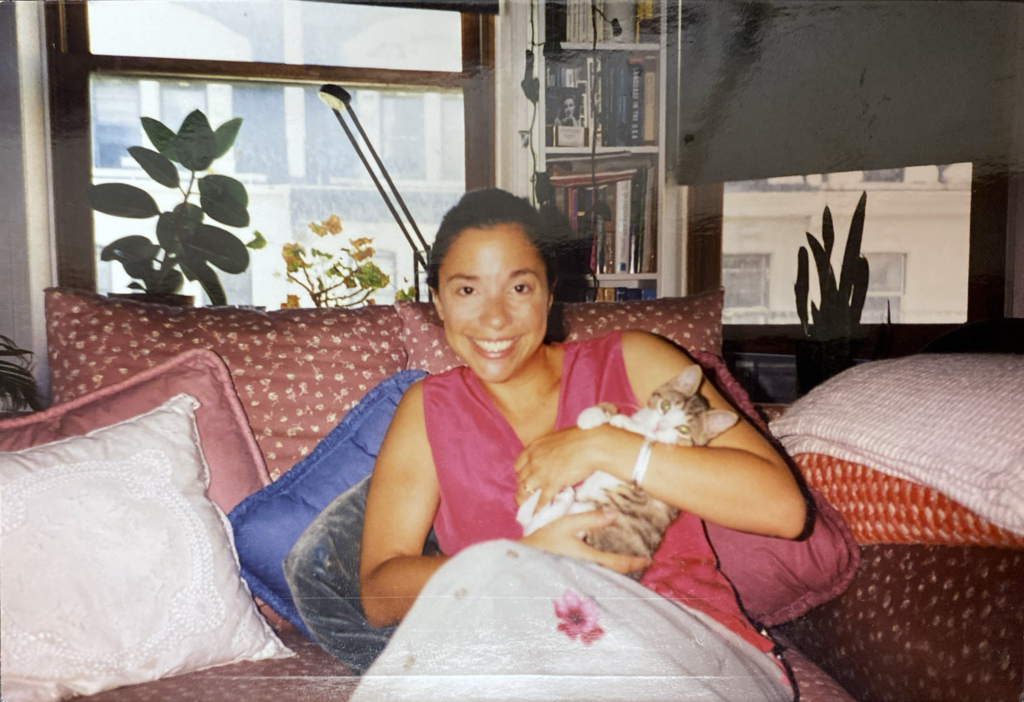
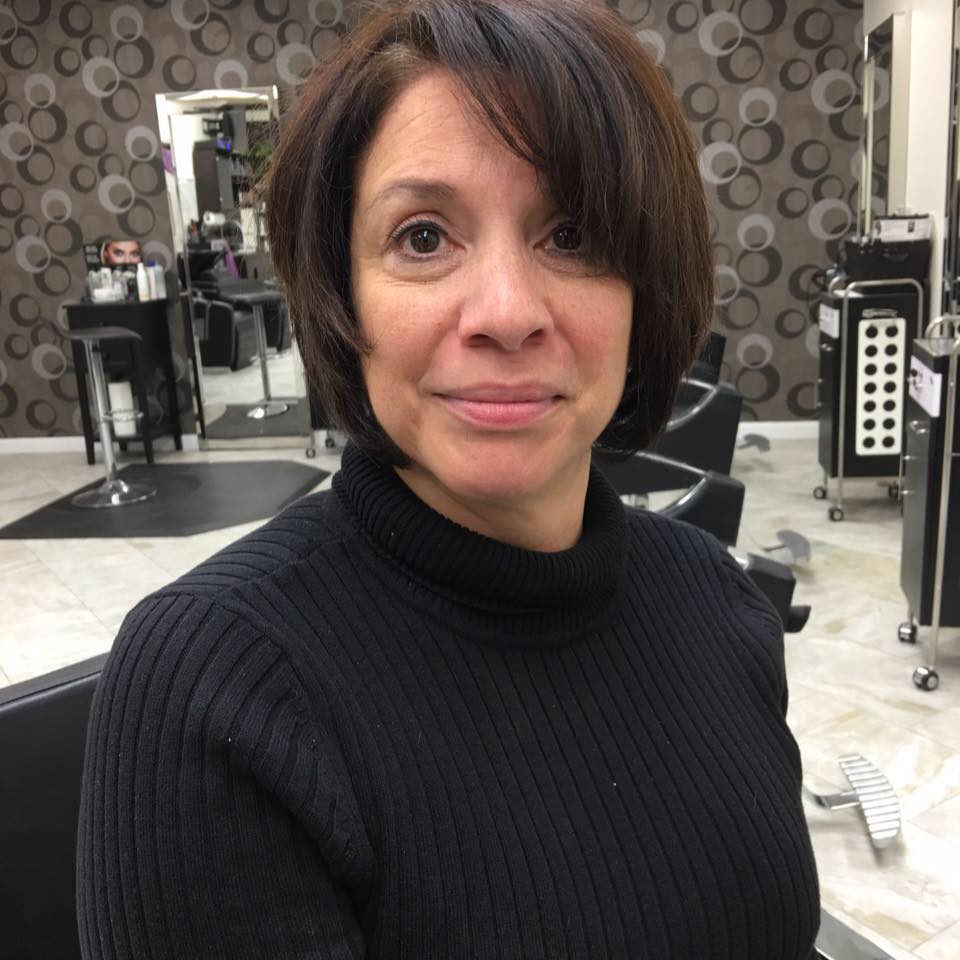
Away from the pantry, Rossetti‑Ryan—who lives in East Naples—recharges the way many people do: around a table. She loves to cook for friends and family, linger over conversations about “ideas, movies, music, and books,” travel and explore new neighborhoods, and tend a small home garden she recently started. And while she doesn’t currently have a pet, she still speaks fondly of a beloved cat, Carmella (shown here), who was part of her life for years. It’s a fitting detail for someone whose work is rooted in care: feeding people, yes—but also helping them feel remembered.
Extraordinary People


