
By the time Rev. Roy Terry IV heard what he describes as “the voice of God,” he had already spent years orbiting the gravitational pull of ministry without quite naming it. He was a teenager at a Petra concert — a reluctant attendee, a self-proclaimed hard‑rock kid who drove himself so he could escape if things got weird — when something unexpected happened.
“It was simple and beautiful,” he recalls. “The voice within affirmed that I was loved unconditionally and longed to be in relationship with me.”
That moment, he says, was not about fear or judgment. It was about identity. “I heard and received — maybe for the first time — the truth that Jesus loved me.” He walked forward that night and gave his life to Christ. Everything changed.
For Terry, now the longtime pastor of Cornerstone United Methodist Church, named the Top Church in Naples in 2025 by Naples Noteworthy, the call to ministry was never a lightning bolt. It was a slow, steady unfolding — a journey shaped by family, mentors, curiosity, and a deepening sense of purpose.
And though he’s not finished, for his unflagging service to his church and community, for the way in which his words and deeds have modeled Christ and his church has been an inclusive refuge for all people, Naples Noteworthy is pleased to present him with a Lifetime Achievement Award.
A Childhood Steeped in Faith and Mystery
Terry grew up surrounded by the rhythms of church life. His grandfather, a United Methodist pastor and former Chief of Chaplains of the U.S. Air Force, often invited young Roy to help with worship services. “I loved my grandfather, and he made me feel special,” he says. “I found joy in serving in that way.”
His mother also saw something in him early on. When he was seven, she asked what he wanted to be when he grew up. He told her he wanted to create video games — the dream of many kids in the early ’80s. She paused and said, “That’s interesting. I always thought you might be a pastor.”
His response was immediate: “No way!”
But even then, he was drawn to the spiritual and the mysterious. “This drive toward the abstract, the mysterious, and the artistic always filled my thoughts,” he says. Looking back, he sees that curiosity as part of his call story.
A Call That Felt Like Coming Home
By late high school, after years of encouragement from family, church members, and mentors, Terry finally stopped resisting. “The calling felt like coming home,” he says. “It was a moment of divine clarity.”
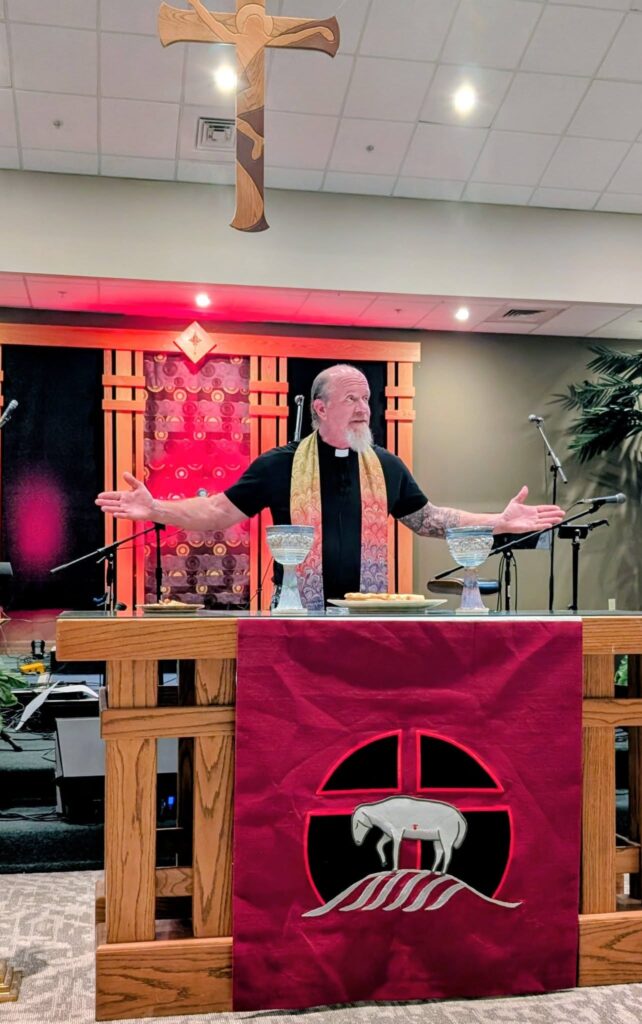
He went on to study Religion at Florida Southern College, served as a youth director, attended Duke Divinity School, and was eventually appointed to launch Cornerstone United Methodist Church — a congregation he has now shepherded for thirty years.
When the Words Don’t Come
For someone who loves preaching as deeply as Terry does, people often assume the weekly rhythm comes easily. And in many ways, it does. “If I could simply show up every Sunday and preach, that would be the best job imaginable,” he says.
But he is honest about the darker seasons — the times when faith feels heavy, when the world feels unbearably dark, when the words refuse to come.
“Faith finds its strength precisely amidst the doubts, fears, and questions of life,” he says. “The good news is not something I create or manufacture. It is something I step into and live, regardless of how I feel. Faith is a journey, and arriving at absolute certainty can never be part of the equation. We learn, grow, experience, doubt, fear, strive, encourage, love, hope, and continue forward. Even when I find myself in a dark place, when it comes to preaching, I relinquish control. The word I come to proclaim on Sunday morning is for all of us, myself included.
“To quote both Friedrich Nietzsche and Eugene Peterson, it is ‘a long obedience in the same direction’.”
And he adds, “It’s important for the people I serve to hear me say that I do not always feel like preaching — but we press on together.”
The Weight of Ministry — and the People Who Carry It With Him
Clergy burnout is real, Terry acknowledges, but he doesn’t believe preaching is the culprit. “Pastoral ministry is one of the few professions where people are expected to continually give, listen, care, show up, and then give even more,” he says. “Somewhere in that constant outpouring, some clergy lose themselves.
“Of course, discouraging and encouraging moments are always intertwined,” Terry continues. “I become discouraged when I feel the tensions between partisan politics and the politics of the Gospel of Jesus Christ. It is discouraging when scripture is used as a weapon or when people insist the church should remain silent about injustice because of a deeply misunderstood interpretation of the separation of church and state. All of that weighs heavily.
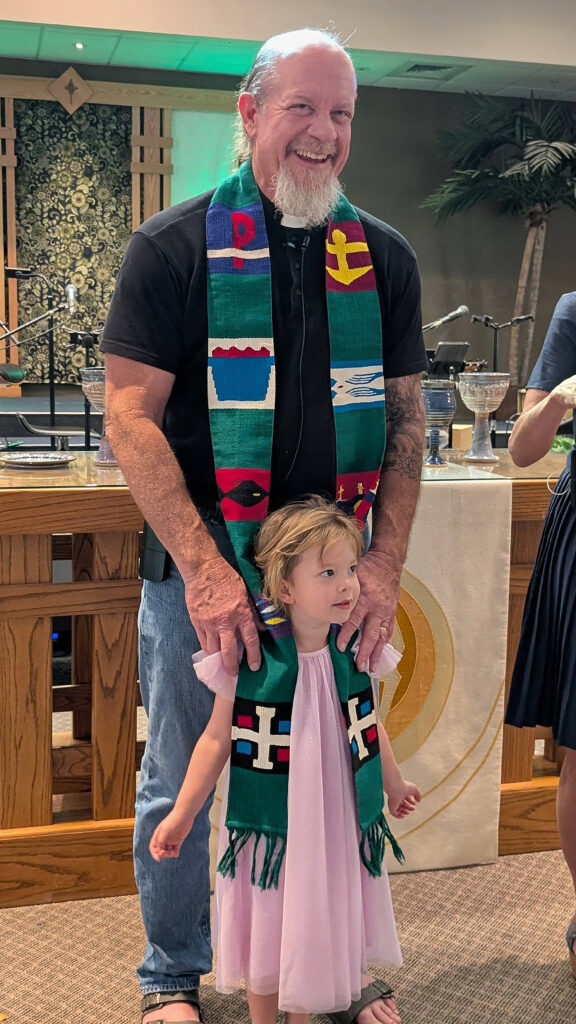
“Conversely, it is deeply encouraging when people genuinely embrace the teachings of Jesus and strive to embody the good news through their lives — standing alongside the oppressed and marginalized, serving the poor, encouraging the downtrodden, lifting one another up, speaking truth to power when injustice harms others, and generously offering their time and resources for the sake of that shared work.”
What sustains him is community — his family, his covenant group of clergy brothers (“one of the main reasons I’ve been able to continue”), and the people of Cornerstone themselves.
“I am encouraged every time we gather on Sunday,” he says. “Not everyone arrives full of certainty or enthusiasm. Yet they come anyway, bringing all their burdens, questions, exhaustion, and hopes. Through that shared presence, they bear witness to the reality that we are part of a story far bigger than ourselves.”
Mentors, Thinkers, and the Shaping of a Pastor
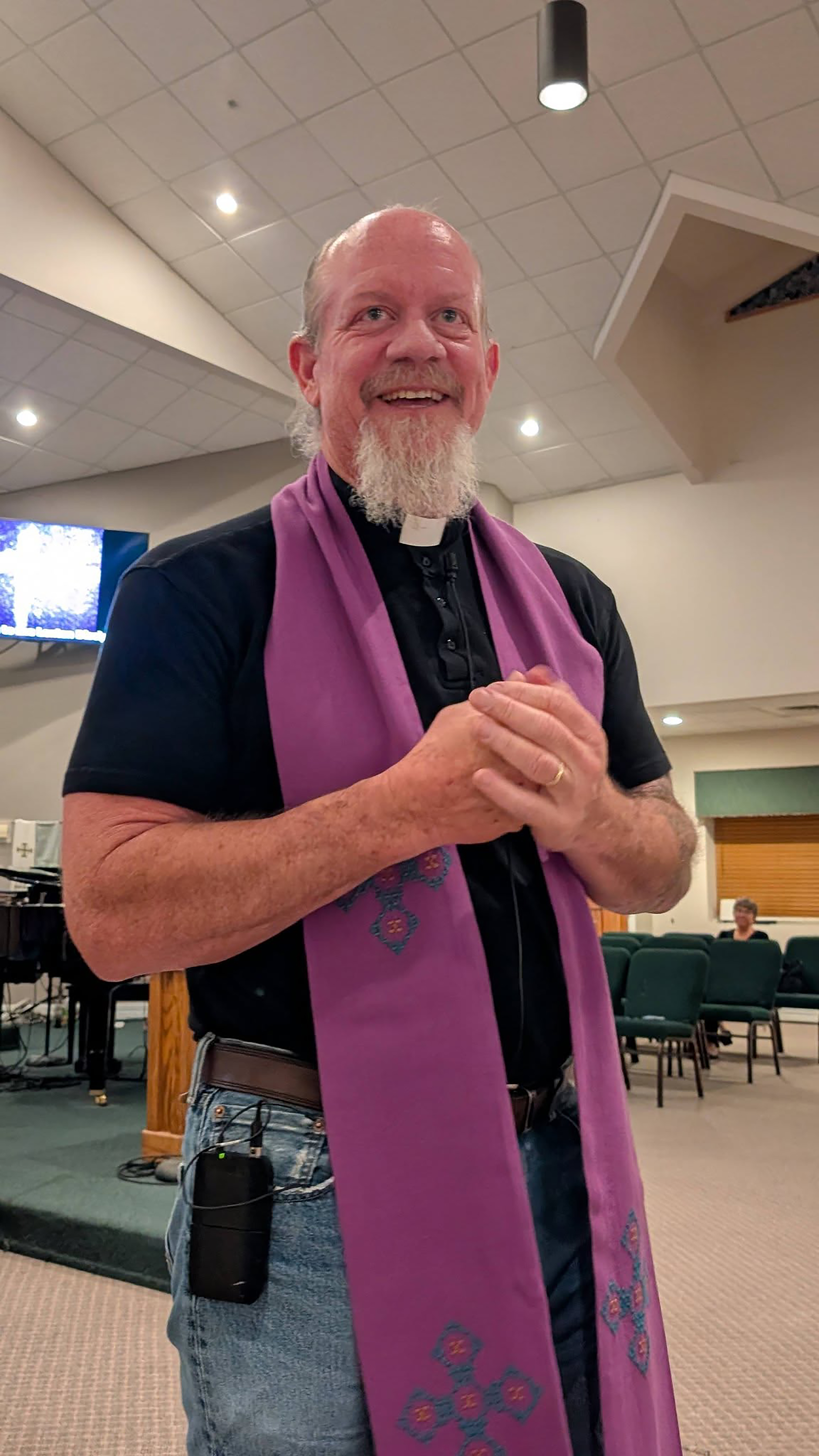
Terry’s life has been shaped by a constellation of mentors — his parents, his grandfather, his spouse Leslie, and two early guides who remain close friends: Rev. Dr. Vic Willis and Rev. Dr. Waite Willis. “Vic embodied the love of God in my life,” he relates. “His love for me and my friends was unconditional, and through him I encountered something of Christ’s presence. Waite was the first professor who truly stretched me intellectually and encouraged me to take my academic pursuits seriously. Both of these men profoundly shaped my life, and I am grateful that we remain close friends to this day. Both were involved in my wedding, and both laid hands on me during my ordination.
“I was also blessed with the opportunity to attend Duke Divinity School during a remarkable season in its history, when some true giants in theology and biblical studies were teaching there. Among them were Stanley Hauerwas in Christian Ethics, Willie James Jennings in theology, Teresa Berger in liberation theology, Richard B. Hays in New Testament, Richard Heitzenrater in Wesley Studies, and Susan Keefe in Early Christian History. Each of them contributed immensely to my growth and development as both a pastor and a thinker. They were thoughtful and faithful not only in their teaching, but also in the way they embodied their faith in the world.
“Additional mentors and influences include Dr. Brent Latham, Brian McLaren, and my many friends connected to the Ekklesia Project, as well as fellow clergy throughout the Florida Conference of the United Methodist Church.
“There have also been many people who have shaped me through their writing, lectures, and podcasts: Martin Luther King Jr., Howard Thurman, N. T. Wright, James H. Cone, Alice Williams, Pete Enns, David Bentley Hart, Jürgen Moltmann, Walter Brueggemann, Karl Barth, Paul Tillich, and Albert Schweitzer. And, of course, there are many more.”
We asked if any particular Bible passages resonated with him throughout his life.
“My favorite biblical passage is Philippians 2:5-11 because it reveals what I believe to be the true source of power within the Christian faith: humility and self-giving love,” Terry says. “In Christ, we encounter a God who does not grasp for power or exploit status, but instead empties himself, takes the form of a servant, and enters fully into the suffering and brokenness of humanity. The passage continually reminds me that the way of Jesus is not domination, fear, or coercion, but sacrificial love. It is both theological confession and ethical invitation — ‘Let the same mind be in you that was also in Christ Jesus.’”
Let this mind be in you which was also in Christ Jesus, who, being in the form of God, did not consider it robbery to be equal with God, but made Himself of no reputation, taking the form of a bondservant, and coming in the likeness of men. And being found in appearance as a man, He humbled Himself and became obedient to the point of death, even the death of the cross. Therefore God also has highly exalted Him and given Him the name which is above every name, that at the name of Jesus every knee should bow, of those in heaven, and of those on earth, and of those under the earth, and that every tongue should confess that Jesus Christ is Lord, to the glory of God the Father.
Philippians 2:5-11 NKJV
“Another foundational passage for me is Luke 4:15-30, where Jesus stands in the synagogue, reads from the prophet Isaiah, and announces the fulfillment of scripture in their hearing. For me, this moment serves as Luke’s declaration of the purpose and mission of Christ in the world. The kingdom of God breaks into human history through liberation, healing, restoration, justice, and good news for the poor and oppressed. It is impossible for me to separate the Gospel from this vision of embodied grace and justice.
“Closely connected to that is Isaiah 61, which forms the foundation beneath Jesus’ proclamation in Luke’s Gospel. Isaiah’s vision of release, restoration, comfort, and jubilee has deeply shaped my understanding of both ministry and the work of the church. The Gospel is not merely private spirituality; it is the announcement that God is actively restoring creation and calling humanity into a new way of being together.
“I am also continually drawn back to Micah 6:8: ‘What does the Lord require of you but to do justice, love kindness, and walk humbly with your God?’ Few passages summarize the ethical heart of biblical faith more clearly. Justice, mercy, and humility belong together. Faith divorced from compassion and justice ceases to resemble the way of Christ.
“As for favorite books of the Bible, I return most often to Gospel of Luke and Acts of the Apostles because of their sweeping vision of inclusion, liberation, table fellowship, and the movement of the Spirit through ordinary people and marginalized communities. Luke-Acts consistently portrays the Gospel breaking beyond boundaries — ethnic, social, religious, and political — revealing a God whose grace continually widens the circle of belonging.
“In the Hebrew Scriptures, Book of Genesis remains my favorite. Genesis wrestles honestly with creation, identity, belonging, exile, covenant, brokenness, reconciliation, and what it means to be human. It is a book filled with flawed people, complicated relationships, beauty, violence, mercy, and hope. Again and again, Genesis reminds us that God continues working through imperfect people and unfinished stories.”
Music, Praise and Transcendence
Roy Terry IV is not only the lead pastor but also a worship leader at Cornerstone. Music is an essential part of his life and ministry.
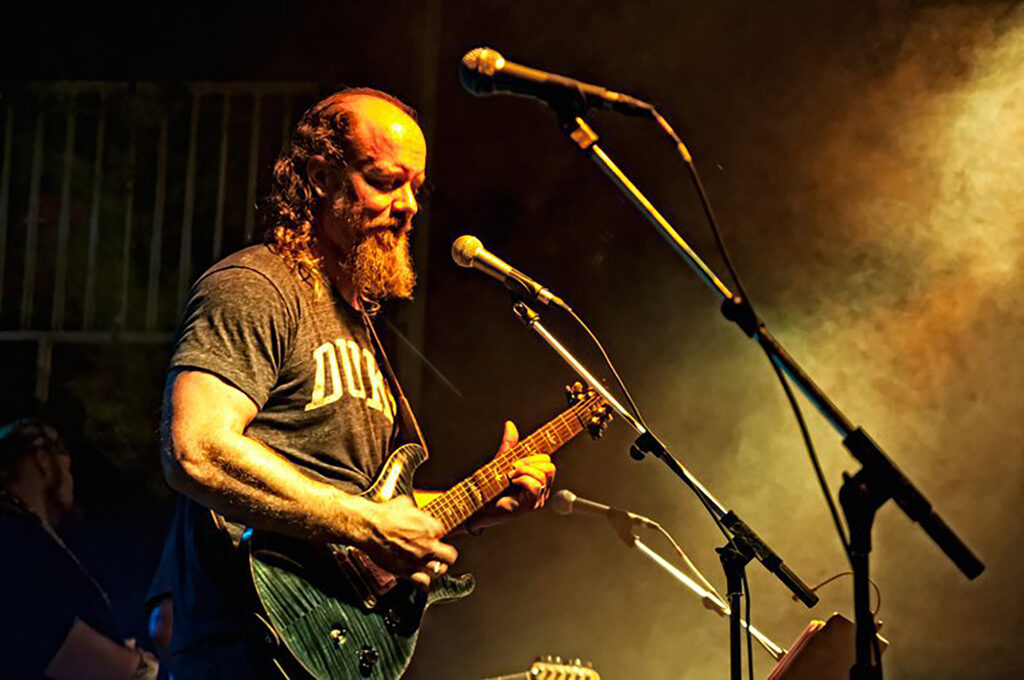
“I love music,” Terry confesses. “At heart, I am a hard rocker. I have always found great joy in playing music, especially at Cornerstone United Methodist Church. I still write music, although recently other responsibilities and projects have occupied much of that creative space. Still, I know I will return to it more fully again.
“Over the past thirty years, I have been part of three different bands. The first was the Holy Moly Band, which released two full albums and toured regionally, playing festivals and events throughout Florida. My current project is Bro Time Band alongside my best friend — and, in my opinion, the greatest guitar player in Southwest Florida — Dan Baptista. Bro Time has recorded four songs out of the ten we have written together so far. Lastly, there is The Between Time Band, which plays every Sunday at Cornerstone.
“Beyond simply performing, I have always loved supporting and promoting local music. For several years, Cornerstone became one of the primary independent music venues in Southwest Florida. About once a month, we hosted concerts in our sanctuary featuring many of the area’s best local bands. That eventually grew into the Strawberry & Music Festival, which featured around thirty bands annually for twelve consecutive years.
“We also helped promote the Homegrown Music Festival at Hertz Arena, formerly known as Germain Arena. During that season, the Naples Daily News published an article about Cornerstone and my involvement in the local music scene titled, Preaching the Gospel of Indie Music.
“For me, music has always been deeply connected to community, creativity, transcendence, and relationship. Much like ministry itself, music has the power to bring people together, create belonging, and remind us that beauty still exists even in the midst of struggle.”
A Life Shaped by Travel — and the Imago Dei
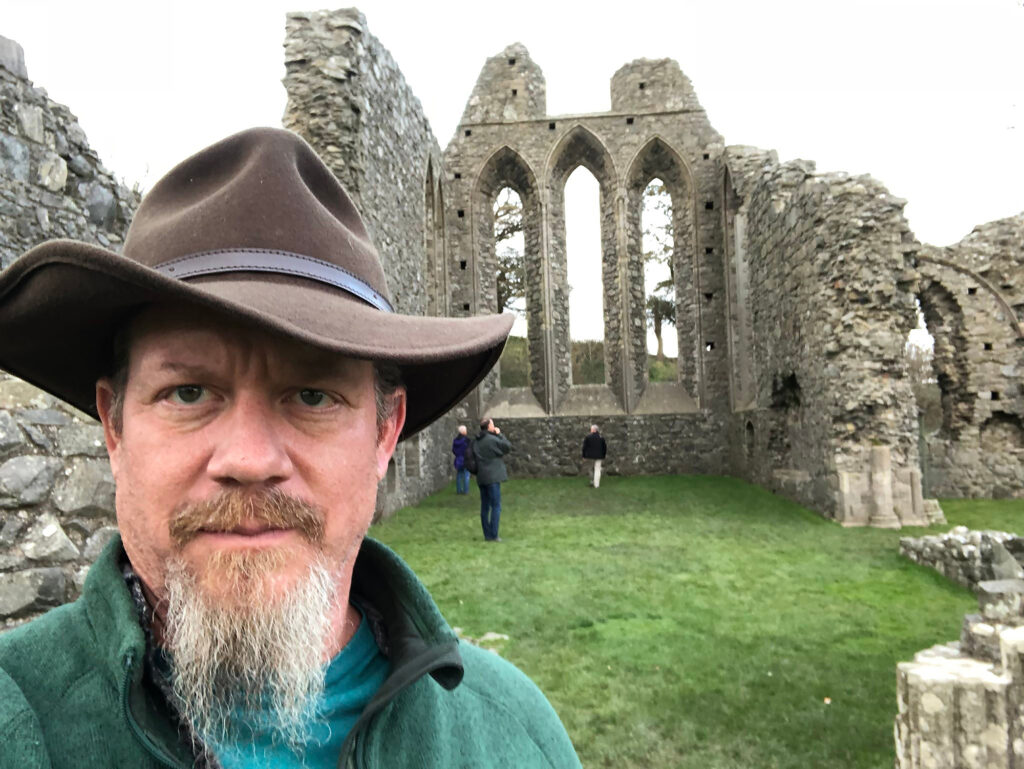
Terry has traveled widely — Cuba, Argentina, Kenya, Ireland, Scotland, England, and Italy. “The greatest lesson travel offers a person is exposure — and the realization that we are far more alike than we are different. People are hospitable, loving, funny, and beautiful no matter where you go. The labels we so often cling to begin to fade as we encounter our shared humanity. Diversity does not weaken unity; it strengthens it and draws us away from the darkness of uniformity.”

Wherever he goes, he sees the Spirit already at work. “God’s Spirit knows no borders or boundaries,” he says. “We are all created in the imago Dei— the image of God. I am also reminded that God is already at work in those places and I can see it in the tapestry of people I encounter.”
A Church That Chooses Inclusion
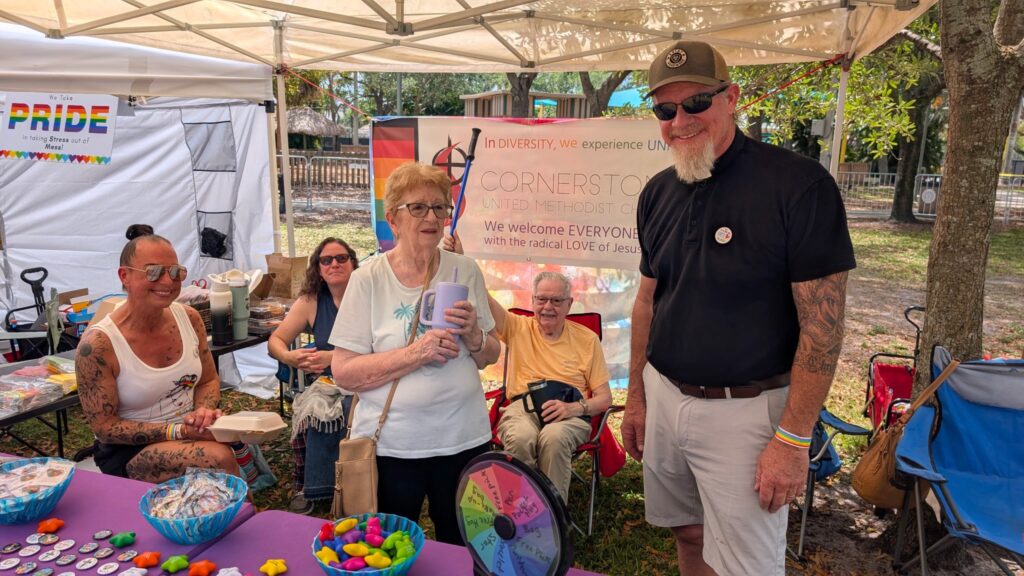
Cornerstone United Methodist Church is known in Naples for its bold, compassionate stances — particularly its full affirmation of LGBTQ+ people and its advocacy for immigrants and the workers of Immokalee.
These decisions have cost the church members. Terry knows that. He grieves the losses. But he is unwavering.
“The reason is the Gospel itself,” he says. “When I encounter Jesus in the Gospels, I see him offering new life and new relationship to everyone he meets. There is hardly a moment in the Gospels — or in the birth of the early church — where radical inclusion is not central to the story. And when I speak of liberation, I do not mean a call away from who someone is, but rather a proclamation of acceptance for who they have been all along. The Gospel of Jesus Christ is more than an ‘all are welcome’ community. It is an ‘all are welcome and included’ community.
“While attending Duke Divinity School, I had the opportunity to enter into deep conversations with fellow students, graduate assistants, and professors. Through that journey, we explored the scriptures — particularly the seven texts most often used to condemn the queer community. We examined the history and tradition of how the church arrived at its positions regarding LGBTQ+ persons. We engaged reason through philosophy, theology, psychology, and science. And we shared our own lived experiences with family members, friends, colleagues, and fellow Christians who are queer. In Methodist circles, this fourfold process is often referred to as the Wesleyan Quadrilateral: scripture, tradition, reason, and experience.
“Through that process, I became convinced that people who identify as queer are not choosing an orientation; they are born with that orientation, and love is love. Whether it is Jesus’ comments regarding eunuchs in \text{Matthew }19:12, Philip’s encounter with the Ethiopian eunuch in Acts of the Apostles, or Jesus’ relationship with the woman at the well in Gospel of John, the biblical witness continually reveals God moving toward those who have been excluded, marginalized, or separated and drawing them into full relationship within the beloved community.
“At Cornerstone United Methodist Church, we have always understood ourselves to be an ‘all are welcome’ church. Around 2010, however, we prayerfully discerned that welcome alone was not enough. We needed to move toward becoming a fully inclusive congregation where welcome truly meant inclusion. That process unfolded through conversations, teaching, prayer, relationship-building, and intentionally inviting members of the queer community within our church to lead openly and authentically.
“Over time, we did lose some people, and we genuinely miss them. At the same time, we found many others searching for a church that was Christ-centered, Spirit-filled, love-driven, justice-seeking, affirming, and relational. One woman, reflecting on our often conservative and fundamentalist local context, described Cornerstone as ‘a rare find.’
“By the time the United Methodist Church began more fully wrestling with LGBTQ+ inclusion on a denominational level, our congregation had already done much of that work internally. The denomination itself has since moved significantly through that process as well, removing exclusionary language from the Book of Discipline and opening wider pathways toward inclusion and equality.
“Today, Cornerstone stands as a fully reconciling and affirming congregation that welcomes all people. While there is always room for growth and deeper understanding, our desire has been to remain attentive to the movement of the Holy Spirit — naming the sin and harm surrounding the treatment of the LGBTQ+ community while also opening our doors even wider and more intentionally. For us, affirmation is not simply a political position. It is an attempt to embody the radical hospitality, relational love, and beloved community revealed in the life of Jesus Christ.”
Why Silence Is Not an Option
Cornerstone’s advocacy for immigrants — especially those targeted by I.C.E. — has also stirred controversy. Some members left. Others questioned why a church would “get political.”
For Terry, the answer is clear. “Again, the reason is the Gospel itself—good news for all people. Scripture repeatedly calls the people of God to care for the widow, the orphan, the poor, the oppressed, the immigrant, the foreigner, and the stranger among us,” he says. “That thread runs throughout both the Hebrew Scriptures and the teachings of Jesus. Because of that, I believe the current moral crisis surrounding immigration demands the church’s attention and witness.”
To remain silent in the face of injustice, he believes, is to betray the very heart of Christ.
“There are many arguments being used to justify the rounding up and deportation of dark-skinned and Black immigrants, but those arguments often fall apart when examined honestly in light of both the Gospel and the actual realities on the ground,” Terry says. “The public was repeatedly told that only ‘the worst of the worst’ would be targeted. I have no issue with identifying and removing genuinely dangerous individuals who pose a threat to others. However, what followed was far broader than that promise. We began witnessing the detention and deportation of neighbors, coworkers, friends, and productive members of society — many of whom have no criminal record at all.
“The repeated narrative suggests that removing undocumented immigrants will dramatically reduce violent crime and social disorder. Yet the statistics do not support such sweeping claims. Large percentages of those detained or deported have no criminal background whatsoever. Meanwhile, industries such as construction, agriculture, hospitality, and healthcare continue to suffer from the loss of hardworking and deeply needed people. If the argument for mass deportation is ultimately rooted in crime statistics, then consistency would require a far different conversation about who commits the majority of violent crimes in this country. Too often, however, immigration rhetoric becomes entangled with fear, race, and political scapegoating rather than truth.

“At Cornerstone United Methodist Church, we do not shy away from addressing issues of injustice that are actively causing harm. Not everyone agrees with that approach, and some people have left the church believing we are ‘too political.’ I find that somewhat ironic, because leaving over partisan convictions is itself a political act. The Gospel carries political implications because Jesus himself confronted systems of exclusion, oppression, economic exploitation, and religious hypocrisy. That does not mean the church should become partisan. It means the church is called to embody and proclaim good news for everyone.
“There are moral failures happening all around us, and the church has an important responsibility to speak truth to power. That work is deeply rooted in our Wesleyan identity within the United Methodist Church. It should not be considered unusual or inappropriate for Christians to advocate for justice, mercy, and human dignity. That is part of what it means to follow Christ.”
Alligator Alcatraz: An Example of Moral Failure
“One example of this, for me, is the detention facility commonly referred to as ‘Alligator Alcatraz,’ located in the middle of the Everglades,” Terry continues. “I believe it represents a profound moral failure on multiple levels. The facility was rapidly constructed at a former airstrip with significant controversy surrounding oversight, environmental concerns, and long-term humanitarian implications. In my view, there are at least three interconnected crises involved.
“First, there is the humanitarian crisis. Human beings — many without criminal records — are being detained in deeply troubling conditions, often with limited legal access, inadequate medical care, and significant fear surrounding transparency and due process.
“Second, there is the environmental crisis. The Everglades are one of the most ecologically fragile and sacred regions in the country, including areas deeply connected to the Miccosukee Tribe of Indians of Florida. Concerns surrounding environmental impact, infrastructure strain, light pollution, water management, and ecological degradation deserve serious public attention.
“Third, there is the fiscal crisis. The enormous financial cost of operating such facilities raises important moral and political questions about priorities, particularly when public resources that could otherwise support disaster relief, housing, healthcare, or education are redirected toward detention infrastructure and private prison systems.
“Ultimately, my concern is not simply political. It is theological. Every human being bears the imago Dei — the image of God. The church cannot proclaim a Gospel of love, mercy, reconciliation, and human dignity on Sunday while remaining silent about suffering, injustice, and dehumanization throughout the week. For me, following Jesus means standing alongside the vulnerable, telling the truth about systems that cause harm, and continuing to widen the circle of beloved community even when doing so is uncomfortable or costly.”
In 2025, Cornerstone United Methodist Church was named the Top Church in Naples by Naples Noteworthy—for their courageous alignment of their ministry with the teachings of Christ, their active stance on these issues in the community and their unwavering inclusion of all people in the church. To see more about this decision, see About Cornerstone – Top Church, 2025 – Award Notes.
Thirty Years Later — Still Listening, Still Learning
After three decades at Cornerstone, Terry remains grounded, grateful, and deeply aware of the mystery at the center of his calling.
“The church’s task is not to stand guard at the gates of eternity deciding who belongs,” he says. “The church’s task is to announce the good news that in Christ, God has already moved toward the world in love.”
And perhaps that is the thread running through his entire story — from the seven‑year‑old who loved the mysterious, to the teenager who heard a voice at a concert, to the pastor who still steps into the pulpit each week with humility and hope.
A long obedience in the same direction.
A life shaped by love.
A call that still feels like coming home.
Visit Cornerstone

Cornerstone United Methodist Church
8200 Immokalee Rd.
Naples, FL 34119
Worship Sundays 8:00 & 10:00 am (Children’s Moment at 10:00 am)

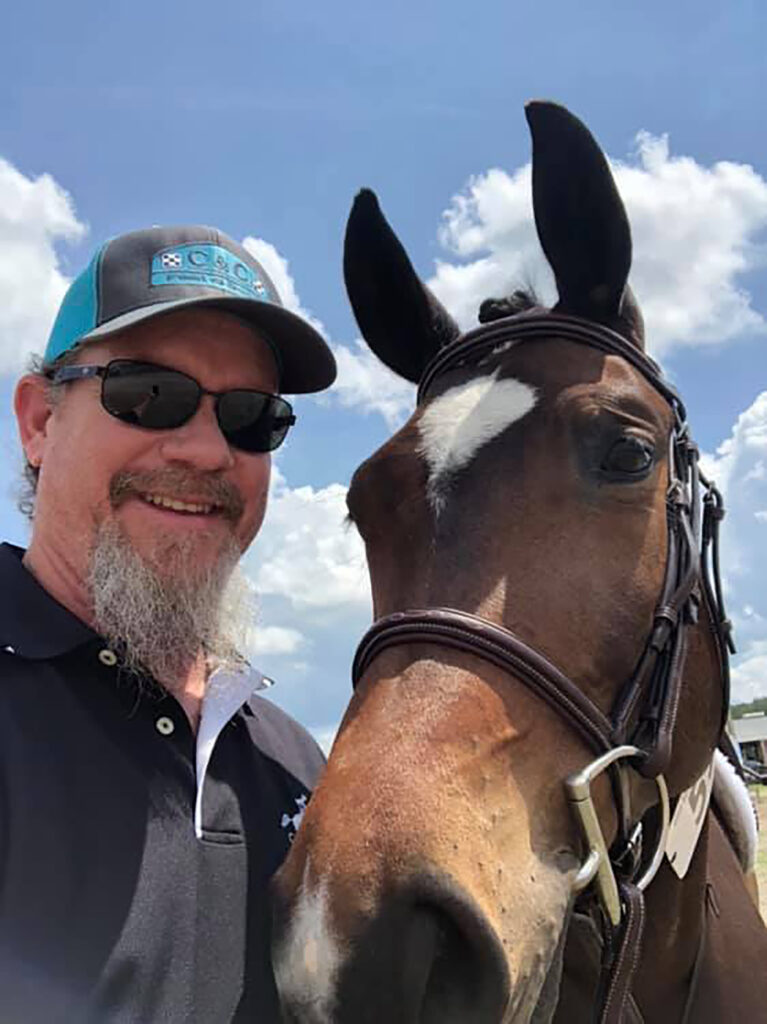
Rev Roy Terry IV lives in Naples Florida. For relaxation, he likes to hang out with family and friends, support his girls and their horse farm, go to concerts, travel, play music, eat really good food, work out, drive the tractor and mow the lawn. His pets/animal friends include Ladybug (pictured), and cats Aria, Meow Meow, Stashy, and Jenny, and horses Ebony, Pebbles, Arturo, Navajo, ET, Penny, Sawyer, Bee, Peter, Amanda, Gracie, and Peps.
Extraordinary People


